


Bob Mehen suggests some suckermouth catfish that are suitable for one of our readers' tanks.
Which pleco would make the best choice for a 120 x 45 x 45cm (48 x 18 x 18”) community tank set-up? The tank contains 16 cardinals, 12 espei rasbora, seven ruby barbs, six neon dwarf rainbows and eight sterbai corys.
I'd like something different to the usual bristlenose catfish, and which grows to a decent length. However, I know my tank is not large enough for an enormous common pleco. I have had a look and I like sabaji, green and blue phantoms, and the gold nugget species. Do you have any thoughts on which might fit best – or any other suggestions, please?
The tank has lots of wood and plants. The plants are mainly at the back and along the sides, with a good open area at the front for the fish to swim in. The aquarium substrate is a fine gravel.
The temperature is 25-26°C (77-78°F) and the pH is 7.2. Nitrate is <20ppm and nitrite and ammonia test at zero. I carry out a 25% change every week. The tank has two Fluval U4 filters which I clean alternately every two weeks.
JACKIE BENNETT
Which plecos does Bob Mehen recommend?
While your tank is a good size, I think that three of the four species you’re looking at are a little large. The gold nugget (Baryancistrus xanthellus) and the para plec (Peckoltia sabaji) both reach around 30cm (12”) in size. Meanwhile the green phantom (Hemiancistrus subviridis), can get to about 22cm (8.7”).
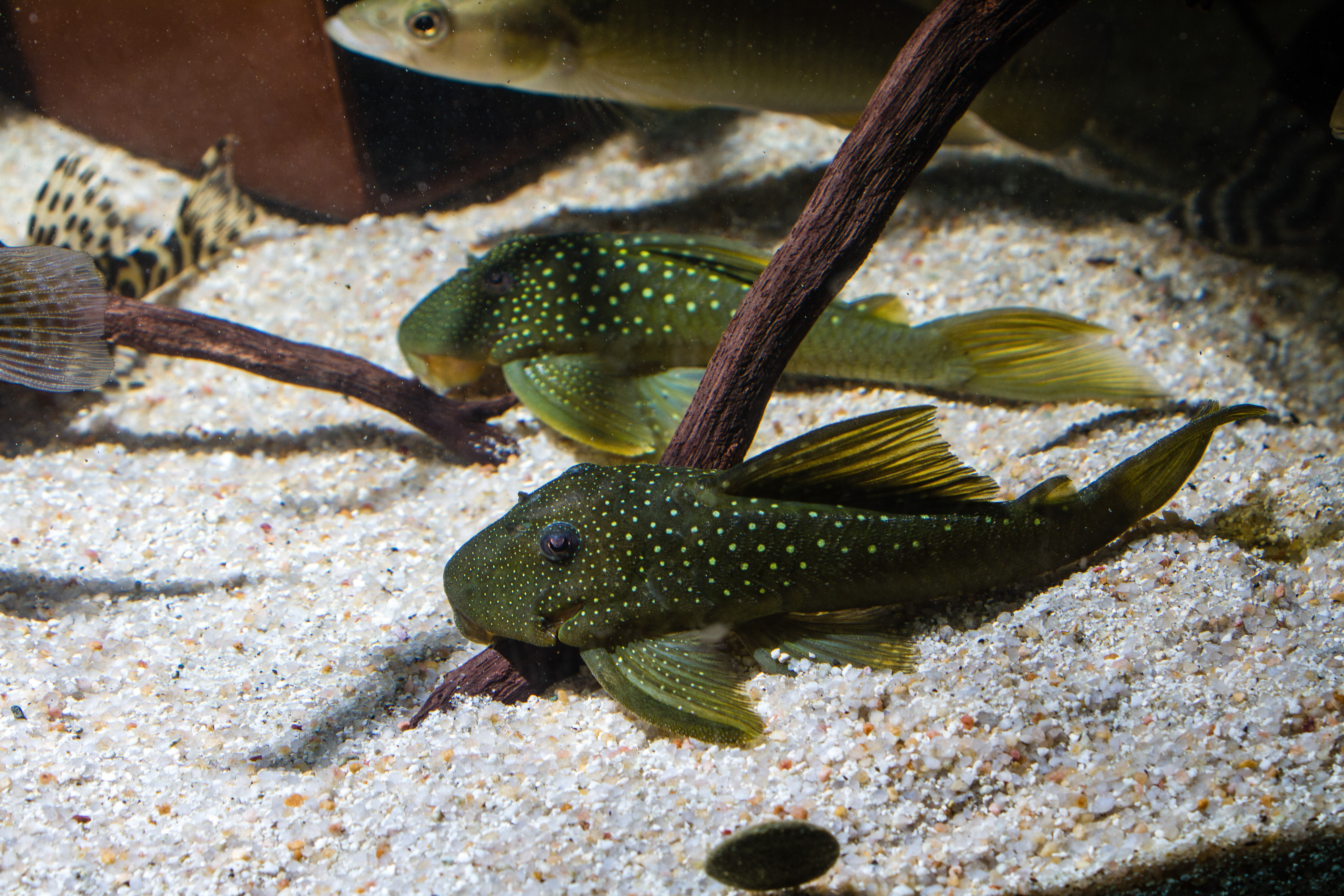
Green phantom pleco Photo by Shutterstock
The blue phantom (Hemiancistrus sp.) is probably the only one that would be a good long-term fit. They reach a maximum size of around 18cm (7”). This species likes good flow to simulate its natural rocky, fast-flowing environment. This means it may not be ideal in your planted tank.
However, plenty of other slightly smaller, but no less attractive species are available to consider. At around 15cm (6”), the flash pleco (Panaqolus albivermis) would make a good choice and will certainly enjoy the wood.
You say you want to avoid the ‘usual bristlenose catfish’ but there are some unusual species you could consider. The Medusa pleco (Ancistrus ranunculus) is a favourite of mine. Wonderfully chunky, it is a species whose head is extremely wide in comparison to its body.
As its common name suggests, males have the most spectacular 'tentacles' on their heads. They also grow to around 15cm (6”) meaning they would be a good fit for your tank size.
Another bristlenose worth a second look is Ancistrus dolichopterus, often sold as the starlight pleco. Growing to around 12cm (4.7”) in length, tiny white ‘stars’ cover their jet-black bodies. They also sport sharp white edges to their tail and dorsal fins, although this can fade in older fish.
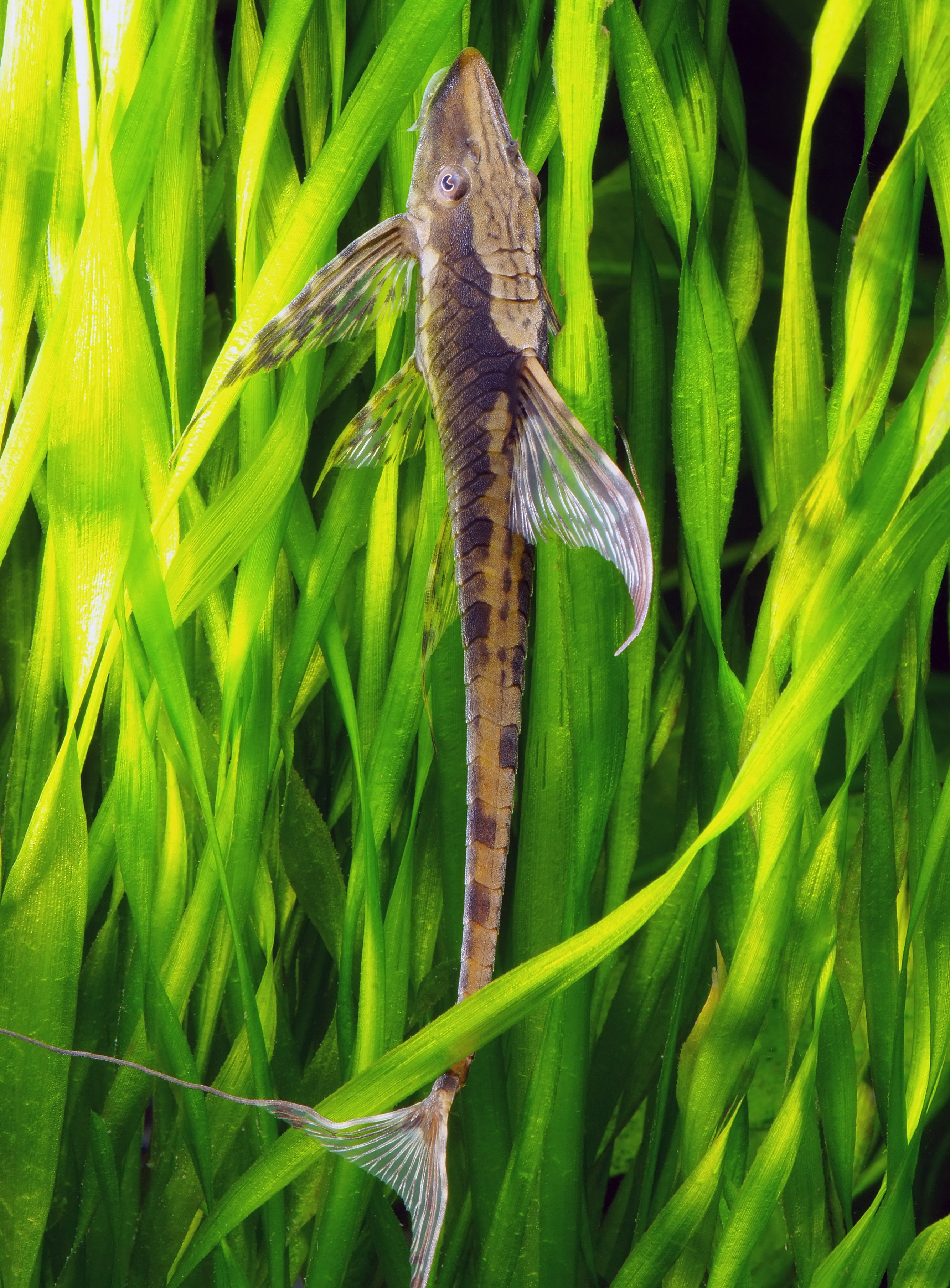
Twig catfish Photo by Shutterstock.
If none of the above appeal, you could consider one of the larger 'twig' plecos of the Sturisoma genus. These are a fantastic shape, beautifully marked and extremely peaceful. They rely on cryptic shape and colouration for safety, so they're less prone to the sudden mad dashes around the tank. This behaviour can injure their more traditionally shaped pleco cousins so is certainly a benefit of this genus.
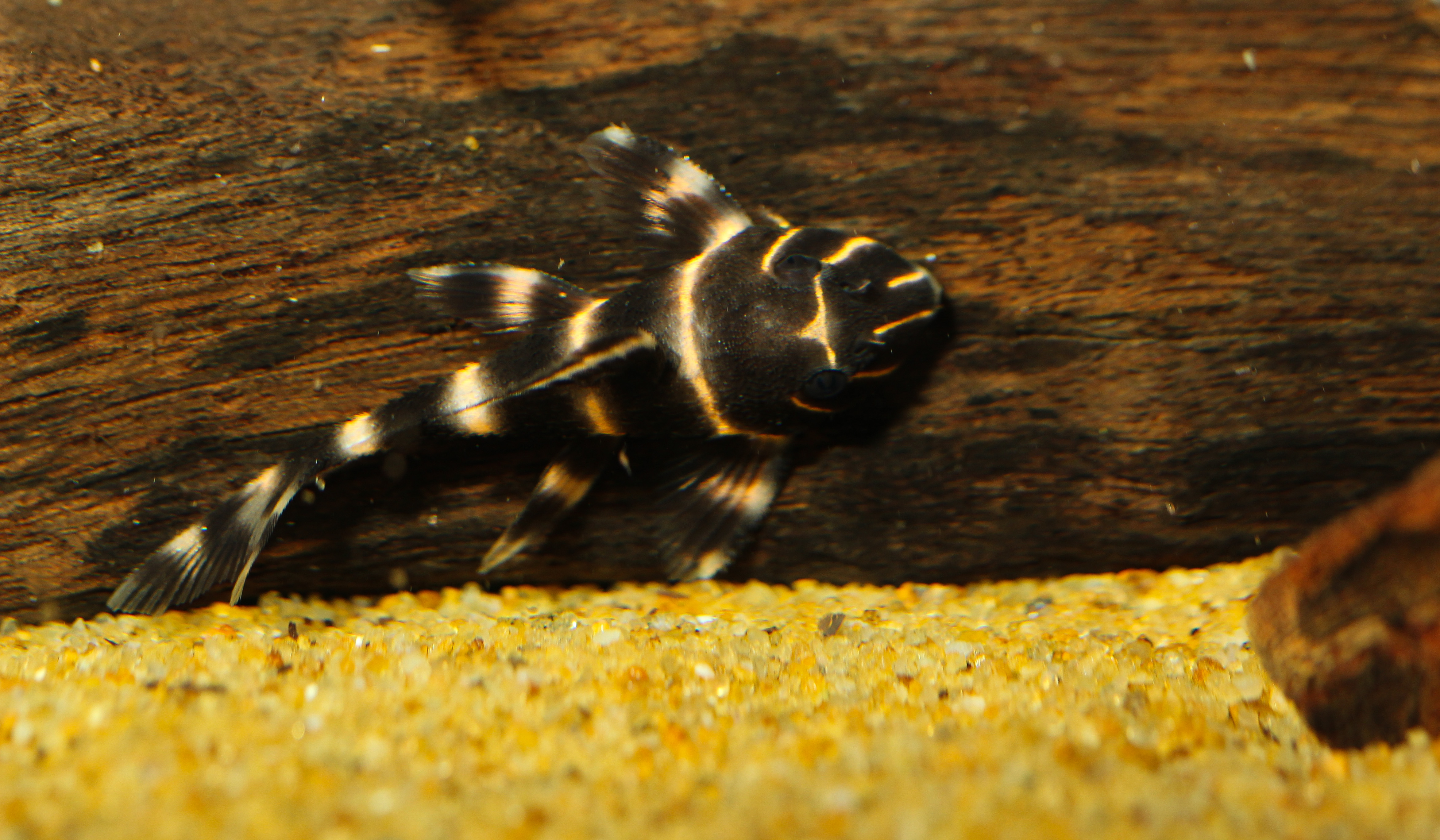
Flash pleco fact file
- Scientific name: Panaqolus albivermis
- Size: up to 15cm (6”)
- Origin: Peru, South America
- Habitat: Occurs in flowing waters up to 1m (3.3') deep with plenty of submerged wood which they graze on.
- Tank size: 100x40x30cm (39x16x12”)
- Water requirements: Fairly adaptable to a range of water conditions. A pH between 6-7.5 and up to 15°H will work well.
- Temperature: 25-30°C (77-86°F)
- Temperament: Shy, nocturnal and peaceful towards tank mates. Ensure plenty of caves and wood are available for the plecos to use as cover.
- Feeding: A wood eating species so this must feature in the aquarium. Supplement with a variety of plant based foods like algae wafers and fresh veg. More meaty fares can be useful to condition pairs for breeding but should not be a staple.
- Availability & cost: Fairly common, ask around and check tank labels as they may be hiding. Expect to pay around upwards of £40 each.
Related article: 9 most desirable places for the aquarium.