


Learn how to create a lush green carpet of aquarium plants that resembles a perfectly maintained football pitch. From choosing the right carpeting species to providing the correct lighting, CO₂, and maintenance, these tips will help you achieve a healthy foreground in your planted aquarium.
With World Cup fever sweeping across the globe, many fans dream of having their own perfect football pitch. While building a stadium may be out of reach, creating a lush green football-field effect inside your aquarium is surprisingly achievable
In fact, there aren't many more impressive sights in an aquarium than a perfectly manicured grassy lawn or carpet. These vibrant green foregrounds often entice new aquarists to give them a try. However, maintaining the perfect lawn in your tank is not as simple as running the lawn mower over them every week or two, and unfortunately many attempts end in failure.

All Photos by Shutterstock unless otherwise stated
Related article: What can I keep with shrimp?
Fortunately, with the right plants, equipment, and care, you can create your own underwater football pitch. In this guide we will cover the key steps to successfully grow aquarium carpeting plants:
- Choosing the right species of plants
- Dividing up your plants
- Consistent maintenance
- Patience
Related article: The perfect fish to look for when stocking an aquascape.
Pick The Right Players For Your Team
Success with growing a perfect lawn in your fish tank starts with picking the right species of plant. Species such as Micranthemum callitrichoides 'Cuba' (formerly known as Hemianthus callitrichoides 'Cuba'), commonly called dwarf baby tears, thrive only in high-tech aquariums. In tanks without high levels of light, CO₂, strict fertiliser routines, and plenty of maintenance, this plant often simply melts away.
Rather than selecting solely on appearance, narrow down your options to the ones suitable to your tank, and then pick your favourite. High light levels and injected CO₂ will always achieve the carpet look faster, but you can still achieve a perfect grassy lawn in low-tech tanks. We have listed some of our favourite species, and their requirements, below to help you pick the one that is right for you.
Best Carpeting Plants

Dwarf baby tears (Micranthemum callitrichoides 'Cuba')
Light: High
CO₂: Required
Size: Typically up to 3cm (1.2") tall
Growth rate: Medium

Dwarf hairgrass (Eleocharis acicularis)
Light: Low
CO₂: Not required
Size: Can reach up to 15cm (6") tall but can be cut back to the desired length. For a shorter lawn opt for Eleocharis pusilla 'Mini'
Growth rate: Medium

Photo by Tropica Aquarium Plants
Pygmy Chain Sword (Helanthium tenellum)
Light: Low
CO₂: Not required
Size: Can reach up to 10cm (4")
Growth rate: Slow
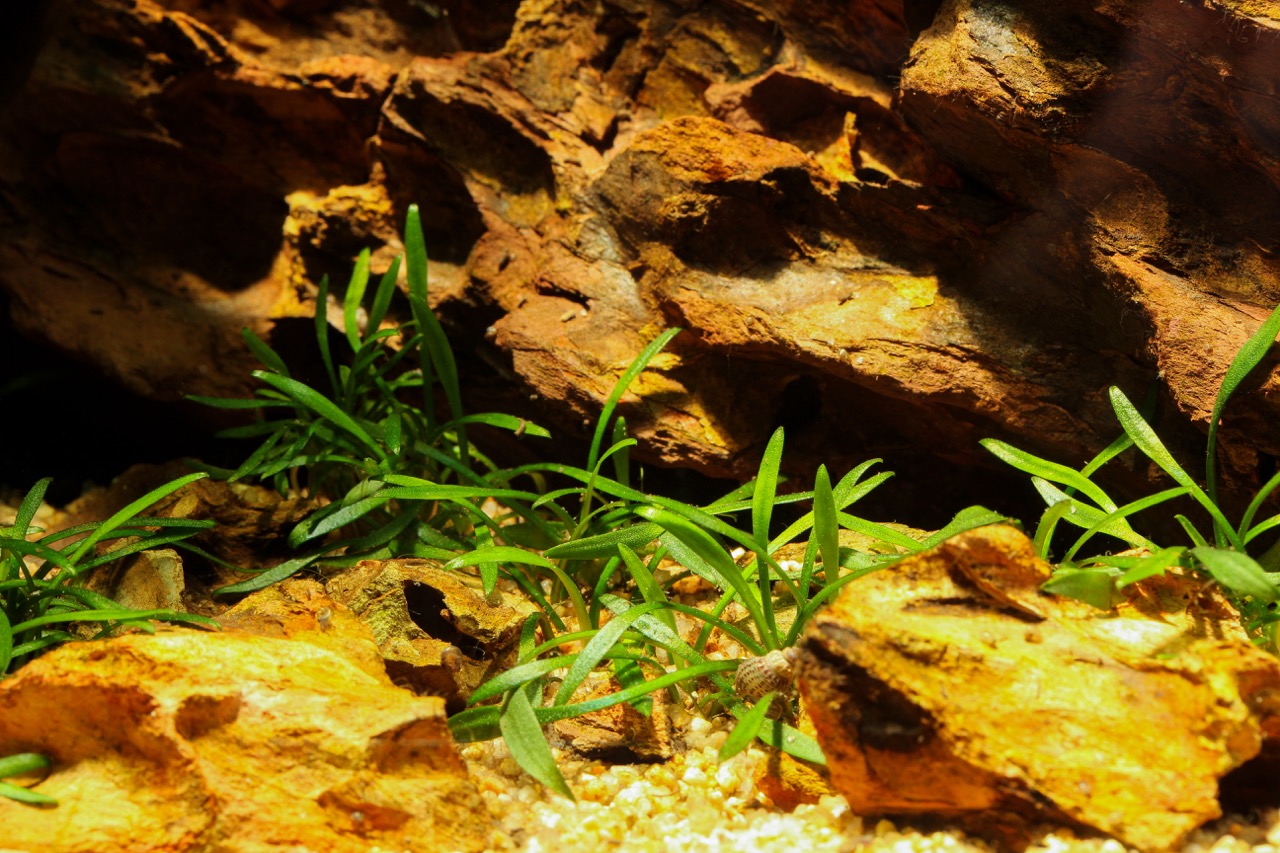
Photo by Alex Bell
Cryptocoryne parva
Light: Medium
CO₂: Not required
Size: Can reach up to 6cm (2.4") tall
Growth rate: Very slow, but once established it will begin spreading and form a lawn-like effect

Micranthemum tweediei 'Monte Carlo'
Light: Medium
CO₂: Optimal but not always essential
Size: Can reach up to 5cm (2") tall
Growth rate: Medium

Glossostigma elatinoides
Light: High
CO₂: Required
Size: Typically stays short at 3cm (1.2") tall but will grow upwards in low light
Growth rate: Medium to fast
Related article: Are there any easier carpeting plants?
Covering Every Blade Of Grass
Just like a world-class box-to-box midfielder, your carpeting plants should be covering every inch of the pitch. To establish a dense, healthy lawn quickly, divide your plants into small portions around 1cm (0.4") wide before planting. Space these portions a few centimetres apart across the foreground. This encourages the plants to spread evenly and fill gaps much faster than planting a few large clumps with significant bare areas between them.

In vitro plants are often the best choice for creating a carpet. Grown in sterile laboratory conditions, they are free from algae, snails, and other unwanted pests. They also provide excellent value, as each pot can be divided into dozens of small plantlets ready for planting. While potted aquarium plants can also produce excellent results, the large number of individual plantlets available from in vitro pots makes it easier to achieve full foreground coverage from the outset.

Photo by Anthony Hunt Photography
Consistency Is Key To Winning
Having one outstanding performance every four games isn't going to win you the World Cup. Similarly, sporadic bursts of maintenance won't produce the perfect aquarium lawn, especially in a high-tech planted tank. Consistency is one of the biggest factors in successfully growing and maintaining a healthy carpet. Focus on these five areas to maximise your chances of success.
Add Fertiliser Regularly
Small, consistent doses of fertiliser are generally more effective than a single large weekly dose. This helps provide a steady supply of nutrients for your plants and reduces the risk of nutrient deficiencies developing between doses. While daily dosing is ideal for many high-tech aquariums, always follow the recommendations for your chosen fertiliser.
Frequent Water Changes During Start-up
Regular water changes are particularly important during the first few weeks of a new planted aquarium, especially when using nutrient-rich aquarium soils. These substrates release nutrients into the water column during the early stages, and before plants become fully established, those nutrients can fuel algae growth. Performing large water changes of 50% or more several times per week during this period can help keep algae under control while your plants settle in.
Routine Trimming
Once your carpet becomes established, regular trimming is essential. As carpeting plants grow thicker, the lower layers can become shaded and begin to die back. Trimming encourages fresh, compact growth and helps maintain the dense, vibrant appearance of a well-kept lawn.
Keep Lighting Consistent
Set your lighting schedule so the lights switch on and off at the same time every day. If you're using CO₂ injection, synchronise it with your lighting period. Longer lighting durations don't necessarily lead to faster plant growth and can often encourage algae instead. For most planted aquariums, 6–8 hours of lighting per day is sufficient, making a timer one of the best investments you can make.
Maintain Stable CO₂ Levels
If you're running a high-tech planted aquarium, consistency with CO₂ is just as important as consistency with lighting. Sudden fluctuations can slow plant growth and encourage algae.
Use a reliable regulator and solenoid to ensure your plants receive a stable supply of carbon every day. Set your CO₂ to start 1–2 hours before the lights come on, allowing carbon dioxide levels to build before photosynthesis begins. Turn it off around an hour before the lights go out.

Trust The Process
A newly planted carpet rarely looks like a football pitch overnight. Many species spend their first few weeks establishing roots before spreading across the substrate. Avoid constantly moving plants, changing fertilisers, or altering lighting schedules. Give your carpet time to settle and you'll be rewarded with healthier, denser growth.
Winning the World Cup requires patience, and so does growing a successful aquarium lawn.
Related article: A guide to contest aquscaping - Planting, Maintenance and Adjustments.

Get ready For The Big Match
Whether you're supporting England, Brazil, Argentina, or another footballing giant, creating the perfect aquarium lawn requires many of the same ingredients as a World Cup-winning team: selecting the right players, maintaining consistency, using every inch of the pitch, and having the patience to let everything come together. Follow these tips and you'll be well on your way to creating a lush green carpet worthy of the World Cup Final.