


One of our readers asks George Farmer for advice on how best to tackle the algae outbreak in her planted tank.
I set up a planted tank using planting substrate in a 60-litre (13 gal) cube aquarium. Everything looked great and the hairgrass (Eleocharis sp.) was growing well. However, within about three weeks of adding the fish – five pea puffers – it was starting to get a lot of algae, and I haven't been able to keep on top of it since; the tank just looks filthy (pictured below).
I syphon the algae off every three days using an airline tube – including some of the hairgrass, sadly, so it's now looking scrappy – along with a 30% water change. I just can't seem to keep it clean. I use EasyLife Profito once a week. Lighting is an Aquael Leddy Smart Plant LED.
I've changed the lighting so it's on for four hours followed by a 90-minute 'siesta' – which I'm told may help as algae doesn't like the break in lighting – and then back on again for four hours. I can't add any clean-up crew because the puffers will likely nip or even eat them
I have a spider plant and a large pothos plant growing out of the top of the tank, so nitrate is really low – less than 10ppm according to my test kit. It's very disheartening. I really want to have a lovely, planted tank, so what can I do?
KATIE INGRAM
Related article: The 10 best algae eaters for tropical tanks.

George's Advice on Fighting Algae
Firstly, don’t lose heart. What you’re experiencing is extremely common in newly set up planted aquariums, especially once fish are introduced. Algae is usually a symptom of plant growth and overall aquarium biology not being mature enough, rather than you doing anything wrong. The solution is to focus on improving healthy plant growth, which naturally suppresses algae.
At the moment, your planting is centred around hairgrass, which is relatively slow-growing and can struggle to compete with algae, particularly without injected CO2. I would strongly suggest adding plenty of fast-growing stem plants. These act as nutrient sponges and help stabilise the aquarium. Excellent choices include Limnophila sessiliflora and Hygrophila polysperma. They grow quickly, are very easy, and can be removed or replaced later once the tank matures.
Related article: 5 Easy and Beautiful Stem Plants for your Aquascape.
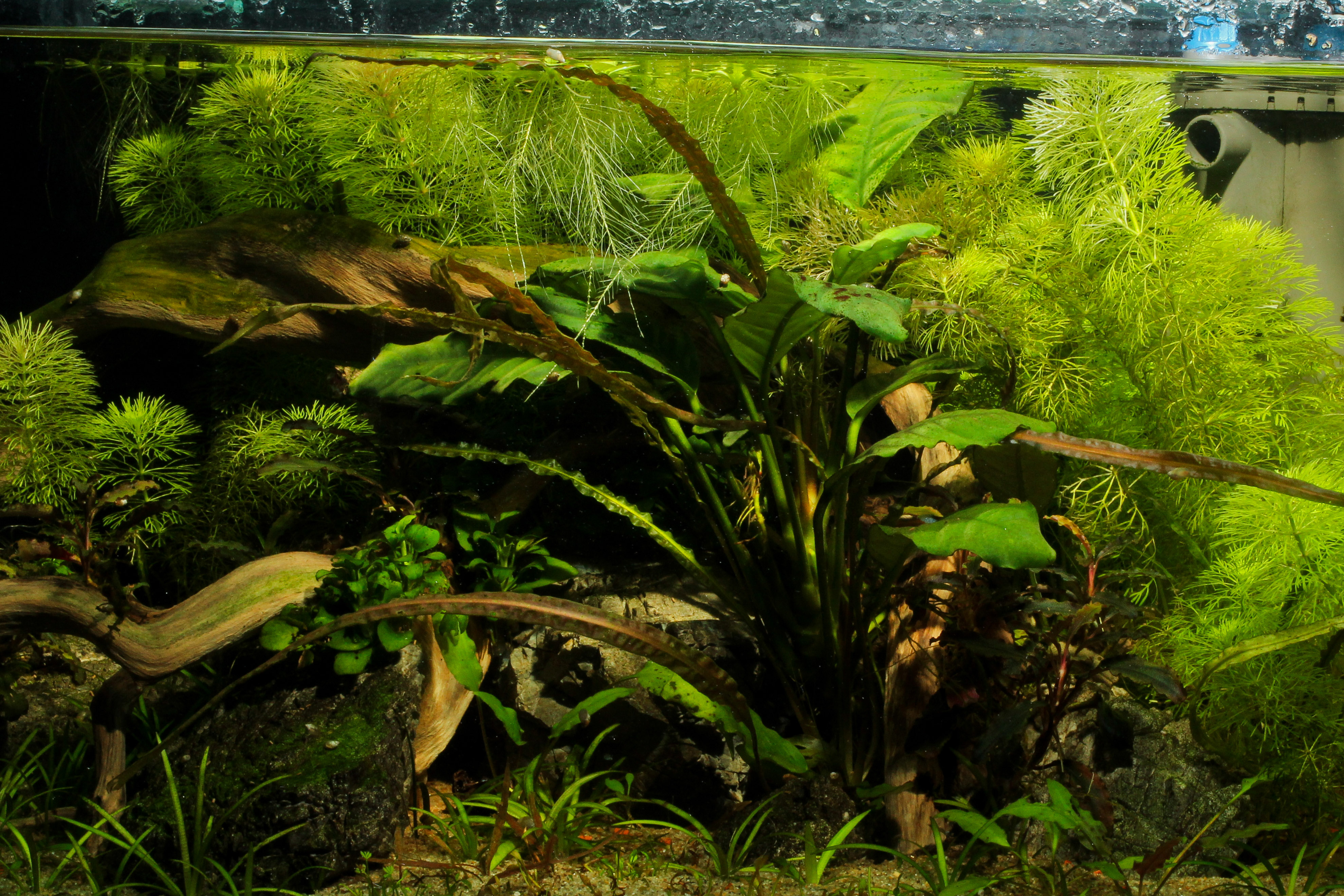
Planting the background with a fast growing stem like Limnophila can help outcompete algae - Photo by Alex Bell
Fertilisers Are Key
Your nitrate reading being below 10ppm might sound positive, but aquarium plants still need a consistent supply of nutrients. Nitrogen is the second most important plant nutrient after carbon.
Because you have pothos and spider plants growing out of the tank, they may be removing nitrate very efficiently, potentially leaving too little available for the submerged plants. This can slow plant growth and encourage algae. Switching to a complete liquid fertiliser containing nitrogen and phosphorus, such as Tropica Specialised Nutrition, should help support healthier plant growth.
Related article: 5 Great Houseplants to Grow Above your Aquarium.
Other Consideration To Battle Algae
It’s also worth considering feeding. Dwarf puffers often require meaty frozen or live foods, which can be messy and increase organic waste if uneaten food isn’t removed promptly. Keeping feeding controlled can help reduce algae fuel.

Regarding lighting, planted aquariums usually respond best to consistency. Siesta breaks are sometimes used in high-tech CO2 injected tanks but are largely anecdotal in low-tech set-ups. I would recommend running a steady photoperiod with no break, to encourage stable plant growth.
Related article: Floating plants: benefits, care tips and our top species.
Simple Steps To Help Your Tank Recover From Algae
- Continue manually removing algae during water changes.
- Trim or remove leaves that are heavily affected.
- Add generous amounts of fast-growing stem plants.
- Begin dosing a complete fertiliser containing nitrogen and phosphorus.
- Switch to a consistent 6-8-hour lighting period.
- Feed puffers carefully and remove uneaten food.
- Maintain regular water changes, especially after undertaking any in-tank maintenance.
You should start to see gradual improvement over several weeks as plant growth strengthens and begins to outcompete the algae.
Related article: An Introduction to Aquascaping.

Finally, stick with it. Nearly every successful planted aquarium goes through this phase, and with a few adjustments your tank can absolutely become the lush display you’re aiming for. Patience is key.