


Stem plants grow fast, outcompete algae and look great. However, not all of them are easy to grow. Here are five of the best options for a beginner aquascaper.
So, you are just starting your journey in aquascaping and want to create a lush underwater garden. But do you know which plants will be suitable for your tropical aquarium? We are here to help with 5 of the best live aquarium plants that look great and grow in most aquariums.
Most beginner friendly plant lists will feature Anubias, Java ferns, aquarium mosses, floating plants and Cryptocoyrnes. This list is different; we will be focusing on the wonderful aquarium stem plants.
Limnophila sessilflora
Light: Can grow in dimly lit tanks but will have a more leggy appearance.
CO2: Not required, this species will grow quickly enough without it.
Height: Will grow tall, easily reaching 50cm if allowed to do so. Keep trimming and replanting cuttings to get a compact, bushy appearance.
Position: An easy to grow background plant.
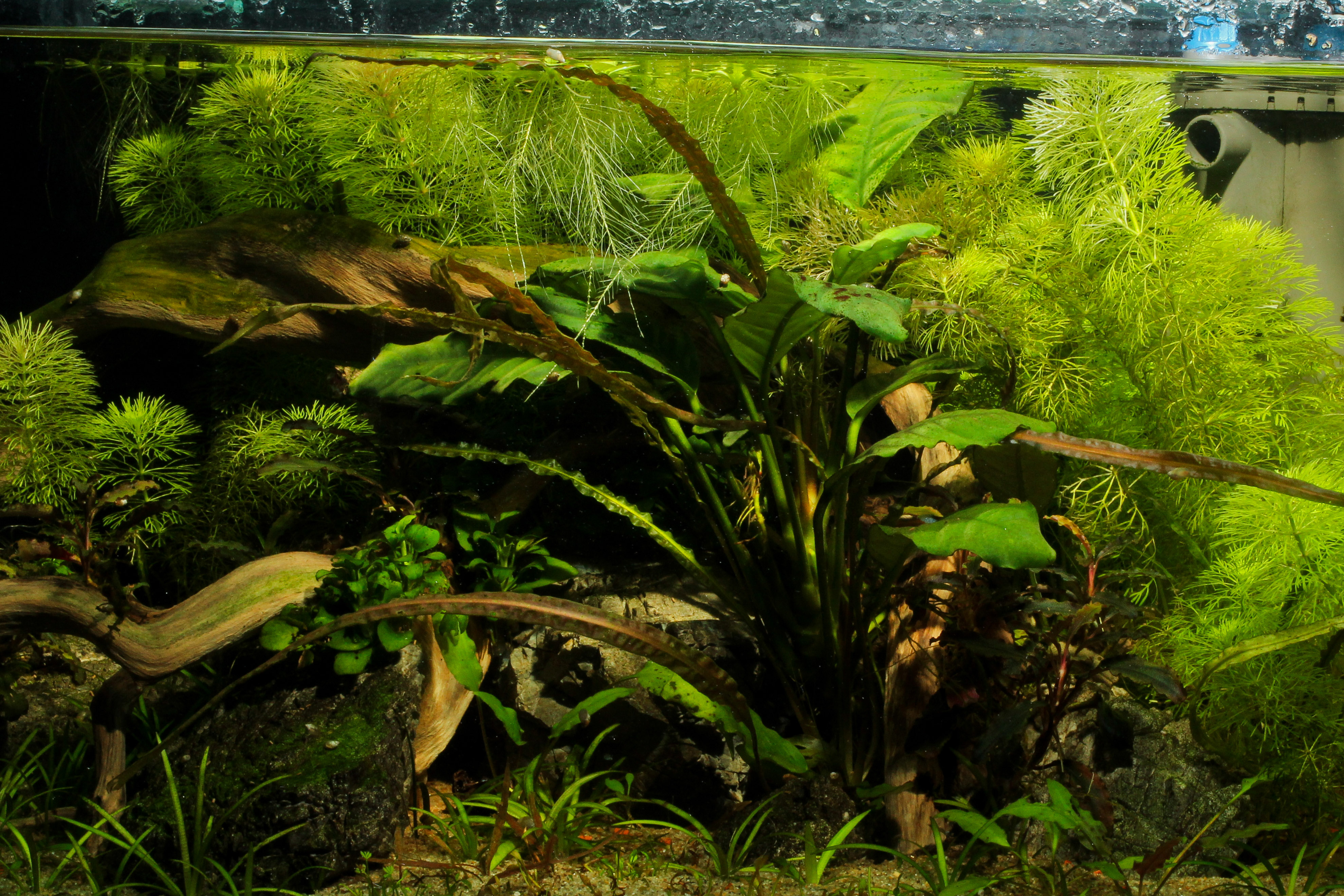
This beautiful, light green, species is an undemanding plant. It thrives in low tech set ups, but with higher light the space between each set of leaves becomes shorter.
The small delicate leaves somewhat resemble that of Cabomba, making this species a great, and easier, alternative. L. sessilflora originates from Asia, so can look at home in a biotope inspired aquarium based on this region. The thick foliage can also help to provide shelter for shy species, including the likes of wild Bettas.
Once settled, this is a fast growing plant, so routine trimming of this stem plant is essential. This species can send out runners to grow new plants around the aquarium. You can also propagate any cuttings you take by planting them into the aquarium substrate.
You do not need to inject CO2 into the aquarium for this species, but if you do you will get more plant growth. This species of Limnophila will grow in standard aquarium sand. However, a nutrient rich plant substrate can be beneficial.

Photo by Tropica Aquarium Plants
Ludwigia palustris 'Super Red'
Light: Will go a lovely red shade even under moderate lighting.
CO2: Does not require CO2 although you can enhance the growth by using it.
Height: Usually stays compact but without maintenance it can grow up to 50cm.
Position: A good midground species for larger aquascapes. You can also use it at the back in nano tanks.
We wanted to ensure that we added a pop of colour to this list. Many lists of beginner plants are always green but we know that a pop of red can look great in an aquascape.
This species of Ludwigia requires moderate to high levels of light to get those dark red leaves. Adding carbon dioxide helps speed up the growth rate, and this plant can grow pretty fast. However, it will do well without CO2 as long as it has a nutrient rich substrate and the lighting it requires.
This plant grows side shoots regularly, giving it a natural bushy appearance. This can be enhance with regular trimming using aquascaping scissors. This makes this plant perfect for the midground of larger aquascapes, or the background of nano tanks.
Use this North American plant alongside some of the bright green species in the list to add contrast to your fish tank. Take inspiration from dutch style aquascapes, as these use varying colours and textures of leaves to great effect.

Hygrophila polysperma
Light: Will grow well in low light conditions, although brighter lights will give larger leaves.
CO2: This plant does not require additional CO2.
Height: Up to 60cm, and will happily grow up and out of the water.
Position: A perfect, bright green background plant.
Another bright green stem plant from Asia, but Hygrophila polysperma has far wider leaves than the Limnophila. This plant can grow to 50cm or more making it ideal for the background of your scape. In shallower tanks, it does just as well growing out of the water and can look effective in a pond style aquarium.
This is truly a low tech plant and will do well without the addition of CO2. As always, the use of a nutrient rich substrate will help. The leaves can change in appearance depending on the light intensity, becoming smaller in lower light.
Many aquatic plants prefer soft water, yet this species will happily thrive in any conditions. This makes it a good option to provide cover in tanks full of livebearers where they appreciate harder water. Any fry will be able to hide amongst the stems and avoid predation.
Related article: Understanding water hardness.

Rotala rotundifolia
Light: Moderate lighting, although high light will give you the best colours.
CO2: Not required, but this plant will grow faster with CO2 injection.
Height: Can grow as tall as 50cm, but the lower sections of the stems will typically look a little leggy. Hide them behind bushy midground plants or keep trimmed to a maximum of 30cm.
Position: Great as a background plant. Although, in taller aquariums you can maintain it at a good height for the midground too.
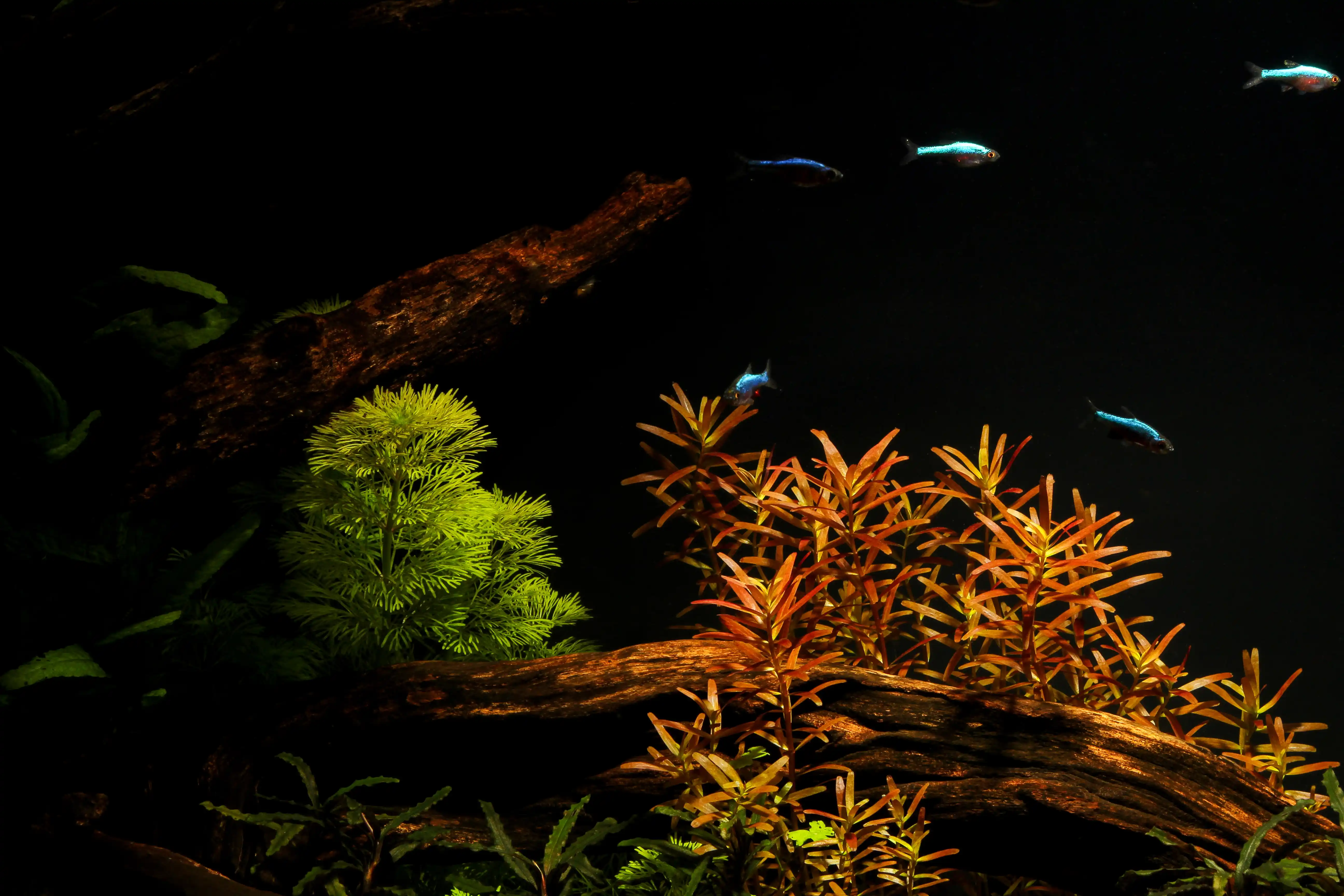
Another classic stem plant for an aquarium which has been around for years. Now there are many variants available in the hobby, with the 'Blood Red' being an incredibly attractive option. You can see the 'Blood Red' Rotala in our Editor's aquascape built by George Farmer and in the image above.
This is one of the easiest Rotala to grow. Provide a good supply of both macro and micro nutrients and moderate light and it should thrive in your aquarium.
Remember that you will likely receive this plant in the terrestrial form, with rounded leaves. It can take time for the plant to adapt to life underwater. Once the transition is complete, the leaves will become elongated, and the plant will begin to grow far more quickly.
You can purchase lab grown plants in small pots which generally adapt to life underwater quicker. Generally, you will also get more plants for your money and the aquarium will look full of life sooner.

Hydrocotyle tripartita
Light: Low to medium, although grows more compact with higher lighting.
CO2: Beneficial but not essential, in fact it grows so fast with CO2 it can become a weed.
Height: Up to 10cm, regular pruning is essential to keep it in check and looking good.
Position: Foreground and creeping over hardscape in high tech tanks. Place in the mid ground in lower tech tanks as the plant will naturally grow upwards.
Some sites may list this species as having a moderate difficulty, but don't let that put you off. This is a beautiful and unique looking plant that you can utilise in a variety of ways.
We have had good success with this plant under moderate lighting both with and without CO2. In lower light conditions the plant grows upwards at a diagonal angle. You can use this to your advantage as it can appear to creep up hardscape.
Equally, in high tech tanks, you can place this plant amongst the hardscape and allow it to tumble down. This can actually slow the growth rate slightly as the roots aren't in the nutrient rich substrate. This reduces how often you need to trim it.
In high tech aquariums you can encourage it to form a carpet by gently compressing it during maintenance. In fact, it grows so fast in high tech set ups it can be frustrating how much maintenance it requires!
Allow the plant to grow wild and it will tangle its way through the other plants in the aquascape. It can give a natural, jungle like appearance to the aquarium as the plants blend. It looks great creeping through the red stems of Rotala, for example.
This plant is fairly unfussy with regards to water chemistry.
Have you got an aquascape you want to show off? Submit it here for your chance to feature in a future issue of Practical Fishkeeping magazine.