


Corydoras catfish are among the best aquarium fish for beginners, and many species are ideal for community aquariums. Here's our top 5 species to choose, plus an overview of general care required for these catfish.
Corydoras catfish are among the most popular bottom-dwelling freshwater fish in the aquarium hobby. We all love these peaceful fish for their playful behaviour, hardy nature, and compatibility for community aquariums.
In this guide we pick our five best Corydoras species for home aquariums, including beginner-friendly and nano-tank options. Plus, at the end we will provide an overview of the care requirements for Corydoras catfish in general.
Related article: Top 10 small fish for nano aquariums.

Photo by Alex Bell
What are Corydoras catfish?
What we in the hobby call cory catfish are actually not all members of the genus Corydoras. A revision of this genus saw several old genera resurrected changing the names of many of the Corydoradinae catfish. You can read more about this scientific publication and the new accepted genera here.
We will use the current scientific names in this feature. However, if you use their old "Corydoras" names when shopping at your local store, you'll still get the right fish. Indeed, many of the books, websites and even experienced fishkeepers will still be using their old names as it takes time for the hobby to adjust.
5 Best Corydoras Species for Beginners
Now it is time to highlight our top picks of the Corydoras species commonly available. Below are five of the best Corydoras catfish for beginners, chosen for their hardiness, availability and suitability for community aquariums and various tank sizes.
Is your favourite species not included in the list below? Well, submit a photo of your Corydoras tank to feature in our reader's tanks pages and tell us why you think your species deserves a mention. Email your images to [email protected] or submit them via our website.
Related article: 4 unusual catfish for a community aquarium.
Peppered Corydoras (Hoplisoma paleatum)
Formerly known as Corydoras paleatus, this species is on sale in most aquarium shops. It has been a feature in the hobby for a long time. A dark mottled pattern featuring a metallic sheen makes this an attractive option, even if not the most colourful.
These are hardy, normally captive bred, fish making them tolerant to a range of water parameters. They even thrive in lower temperatures, making them the perfect bottom feeder for temperate tanks.
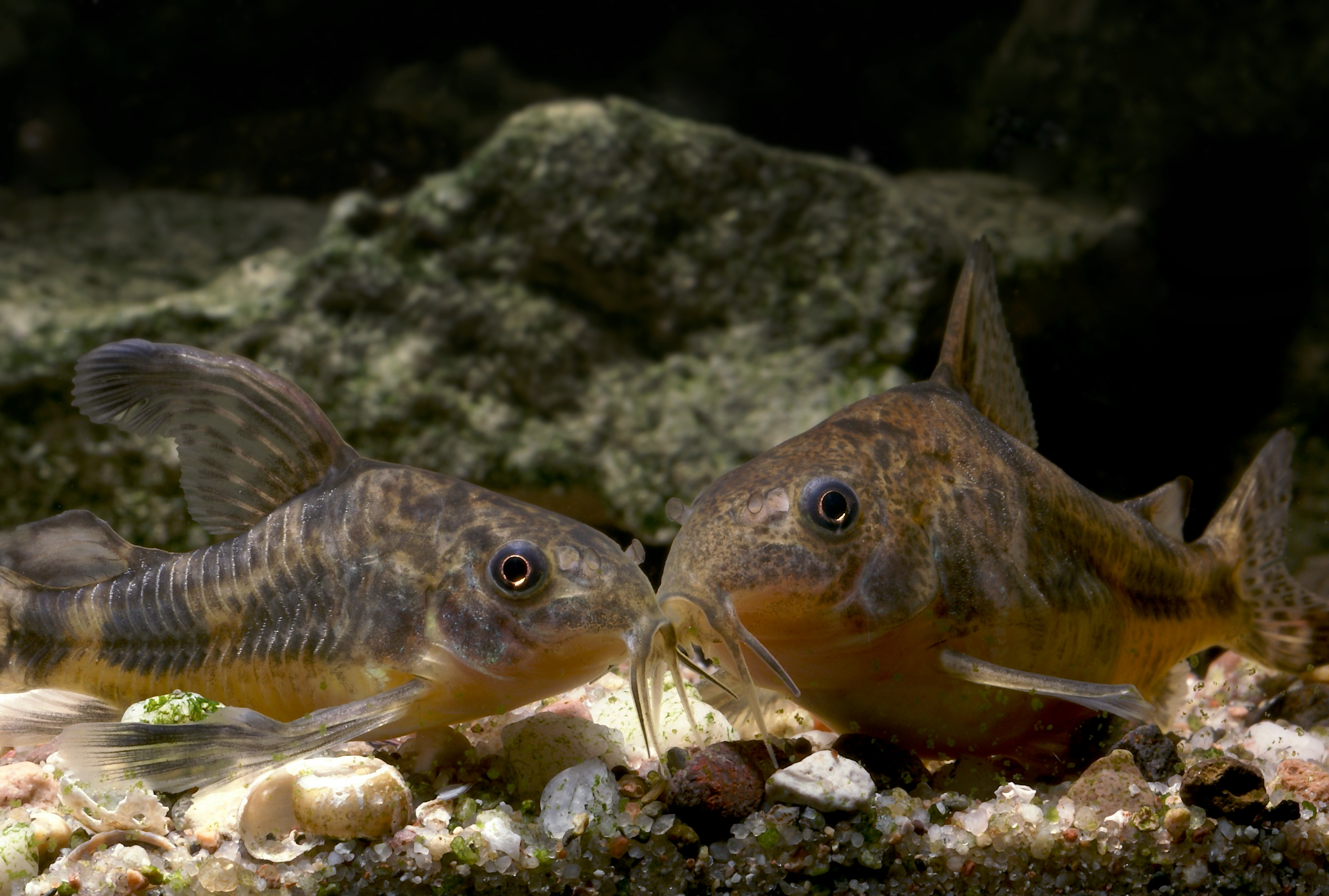
Photo by Shutterstock
Scientific name: Hoplisoma paleatum
Size: Up to 7cm (2.5”).
Origin: Native to southern South America, in Brazil, Argentina, and Uruguay.
Habitat: Found in an array of habitats including small rivers, streams, flooded pools and lakes. Almost always associated with soft substrates like sand and muddy silt.
Tank size: 60x40x30cm (24x16x12”)
Water requirements: Adaptable and hardy, will do well as long as you avoid extremes. A pH between 6 and 8 and a hardness below 20°H will work, although softer and more acidic is best.
Temperature: 15-25°C (59-77°F)
Temperament: Peaceful and gregarious, keep in a group of 6 or more alongside other peaceful fish. Avoid housing with aggressive and territorial tank mates as these catfish tend to not understand other fishes territories.
Feeding: Despite being a bottom feeder, this fish needs its own foods and will not thrive just scavenging on leftovers. Offer frozen foods like bloodworm and Tubifex along with sinking granules and tablets.
Availability & cost: Common and seen in most stores. Prices tend to be around the £3 mark per fish with deals on groups often available for this shoaling fish.
Three-lined corydoras (Hoplisoma trilineatum)
Often mis-sold as julii corydoras (Hoplisoma julii) the fish you are actually seeing is the three lined-corydoras, formerly Corydoras trilineatus. This adorable little catfish displays a dark reticulated pattern on the head, whereas julii are more spotted. They also have three dark stripes on the flanks – hence the common name.

Photo by Shutterstock
Scientific name: Hoplisoma trilineatum
Size: Up to 5.5cm (2.2”)
Origin: Native to South America, occurring in Brazil and Colombia, Peru and even Ecuador.
Habitat: Small tributaries, moving into the flooded forests during the wet season.
Tank size: 45x30x30cm (18x12x12”)
Water requirements: Adaptable and hardy, will do well as long as you avoid extremes. A pH between 6 and 7.5 and a hardness below 15°H will work well.
Temperature: 16-25°C (61-77°F)
Temperament: Peaceful and gregarious, keep in a group of 6 or more alongside other small fish. Avoid housing with aggressive and territorial tank mates.
Feeding: Offer a mix of frozen and live foods like bloodworm and Tubifex along with sinking granules and tablets.
Availability & cost: Common and available in most shops. Prices usually around £4 with deals on groups often available for this shoaling fish.
Panda corydoras (Hoplisoma panda)
A smaller option, although not the smallest, pandas are your go to for more modest community tanks. Reaching just 4cm (1.6"), these small catfish display striking black markings over a cream base which gives their common name.
Formerly Corydoras panda, they originate from the upper Amazon River in Peru. The fish in the trade will be captive bred, however. They are peaceful and sociable and make great community fish doing well alongside small tetras, rasboras and gouramis.

Photo by Shutterstock
Scientific name: Hoplisoma panda
Size: Up to 4.5cm (1.6”)
Origin: Native to Peru, South America.
Habitat: Small tributaries and streams containing clear or tinted waters.
Tank size: 45x30x30cm (18x12x12”)
Water requirements: Adaptable and hardy, will do well as long as you avoid extremes. A pH between 6 and 7.5 and a hardness below 12°H will work well.
Temperature: 21-25°C (70-77°F)
Temperament: Peaceful and gregarious, keep in a group of 6 or more alongside other peaceful fish. Avoid housing with aggressive and territorial tank mates.
Feeding: Offer a mix of frozen and live foods like bloodworm and Tubifex along with sinking granules and tablets.
Availability & cost: Common and available in most shops. Prices usually around £4.50 with deals on groups often available.
Salt and pepper corydoras (Hoplisoma habrosum)
Not to be confused with the chunky peppered cory, this species is one of the dwarf corydoras available. Formerly Corydoras habrosus, these do share the peppered black marking of the larger relative, but remain almost half the size.
The pygmy corydoras (Gastrodermus pygmaeus) would be another suitable candidate. However, given its tendency to swim midwater, we chose the truly benthic dwelling species to feature in this list.

Scientific name: Hoplisoma habrosum
Size: Up to 3.5cm (1.4”)
Origin: Restricted to the upper Orinoco basin in Colombia and Venezuela.
Habitat: Small tributaries in areas of low flow and marginal plants. They move into flooded grasslands and forests as the rivers flood.
Tank size: 45x25x25cm (18x10x10”)
Water requirements: Less hardy than the other species in this list, requiring soft and acidic water to thrive. A pH of 5.5 to 7 and less than 10°H is best.
Temperature: 22-26°C (72-79°F)
Temperament: Peaceful and gregarious, keep in a large group with peaceful and small fish. Their small size makes them vulnerable to larger fish and even the presence of boisterous species may make them shy.
Feeding: Offer a mix of frozen and live foods like bloodworm and Tubifex along with sinking granules and tablets.
Availability & cost: Occasionally available, seems to vary throughout the year. Prices vary considerably depending on source, but you can find them for as little as £4 each.
Sterba's Corydoras (Hoplisoma sterbai)
This species made the list ahead of the bronze cory (Osteogaster aenea) thanks to their tolerance of warmer waters. This is the common option to live alongside fish that require warmer water conditions like discus and blue rams.
They have delightful orange pectoral fins, which you may not notice at first, but will fall in love with when you do.

Photo by Shutterstock
Scientific name: Hoplisoma sterbai
Size: Up to 7cm (2.7”)
Origin: Occurs in the Rio Guaporé, Brazil. Another population is present in Bolivia, known as Hoplisoma sterbai 'Bolivia'
Habitat: Found in small streams and pools moving into forests when they flood.
Tank size: 60x40x30cm (24x16x12”)
Water requirements: Adaptable in captivity, tolerating a Ph between 6 and 7.5 and up to 18°H.
Temperature: 24-29°C (75-84°F)
Temperament: Peaceful and gregarious, keep in a group of 6 . Avoid housing with overly aggressive and territorial tank mates.
Feeding: Offer a mix of frozen and live foods like bloodworm and Tubifex along with sinking granules and tablets.
Availability & cost: Often available and prices vary depending on size. Small individuals cost between £5-8 each, typically.
Related article: The legend of the Cory.
Corydoras Care Guide
Once you see a species you like (there's many others available too), you must ensure you can care for them before buying a group. Each species will vary slightly but here's a basic overview of their care requirements.

Photo by Tai Strietman
Tank Setup for Corydoras
All corys must have a soft substrate to dig in to allow them to display their natural behaviours. Sharp gravels can damage their sensitive barbels causing erosion and sometimes infection. Rounded, smooth gravel is safer, but it prevents them from properly digging in search of food.
Corydoras prefer their aquarium to feature plenty of décor. The presence of live plants, driftwoods, rocks and botanicals all help them feel safe and secure. These create shaded spots that the fish love to hang out in. This can be further improved by using dim lighting or floating plants to help your fish feel even more secure.
While corydoras are able to gulp atmospheric air, this does not mean you can neglect the tank. A good filter is a must have to ensure adequate oxygenation and water quality to help your fish thrive. Ensure the filter is mature before adding the fish, as they do not do well in immature aquariums.
While some of the above species are tolerant to lower temperatures, it is still worth having a heater. Install it and set the thermostat to their lower temperature range as a minimum to ensure it doesn't drop too low during cold spells.
Check the specific requirements for your species. As we have just seen, the five species above all grow to different sizes, requiring different size aquariums. They may also require different water parameters. Ensure your fish tank matches the needs of the species of fish you want to buy before you buy them.
Cory Catfish Tank Mates and Group Size
Boisterous tank mates are a no-go, but peaceful shoaling dither fish can help these sometimes shy catfish come out more. Dwarf cichlids, like Apistogramma, can work but trouble may occur if they start breeding. Corydoras ignore territorial boundaries and may wander into the territory of breeding fish. This can cause problems if the other fish are guarding eggs or fry.

Small characins like these pencilfish make great tank mates - Photo by Alex Bell
Many of the Corydoras are fairly small, meaning larger fish may view them as prey. However, Corydoras have spines in their fins which they can stick out and wound fish, so this combination won't be good for either the Corydoras or larger fish. Therefore, you must avoid keeping anything with a mouth large enough to consume the Corydoras.
Corydoras must be in a group, six is the minimum but the bigger the better. In the wild they can move around in shoals that measure in the hundreds. Make sure your stocking levels will allow a large enough group to be added without the tank becoming overstocked.

Photo by shutterstock
What do Corydoras eat? Feeding Guide
These are not just clean-up crew that will hoover up fish waste and algae. They require targeted feeding and add to the bioload of your aquarium. If you only want them for 'cleaning purposes' think again.
Corydoras naturally rummage in the substrate for insect larvae and worms, but they will consume some plant material too. Sinking pellets, frozen foods, live foods, catfish tablets and alike all make great options for these fish.
Feed them regularly, and mix up the type of food you are giving them on a day to day basis. You can inject foods like defrosted bloodworm into the sand for them to search around for giving them some enrichment.
FAQ
Are Corydoras good for beginners?
Yes, most of the commonly seen species are great options for beginners. They are hardy, easy to care for if you follow the above advice, plus they are great fun to watch in the aquarium. Some of the rarer, more expensive species can be more sensitive, so it is best to avoid these until you gain some experience.
Are Corydoras a good breeding project?
Absolutely, Corydoras make interesting breeding projects with many species being fairly easy to breed. Plus, their small size means you don't need huge aquariums to rear the fry. Females carry their eggs in their pelvic fins before laying them on the glass and amongst the plants and hardscape. You can often move these eggs into a separate tank for hatching as the other fishes will likely consume the eggs and fry.
Females will be larger than males and their abdomen will become more rounded with eggs as they mature. Trigger spawning by performing a cooler water change, simulating rainfall. Males will chase the female around the tank, before forming a T like shape as they pass the sperm over to the female.
Once the fry have used up their yolk sac they can be fed on small live foods like rotifers, microworms and baby brine shrimp. Fine powered prepared foods can also work well, just keep an eye on uneaten food and water quality.
Related article: Breeding: Kittens without cat-astrophies.
Will Corydoras clean my Tank?
Corydoras will eat some left over fish food, reducing the amount of waste sitting on the base of the tank. However, they also need direct feeding which adds to the volume of food entering the tank, so this kind of balances out.
They absolutely will not eat fish waste that accumulates on the sand though; this will still need syphoning out by the aquarist. Nor will they eat algae, and as such, Corydoras should never be viewed as a 'cleaner fish'.
Related article: The 10 best algae eaters for tropical tanks.
Do Corydoras need sand?
Corydoras prefer soft sand substrates. Sand allows them to dig and sift through the substrate for food while protecting their sensitive barbels. Fine, smooth gravel can work, but sharp gravel should always be avoided.
Aquarium soil substrates that support plant growth are rounded and smooth and will also be safe. However, the digging behaviour of Corydoras can cause these to break down into a fine powder more quickly.