


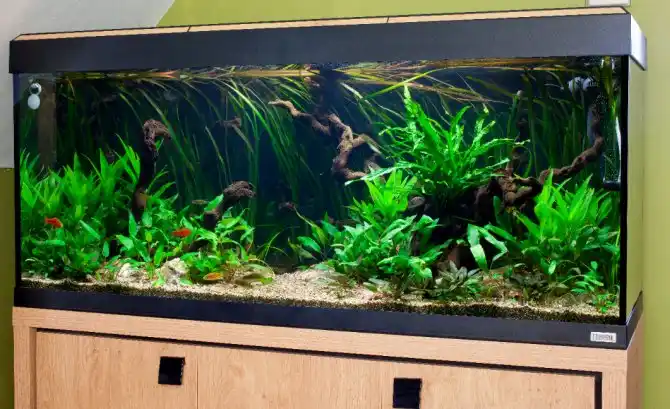
Jeremy Gay sets out to confuse us all by creating the grand illusion of a tropical tank set-up but on a leaner, greener budget by going for temperate species!
How do I make fishkeeping cheaper and greener?
I’m only too aware of the everyday issues facing the hobbyist, as they face me too. Energy bills only ever go up, as does car fuel, so running a tank is not only more expensive, travelling to buy the fish and tank can be more expensive too.
Fishkeeping isn’t always seen as the greenest of hobbies either. Fish are flown around the world for us and we strive to create the conditions of a coral reef or the Amazon in our colder, more northerly climes. Want to know more about where our fish come from, well Ruth McDonald explains all as she traces the journey of our pet fish!
Marine tanks can bug me too when I can’t reuse that water on my garden or pot plants!
As well as saving money, I want to try and be greener and save valuable wattage wherever possible. Enter the temperate freshwater tank…
While pondering my next set-up, I was already keeping variatus platies, rosy barbs and Florida flagfish in another tank, so was unintentionally already keeping some very cool water tolerant fish.
Perfect, I thought, I can move them to this new tank and make the whole thing a good-looking temperate aquarium, running at room temperature — though one that would appear to many onlookers to be a tropical one.
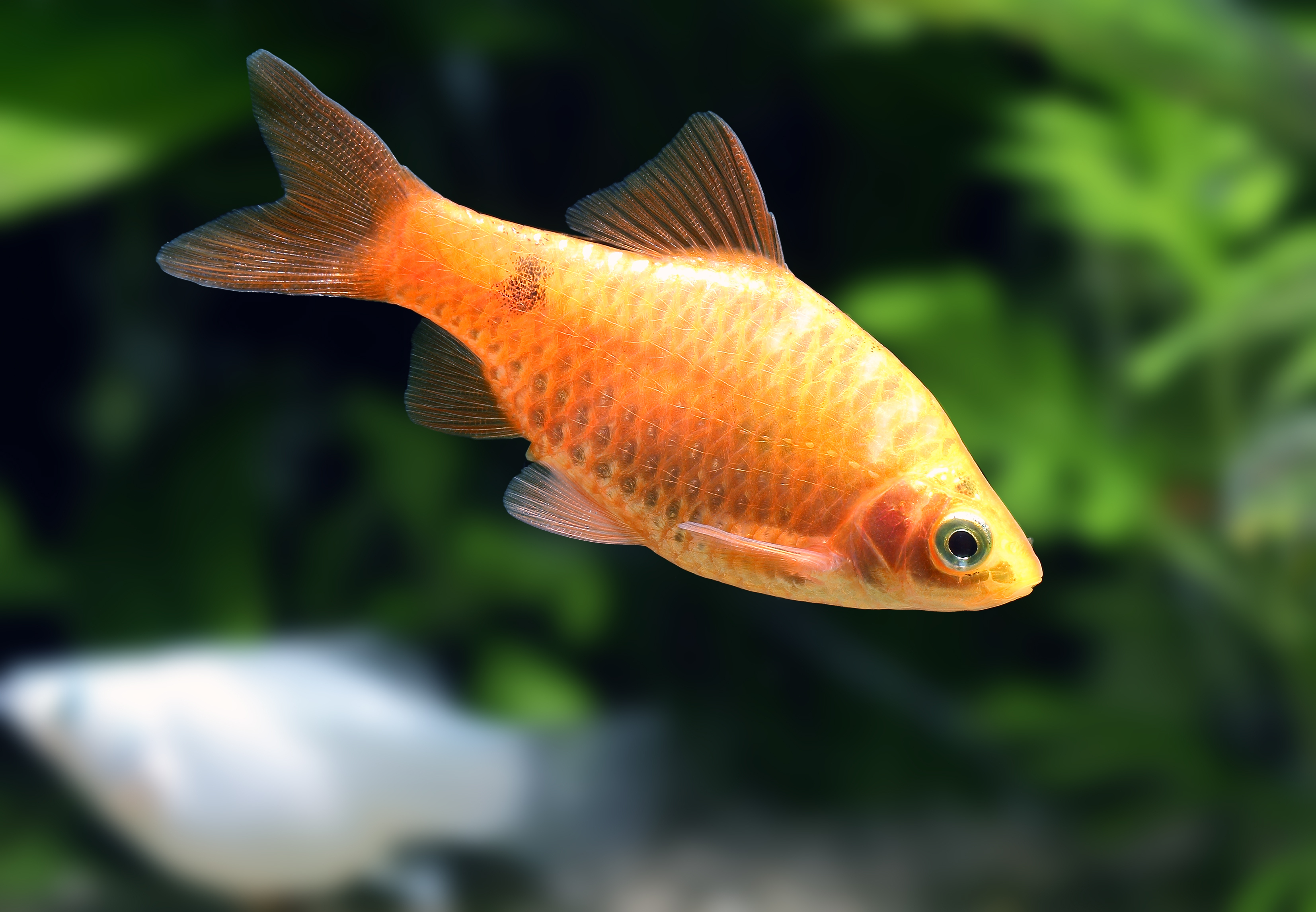
Rosy barb, photo by Shutterstock
Avoiding the usual clichés of temperate tanks
There are ways to theme your tank so that others get an idea of what you are trying to create. For Amazon you’d go wood and leaves, Asian a bit of bamboo maybe, cold water, use rounded stones and Elodea. Add some white clouds to your Elodea and there’s your easily recognisable stereotype. That’s not me though…
Instead, I wanted to trick people into believing it was a normal tropical fish tank, while secretly enjoying the illusion and saving money at the same time. People don’t expect to see platies in cool water tanks, so my exotic looking red calico hi-fin variatus platy was a good start!
I thought I’d leave out the white cloud mountain minnows, instead I would really confuse people by adding peppered corydoras (Hoplisoma paleatum) and tetras in the form of some Buenos Aires (Psalidodon anisitsi). I’ve never known an aquatic plant fail to tolerate cooler temperatures, so I went for Vallisneria spp., crypts, Java fern and Hygrophila sp. to finish off my tropical illusion.
Zebra danios can be a bit temperate clichéd as well, but I still wanted some, so went for leopard danios, which, given a cool, roomy 122cm /4’ tank and well-filtered water, are blossoming — as are all the fish. The danios now resemble little brown trout.
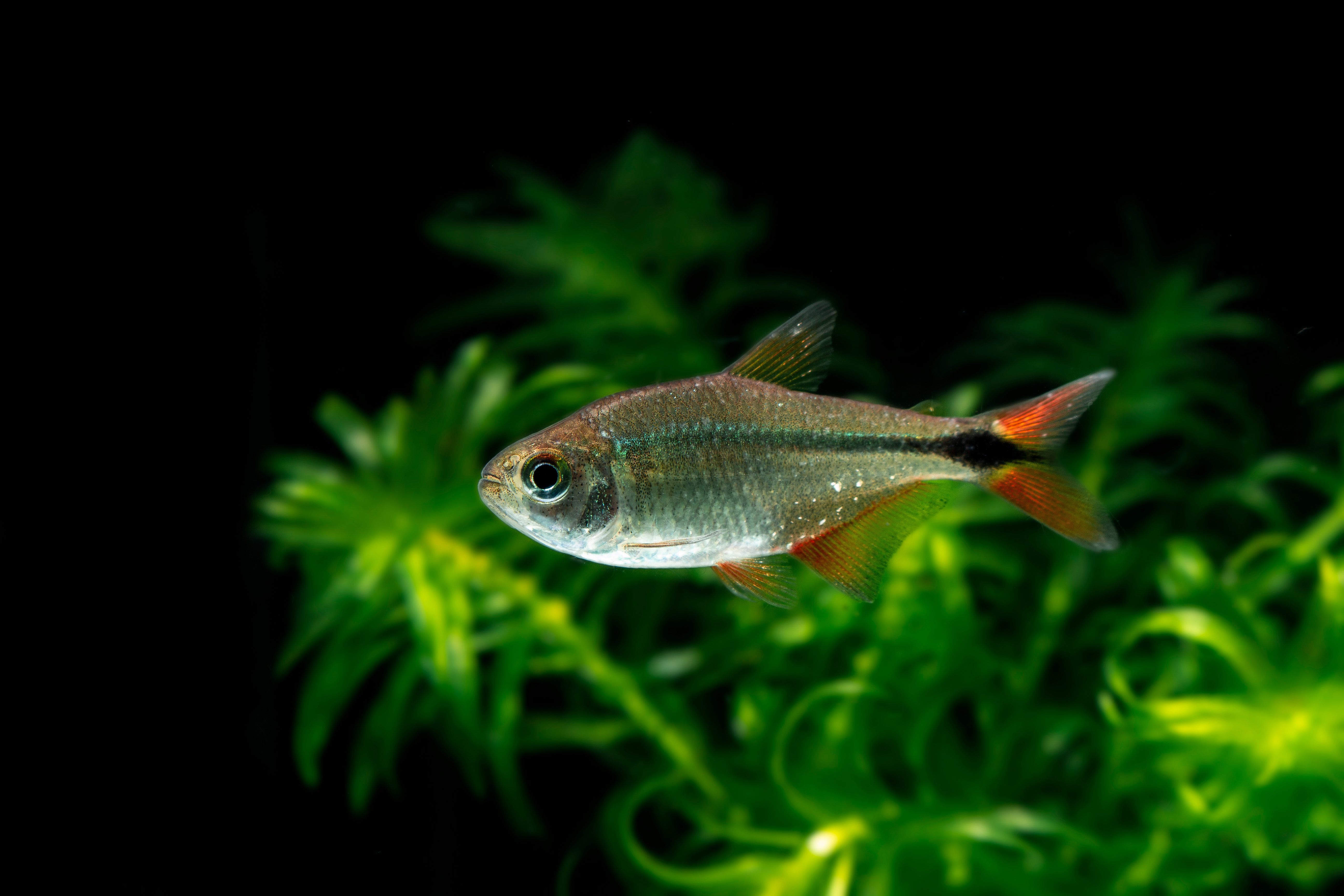
Buenos Aires tetra, Photo by Shutterstock
Acclimating the fish to cooler water
All of the fish I bought for the temperate set-up were on sale as tropicals, and at tropical temperatures of 24-26°C/75-79°F, so be aware when setting up your own temperate tank there are a few steps you need to take.
Place a fish from warm water into noticeably cooler water and it may get stressed and develop whitespot because of the sudden temperate change. The barbs and danios probably wouldn’t, as they are a hardy bunch, but I decided to be cautious.
Instead I set up, matured and heated my tank in the normal way. The heater was pre-set to 24°C/75°F, so that was the temperature I started with. To mature it I launched a three-pronged attack, using a biological filter starter liquid, just adding a few fish and mature filter media from an existing tank. The result was not even a blip of ammonia or nitrite on the test kit results. I stocked it fully within a month or so, but probably could have done it quicker.
Related article: Can I mature a new filter quickly?
I gradually amassed my collection of fish over weeks, holding them all at 24°C/75°F. Then, when everything was mature, and fully stocked I took the temperature down by 1°C. I then waited a few more days and took it down another 1°C, until, over about ten days, I had knocked it down to 20°C/68°F. By the time I took it to 18°C/64°F, the lowest mark on the heater, my room temperature was there or thereabouts anyway and the heater was effectively off.
So were the fish bothered by the temperature change? The rosy barbs are still in colour and spawning, the flagfish are still growing and spawning, there’s no change in the platy, the danios are even better than before and spawning, and the peppered corydoras are growing and spawning.
The Buenos Aires tetras were interesting. They were the last to go in and made me feel especially good as they were in a 60cm/2’ shop tank for many months beforehand. Liberating them to my four footer meant they had much more swimming room and, for once, this very active species could exercise properly.
If you’re thinking of getting any of these tetras, they really need my size of tank to be at their best. My fish have improved in condition too, with a lovely mother of pearl sheen developing all over their bodies. They’re not spawning yet, but anything is possible...
Now the fish are happy at their optimum temperature, which also happens to be my optimum temperature, and it’s costing me nothing in heating bills. If it goes up in summer — fine. Down a bit in winter — no bother.
Is native coldwater the greener and even better option? I don’t think so. Some of the first fish I kept were native minnows and stone loach from the river near where I lived. Although they should seem the most eco-friendly fish you could keep, modern room temperatures and heatwaves are far too high for them, and to properly keep UK natives in the home aquarium I would always use a chiller. These cost a lot to buy and run, so the best species for indoor UK temperatures are those I’ve used and a few others I mention later!

What tank to use for a temperate aquarium?
I’m using the Fluval Roma 240 for this aquarium. At the time of creating this aquarium the tank is supplied with twin 40w T8 lighting, Fluval 306 external filter, 300w ‘M’ series heater, food, water conditioners, thermometer and a care guide. The newer Roma models come with bluetooth LED lighting, the updated 307 filter and a new look cabinet!
I chose this tank because from experience, most temperate tanks are small. Having bought them as nano tanks for some goldfish, owners are correctly talked out of stocking goldfish and instead opt for white cloud mountain minnows. There’s a time and place for nanos, but they can be restrictive and I wanted a larger tank where my fish could swim as much as they like, especially with active species like mine.

This tank is drilled in the base, so the filter inlet and outlet can be connected up through the base of the tank into the cabinet, instead of trailing over the back as normal. This means the tank can be pushed right up against a wall and, as soon as you fill it with water, the filter is primed.
The new model of this tank and cabinet can be purchased from around £650 which I reckon is pretty good, considering what you get.

How to set up a colder water tank.
When we set up tanks for PFK features a photographer records the step-by-step process. In this case I booked our man, set up and off I went. However, I had just spent the weekend with some of the UK’s top nature aquarium aquascapers, so I started my own version while genetically programmed to create the Japanese nature aquarium style.
Great, but I didn’t want that this time and you can see far better versions in every issue of PFK. I wanted to have my own style, so after paying a king’s ransom to get it professionally photographed I stripped it down and started again.
For version two I used vallis along the length of the back, Java fern on wood and some Hygrophila and crypts around the fern.
I still didn’t like it though, so when plant expert George Farmer next came around with some spare greenery we did version three. It went quite jungly, only with lots of crypts, and I didn’t like that either, so, driving my other half mad, I got the floor wet once more and redid it. I liked version four!
I used Samoa sand coarse from Unipac, some Unipac rocks and some old vine wood. I re-used this wood because I like it and because the whole aim of the exercise was to save money. Underneath the course sand was Flora Base planting substrate, with Hagen’s Fluval Pressurised CO2 kit 88g, and Fluval Plant Gro liquid fertiliser.
I changed the supplied Aqua Glo and Power Glo T8 light tubes for more natural looking Life Glo. I invested sensibly in plant gear because, knowing it would be featured in the magazine, I really wanted healthy plants and not loads of algae! These days there are many LED light units that are great for plant growth and use less energy than the old T8 or T5 bulbs. Many of these units can be retrofitted into the lids of these aquariums like the Fluval plant range.
After being inspired by experts and reading countless articles, it’s clear to me that if you want to grow plants you have to do it properly by providing the right substrate, light, fertilisers and carbon source, even in temperate waters!
The verdict
So did I trick anyone into assuming it was a tropical fish tank? Yep, and it was another fishkeeper too! He keeps Malawi cichlids and regularly seeks advice.
Firstly he loved the layout, secondly he couldn’t believe it when we told him it was unheated. He’s now badgering me for some of my plants...
Top Tip
If you live in a cold house over the winter you could leave your heater plugged in and on its lowest setting, so if room temperatures drop below that the heater will kick in and provide some security for your fish.
Perfect fish for temperate aquariums
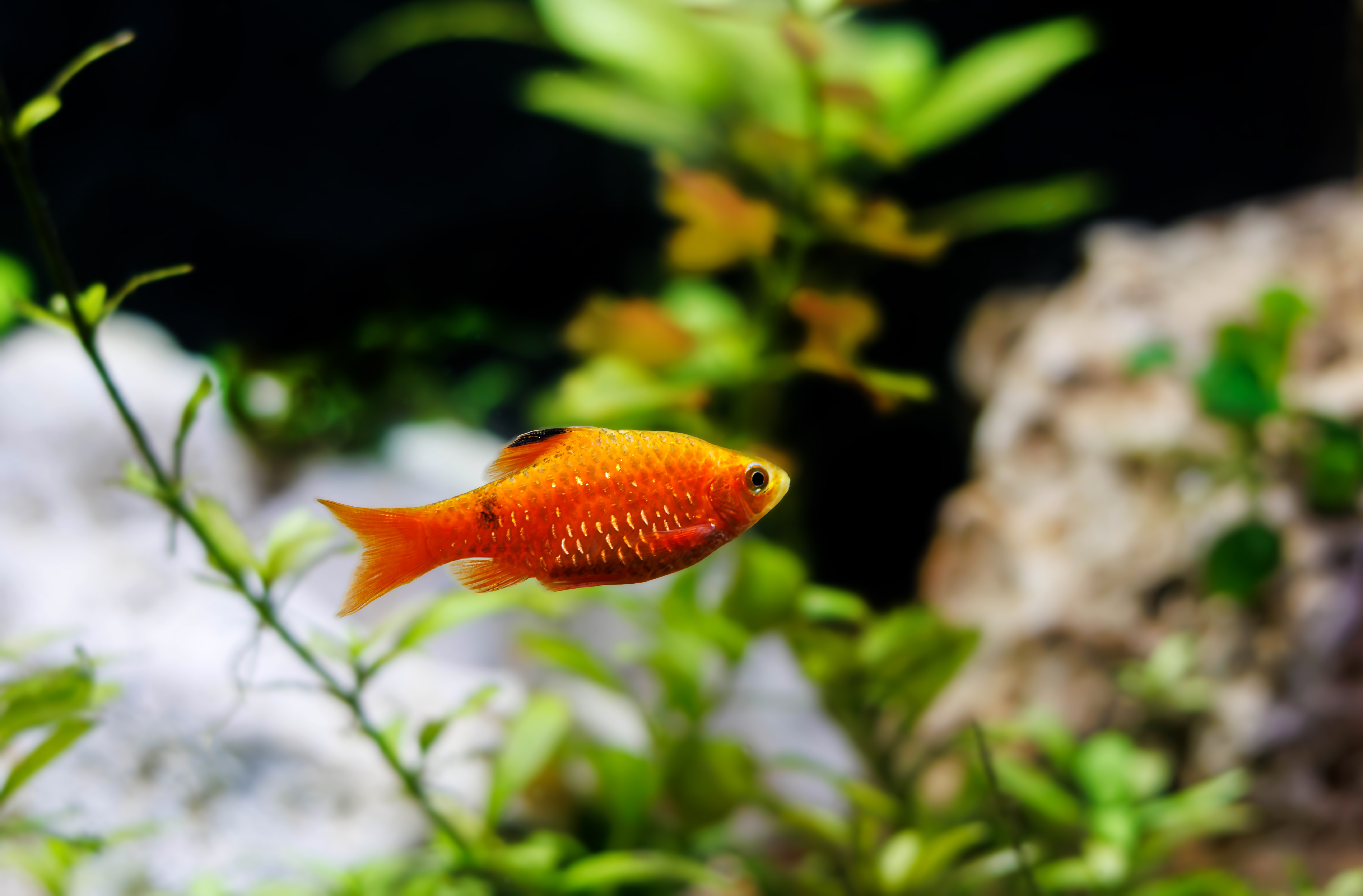
Photo by Shutterstock
Name: Rosy barb (Pethia conchonius)
Size: 5cm/2".
Minimum tank size: 90cm/3’.
Temperature and pH: 18-22°C/64-72°F, pH 6-8.
Notes: A much better choice than common goldfish for aquaria, yet similar in shape and colour. They’re easy to keep and breed.
Price: £3.50.
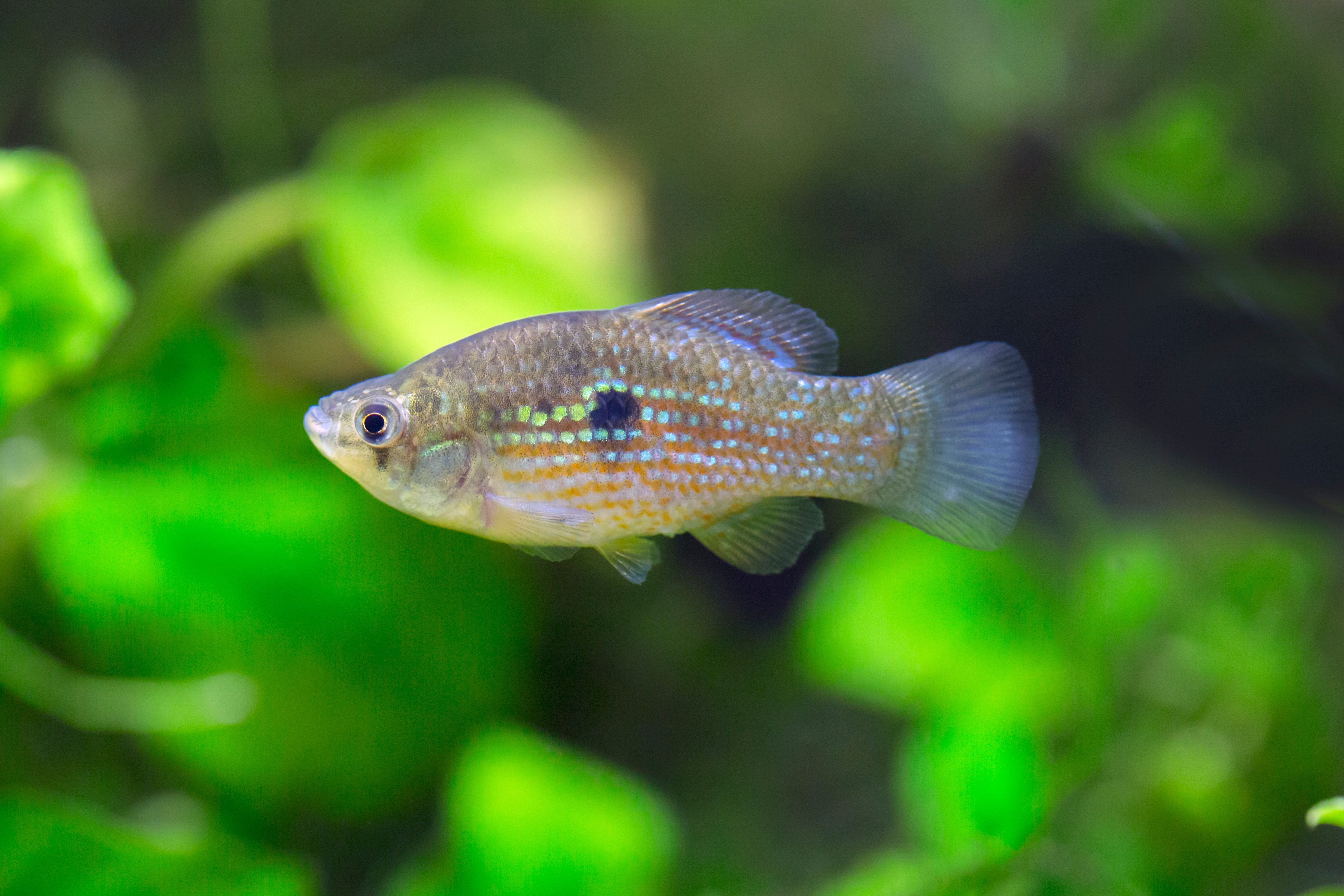
Photo by Shutterstock
Name: Florida flagfish (Jordanella floridae).
Size: 5cm/2”.
Minimum tank size: 75cm/30”.
Temperature and pH: 18-25°C/, pH 6-8.
Notes: Not everyone can see the beauty in this fish, but I can. Have a go at breeding this temperate killifish species, but it may nip fins when doing so.
Price: £4.50.
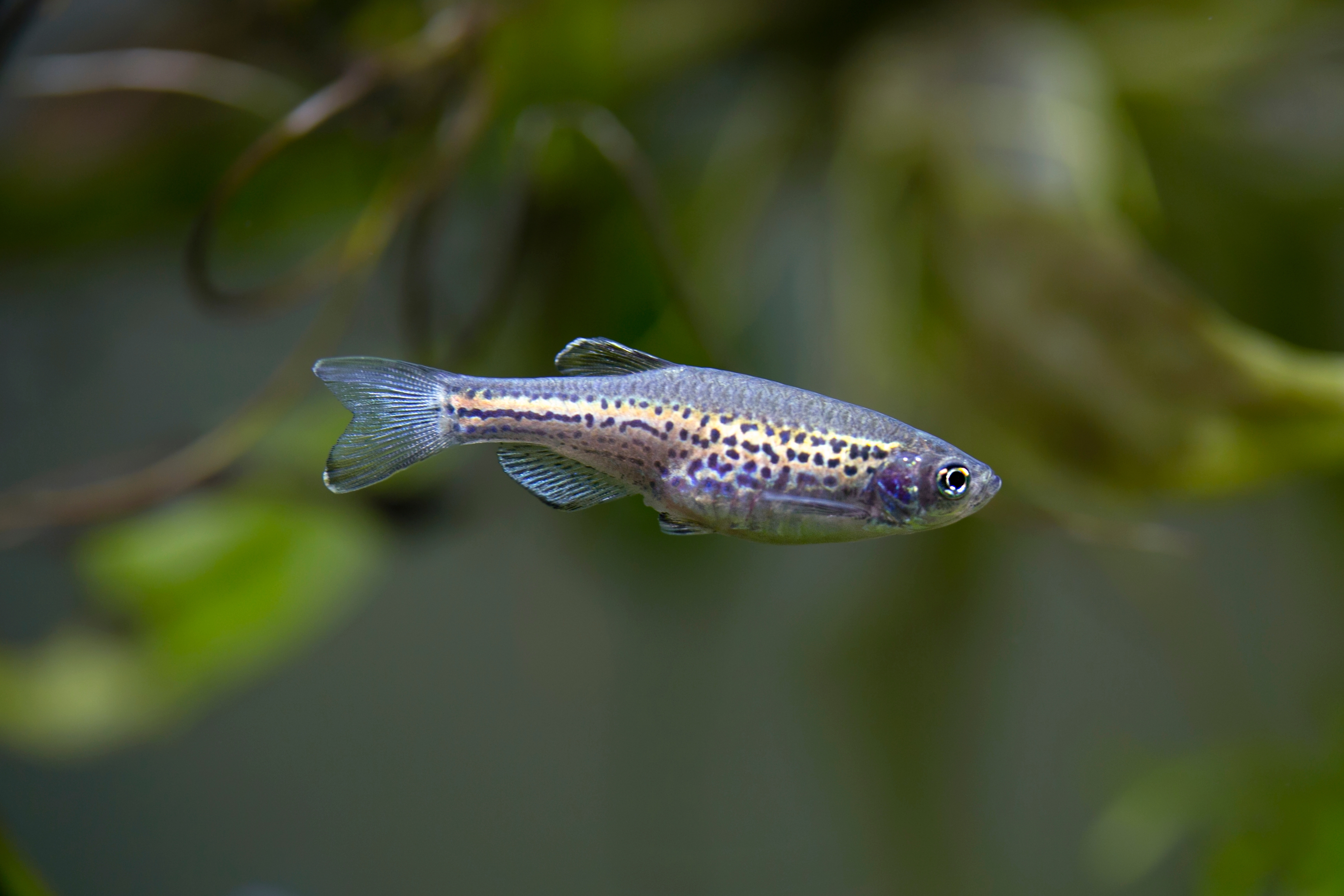
Name: Leopard danio (Danio rerio, var.)
Size: 4cm/1.6”.
Minimum tank size: 60cm/2’.
Temperature and pH: 18-27°C/64-81°F, pH 6-8.
Notes: Many abuse this perfect fish by placing them in new nitrite-filled tanks. These will thrive in large mature homes.
Price: £2.50.

Photo by shutterstock
Name: Buenos Aires tetra (Psalidodon anisitsi).
Size: 7.5cm/3”.
Minimum tank size: 120cm/4’.
Temperature and pH: 18-28°C/64-82°F, pH 6-8.
Notes: This shoaling fish needs swimming room. They nipped the growing tips off my Vallisneria, but left other plants alone. It’s one of the few temperate tetras, a smaller option would be the reed tetra, Hyphessobrycon elachys.
Price: £3.
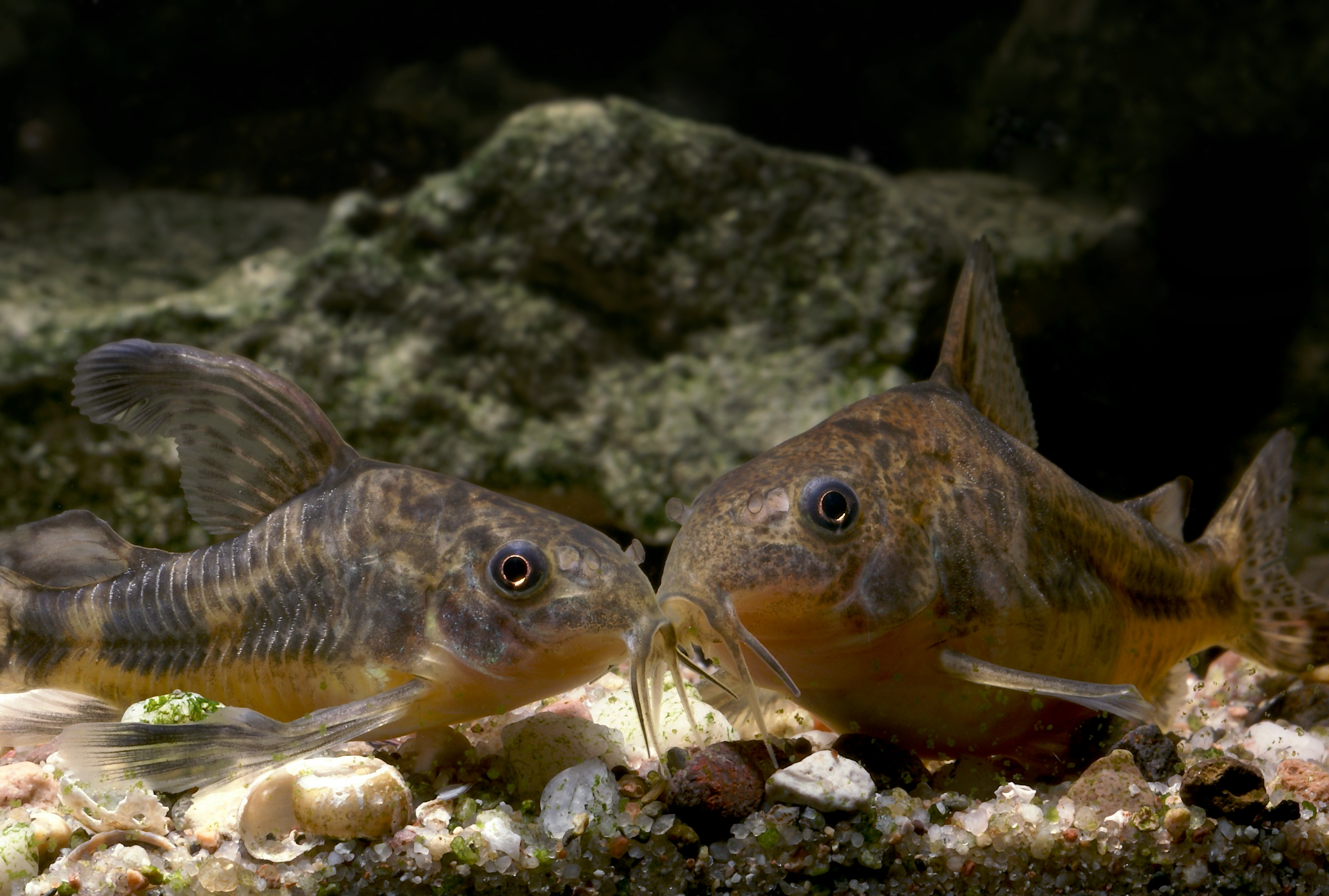
Photo by Shutterstock
Name: Peppered corydoras (Hoplisoma paleatum).
Size: 5cm/2”.
Minimum tank size: 60cm/2’.
Temperature and pH: 18-24°C/64-75°F, pH 6-7.5.
Notes: A cheaper and easier alternative to Scleromystax barbatus, this is another temperate ”Corydoras”.
Price: £3.50.

Name: Hi-fin calico variatus platy (Xiphophorus variatus).
Size: 5cm/2”.
Minimum tank size: 60cm/24”.
Temperature and pH: 15-28°C/59-82°F, pH 7-8.5.
Notes: This perfect temperate fish eats some algae too. It’s an easy-to-keep livebearer.
Price: £3.50.
Check out the video of the finished set-up below.
Why not take out a subscription to Practical Fishkeeping magazine? See our latest subscription offer.