


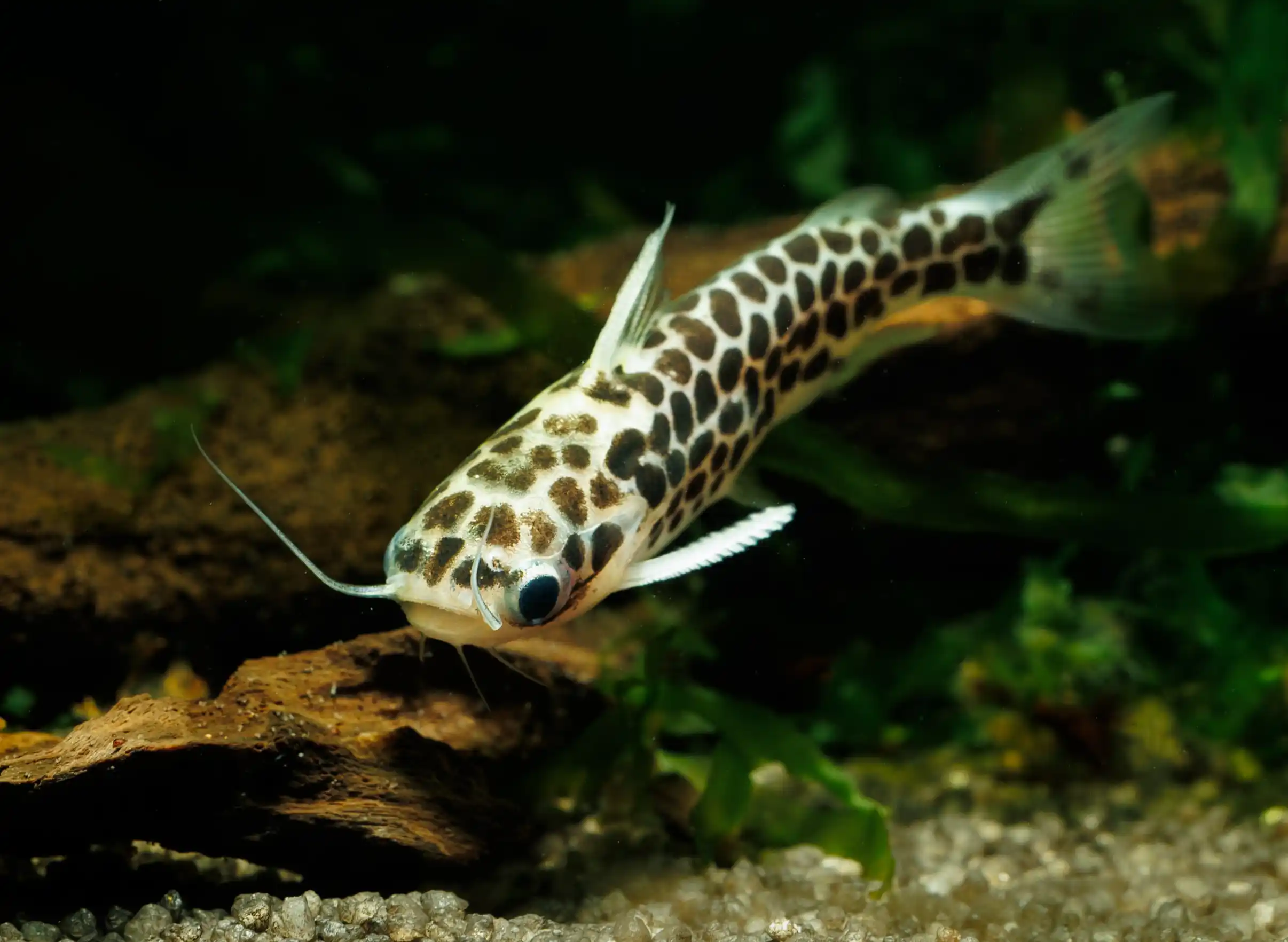
Gabor Horvath presents four catfishes that stay small, won't eat their tank mates and are perfect for a peaceful community tank.
I have always been a huge fan of catfishes. I think that spending countless hours with my father fishing for elusive catfish played no small part in my fascination. While waiting for the bite my imagination would run wild, picturing huge whiskery monsters in the murky water.
When I first got a fish tank I wanted to recreate this vision at home, albeit in a much smaller scale. My initial catfish-keeping endeavours included a walking catfish (Clarias batrachus), a brown bullhead (Ameiurus nebulosus) and even a baby wels catfish (Silurus glanis). All these species were totally unsuitable for most tropical freshwater aquariums, and soon outgrew mine.
Based on my experiences I have assembled a shortlist of four species which are ideal choices for such setups. Catfish that will not eat smaller fish like neon tetras that commonly live in such aquariums.
The common recommendation for such a fish is usually a species of cory catfish. While perfectly suitable, they lack the large catfish appearance that I craved as a child. Therefore, I have not included any 'Corydoras' catfish in this list.
Related article: Corydoradinae revision changes names for hundreds of species
South American bumblebee catfish
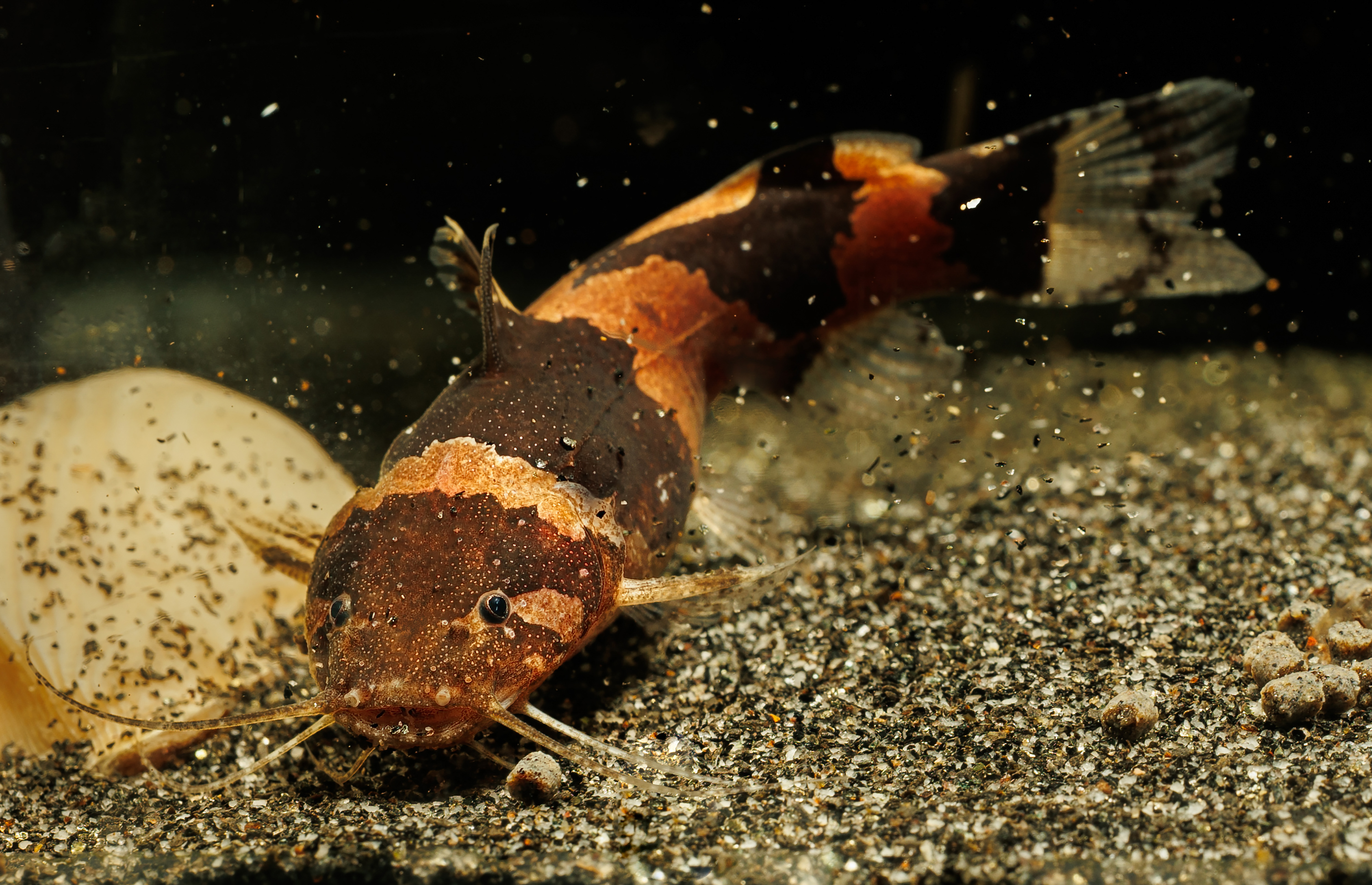
I begin my list with a South American bumblebee catfish, Microglanis aff iheringi. The genus Microglanis is within the Pseudopimelodidae family. Currently, there are 29 described Microglanis species, but the list is likely to grow soon.
The catfishes in the Microglanis genus share several characteristics. They are all small catfishes with a maximum size of 8cm (3.1"). They display a marbled or blotchy brown pattern on a yellowish-brown or pinkish body. They also have well-developed spines on the dorsal and pectoral fins.
Their pattern varies a lot, so it’s likely this common name refers to many similar species. If you are not worried about the exact species then you only need to make sure that you are getting the real (dwarf) deal. Several catfish species are available under the “bumblebee” moniker – and many of them are not small at all.
Fact File
- Scientific name: Microglanis aff. iheringi
- Size: up to 7cm (2.8”)
- Origin: Found within the Orinoco River in Venezuela and Columbia.
- Habitat: Occurs in flowing tributaries with plenty of cover in the form of fallen wood, vegetation and rocks.
- Tank size: 60x35x35cm (24x14x14”)
- Water requirements: Fairly adaptable but avoid the extremes. Water with a pH between 6-7.5 and 5-15°H will suffice.
- Temperature: 22-26°C (72-79°F)
- Temperament: Shy, nocturnal and generally peaceful, although like most fish if it fits in their mouth, it will be at risk. Extremely small schooling aquarium fish, like Boraras, are likely not the best choice as tank mates for this one.
- Feeding: Naturally feeds on insect larvae or similar found when rooting around the substrate. Offer a mix of frozen and live foods along with an insect-based granule.
- Availability & cost: Fairly common, ask around as they may be hiding in some wood in the sales tanks. Expect to pay around £6 a fish.
Dwarf synodontis catfish
Synodontis species have featured for many decades in African themed setups and other community tanks. They look and behave interestingly – some will swim upside down while others “hijack” the breeding process of mouthbrooder cichlids. They are robust tropical fish that can hold their own in a busy aquarium.
The problem with Synodontis catfishes is that some of them can grow large and may become bullies themselves. So, what if you don't have room for large species or don't want to add boisterous fish to your community tank? Well, that's where Microsynodontis enter the scene.
Like with the previously mentioned micro-cats from South America you must make sure you are buying a Microsynodontis. Juveniles of some large-bodied Synodontis could look incredibly similar to them. Luckily there are some quick and easy identification marks you can use.
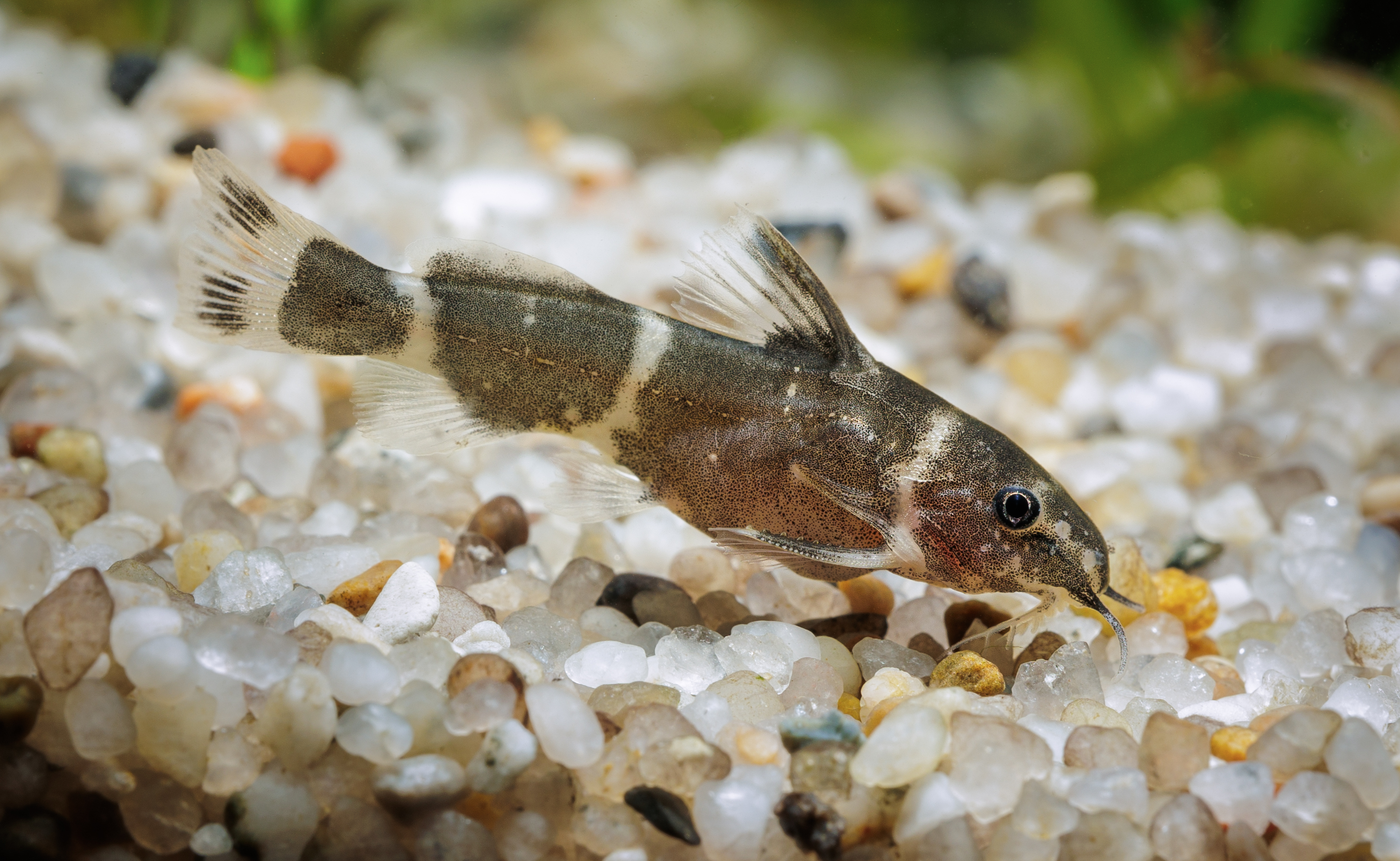
Firstly, there is the shape of the tail fin. On the micros it’s rounded or triangular shaped, while with Synodontis the caudal fin is forked or crescent shaped. Secondly, Microsynodontis are unable to move their eyeballs, while the larger cousins can easily look around. What they share, however, is my favourite feature: the feather-like barbels.
Currently, there are 12 described species within the genus. However, the imported specimens are usually all under a “blanket” label of Microsynodontis batesii or polli.
My lot arrived as the former, but a closer inspection quickly revealed that they are actually Microsynodontis sp. ‘Nigeria’. Identification is quite simple. They have three almost complete circular white belts, whereas batesi individuals have more, but mostly incomplete, white bands.
The species I ended up with are truly a dwarf catfish, only reaching 5cm (2”) in length compared to the relatively “huge” M. batesi which can reach 8.5cm (3.3”). This means they are suitable for tanks with small species of fish, including fry, which in my experience are safe.
Fact File
- Scientific name: Microsynodontis sp. ‘Nigeria’
- Size: up to 5cm (2”)
- Origin: Endemic to Nigeria.
- Habitat: Likely to inhabit slow moving, but flowing, tributaries with plenty of cover.
- Tank size: 60x30x30cm (24x12x12”)
- Water requirements: Naturally tolerate of changing water conditions. A pH between 6 and 7.5 with 8 to 15°H will be suitable.
- Temperature: 22-26°C (72-79°F)
- Temperament: Peaceful if a little shy. Overly ravenous or boisterous tank mates can outcompete them.
- Feeding: Fairly opportunistic feeders, will take prepared foods along with the usual live and frozen foods. Bloodworm is a firm favourite.
- Availability & cost: Difficult to find as you never know which Microsynodontis will arrive. Specialist retailers may be able to help, expect to pay around £5 each.
To read more about these two catfishes, head to the June 2025 issue for the full feature!
Woodcats
The genus Trachelyichthys has two confirmed species – T. decaradiatus and T. exilis. A third woodcat is also frequently available as Trachelyichtys sp. ‘Tapajos’.
As there is no formal description of the latter - and even “official” pictures of T. exilis show a huge variety of patterns - it’s impossible to tell the exact species of a given specimen.
In the wild they live in gently flowing rivers and smaller tributaries. They like to inhabit places with floating vegetation and overgrown riverbanks with plenty of roots hanging into the water. If there are no such plants then fallen and submerged branches, tree trunks and leaves seem to suffice.
Being potentially predatory – don’t house your Trachelyichthys with small fish or shrimp. I found that fish over 2cm (0.8”) are generally safe with them. Anything smaller will be fair game in the catfish's opinion. Otherwise, they are peaceful and go along well with other (friendly) similar sized fish species.

Fact File
- Scientific name: Trachelyichthys exilis
- Size: up to 8cm (3.2”).
- Origin: Native to the Rio Nanay basin, Peru.
- Habitat: Areas with slow flowing water and abundant cover.
- Tank size: 60x40x30cm (24x16x12”)
- Water requirements: Acidic to neutral water, a pH 6-7.5 will work with soft to medium hard water (5-12°H)
- Temperature: 23-26°C (73-29°F)
- Temperament: Generally peaceful, like most fish though, if it fits in their mouth, it is at risk.
- Feeding: Will take to most foods including prepared pellets and granules, along with frozen and live fares. This is the best time to observe your fish.
- Availability & cost: Uncommon to find in stores, but worth asking as they could be lurking under some wood. Expect to pay around £15.
Oilcats
My roundup of dwarf catfishes wouldn’t be complete without my family's favourite: the oil catfish (Duringlanis perugiae). With its large eyes, small mouth and flailing whiskers it apparently looks rather cute (according to my daughters)
This fish has had many names over the years. You may know them as: Tatia perugiae, Centromochlus perugiae, oil catfish, honeycomb driftwood catfish, or the Perugia’s woodcat.
One thing to note is these cats require excellent water quality. They’re not tolerant of high nitrate or organic waste levels and need oxygen-rich water. It doesn’t mean strong currents are compulsory (although they won’t mind it) but overcrowded tanks with no flow may kill them.

Fact File
- Scientific name: Duringlanis perugiae
- Size: up to 6cm (2.4”).
- Origin: Found in the upper Amazon River basin.
- Habitat: Lives close to the banks of flowing rivers and streams. The substrate is sandy and littered with rounded stones and fallen branches.
- Tank size: 45x30x30cm (18x12x12”)
- Water requirements: Hardy, aim for a pH of 6-7.5 and avoid extremely hard water.
- Temperature: 25-28°C (77-82°F)
- Temperament: Extremely peaceful with other fish. However, even medium sized fish may outcompete them.
- Feeding: Known to feed from the surface as well as the substrate, these fish will happily take to most common aquarium foods.
- Availability & cost: Somewhat common, if not available stores are likely to be able to source them for you. Expect to pay around £10 a fish.
Read more about the last two catfishes in the July 2025 issue of the magazine.