


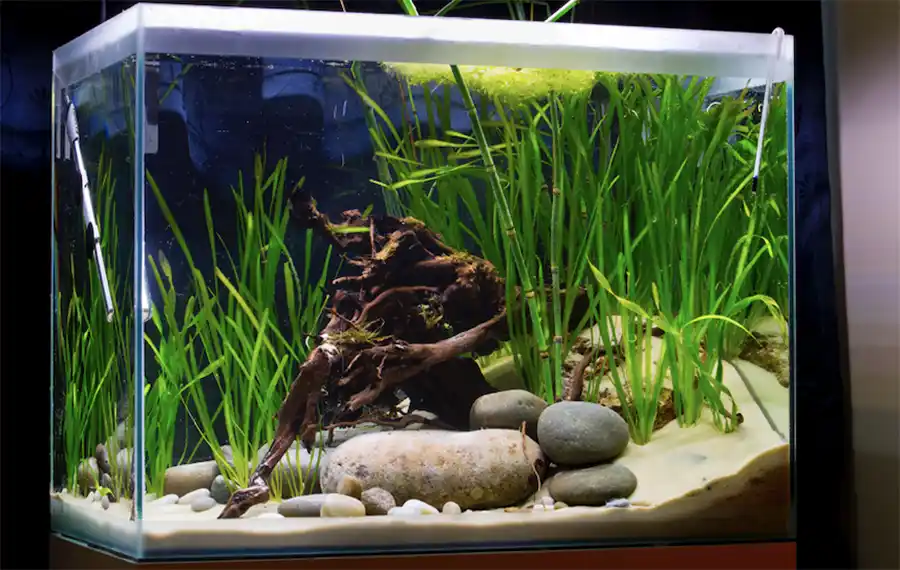
Like most hobbies, when you first venture in to the world of fishkeeping, things can get a bit overwhelming. This post will guide you through all of the essentials for setting up your first tank and how to do this correctly.
Setting up your first fish tank
Your first tank needs to suit the space you have available. Aquariums should be away from windows, radiators, vents, speakers and doors. Beginners have a tendency to buy small tanks and it is generally not the best option.
Small tanks are harder to keep and limiting for your choice of fish. While, it is possible to keep small aquariums, it is important to choose the right fish and plants for your tank. Remember to aquascape your small tank accordingly.
Aquaria of 60-80 litres (13-18 gal) are ideal. Small enough to manage easily but large enough to effectively dilute fish waste. This size allows you to keep an array of different starter-friendly species (they also hold some value as second hand items).
Make sure to read our full guide on getting your first fish tank ready. This will ensure you are keeping your fish in the best environment possible and are avoiding those beginner mistakes.

What products will I need for my new fish tank?
A lot of beginner aquariums up to 100 litres (22 gal) are complete kits. They come with a filter, a light unit, possibly a heater and thermometer, water conditioner and a net. These items should be suitable for the tank size but sometimes the budget kits include items you may wish to upgrade soon after filling.

Setting up the filter
The flow rate should be five to ten times the volume of the aquarium (one sticking point of cheaper kits). Some filters use replaceable cartridges but consider the on-going cost of this and the travel to buy them. They are easy to use for beginners, however, it can make sense to buy a more expensive filter with cheaper running costs.
When setting up your first tank, choosing the correct aquarium filter is critical. Our guide will take you through the different types of filters available. Plus, why it's important to have an aquarium filter, and the cleaning procedure.
Lighting your fish tank
Fish don’t require a light. We use them for viewing our fish and/or to provide energy for plant growth. Basic white lighting is fine for fish and for beginner friendly, low light level plants (Anubias, Java fern, Crypts).
However, avoid a lot of blue light – it encourages algae growth. If you intend to keep live plants then a slightly pink or yellow light will be better. Plenty of beginner friendly light units are available on the market which are well suited to plant growth.
Selecting the correct heater and temperature for your tank
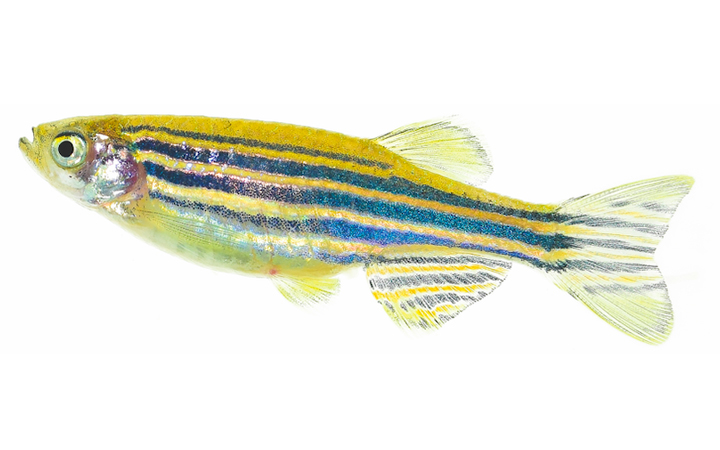
A small selection of ‘tropical’ fish don’t need an aquarium heater (including some danios, barbs, tetras etc). However, using a heater will give you a far wider choice. You will need at least one watt per litre for efficient heating.
Make sure that you do not overheat your tank as this can put your fish in danger. Different fish require different water temperatures. Ensure you read up on the needs of your fish and choose a community that suit the same temperatures.
Extra products you will need
Kits may include essential tap water conditioner, a filter start additive, a net and possibly some food. This can offer good value – these items can add to £15 or more – but do check dates on any bottles or food included.

No kit includes everything so you will be needing extras. Some shops offer a small discount on products bought alongside a new tank so have a list ready.
For more information on what you need to set up a fish tank, head to our complete aquarium shopping list. Here you will find all the other fish tank essentials that you might forget to buy!
Next steps
Once you have purchased the equipment to set up your first tank you will need to work out how you would like to scape it. You can see plenty of examples of biotopes, aquascapes and community tanks on our website for inspiration.
You will also need to research which fish are compatible with the size and type of tank you are hoping to keep. You must also understand the maintenance required to keep your fish tank clean. Poor water quality from a lack of beneficial bacteria after adding fish can cause them to become unwell.
Good luck with your new adventure and remember you can always send in any questions you have to [email protected].