


A complete guide to common pond fish diseases, symptoms and treatments, including parasites, ulcers, finrot, fungal infections, dropsy, whitespot and more.
The ornamental pond fish in the UK often gets a rough deal. Harassed by herons, baked in the sun, frozen in winter, and often overcrowded or under-filtered, it’s a wonder that pond diseases aren’t more common.
Common Causes of Pond Disease
Broadly speaking, there are a few scenarios that can result in an breakout of pond fish disease. Here are some of the most common...
Temperature Increase in Spring
Pond disease is often associated with rising spring temperatures. As water slowly warms after winter, parasites, fungi, bacteria and viruses become more active, while fish recovering from winter may still have a reduced immune response. This temporary imbalance makes disease outbreaks more likely.
Adding New Fish to the Pond
Adding new fish is another common cause of disease outbreaks. Any introduction of livestock can carry pathogens to which your existing fish are naïve and have little or no natural immunity.
Stress
Stress caused by conditions within the pond is another major trigger for disease. This is usually linked to water quality, such as a build-up of ammonia or nitrite from a struggling pond filter system, although old ponds may also suffer with water chemistry issues such as a drop in pH and carbonate hardness (KH).
Physical Harm: Wounds and Infection
The fourth reason is stress and physical injury from something outside of the pond. Herons in particular are notorious not only for eating fish, but also for wounding those they fail to catch. These injuries can quickly become infected in pond water, allowing opportunistic bacteria or fungi to take hold.
Fish can also scrape themselves on rocks, pond edging, pumps, or other decorations, particularly when spawning or if they panic after being startled. Any break in the skin or protective mucus layer can provide an entry point for infection.
Related article: What is Eating your Pond Fish and How to Stop It.
Common Pond Fish Symptoms and Diseases
Any of the above can allow a wide range of disease-causing organisms to become established in the pond or overwhelm a fish's natural defences.
Here are some of the most common, and some less common, illnesses to look out for.
Gasping and Gill Issues
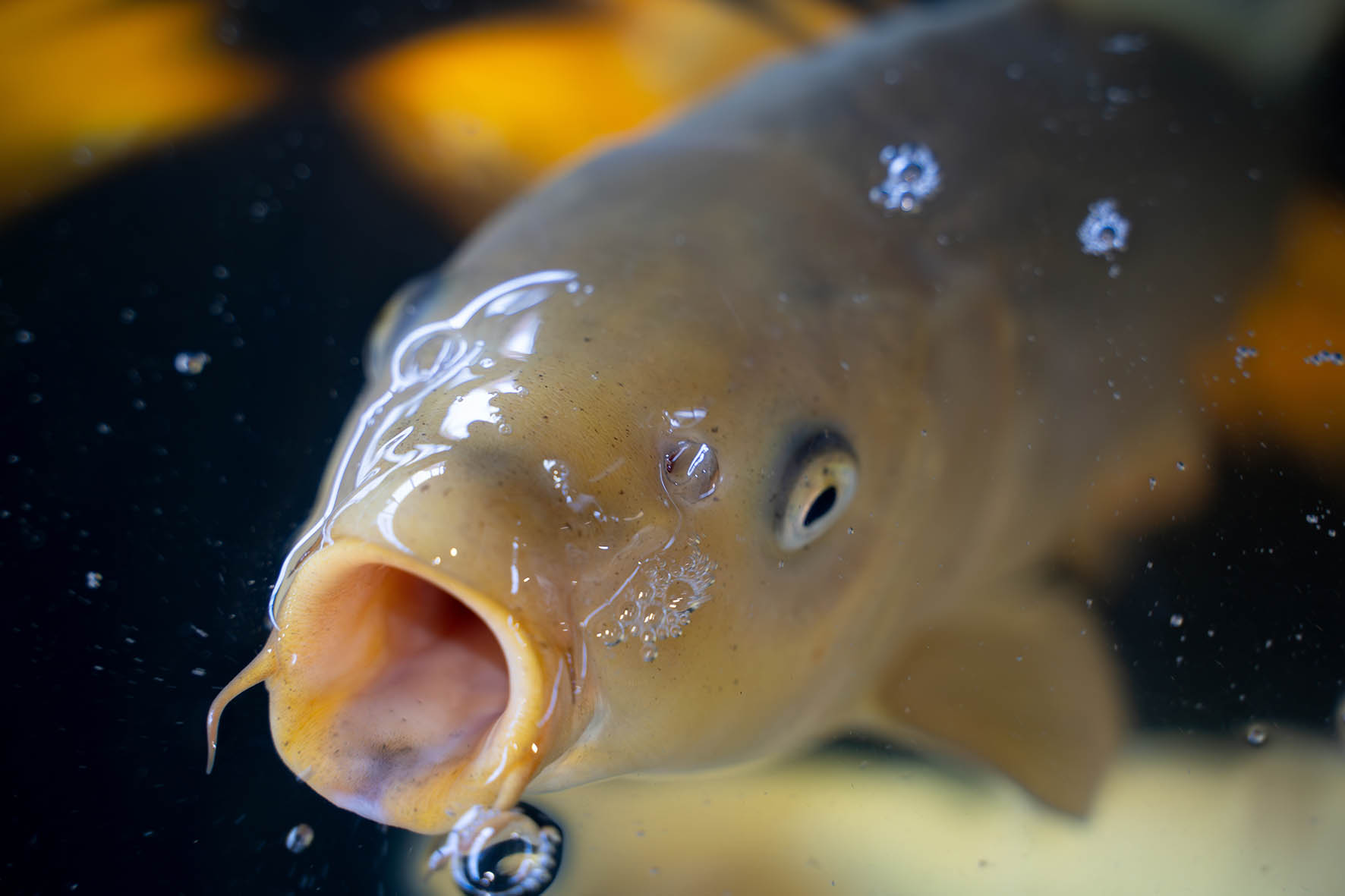
Fish gills are delicate and sensitive organs, easily affected by a range of problems. The first sign that anything is wrong with gills is a fish breathing erratically, or gasping at the pond’s surface. It also requires immediate intervention.
Low oxygen can cause gasping and heavy breathing, and exacerbate a pathogenic gill issue, so first make sure that the pond has sufficient turnover and oxygenation. Turn waterfalls on (especially at night), make sure that the flow from pumps and filters is breaking the water’s surface, and consider using an airstone connected to an airpump to increase aeration.
High water temperatures reduce the amount of oxygen that water can hold, so check the temperature. If it is above 25°C (77°F), this may be contributing to the problem, particularly if the pond is heavily stocked.
Related article: Summer Pond Essentials for a Healthier Garden Pond
Ammonia and nitrite can both damage the gills. Ammonia poisoning may cause the gills to appear bright red or inflamed, while severe nitrite poisoning can cause the gills to appear brown. Test the water and ensure ammonia and nitrite are both zero before looking for other causes.
Bacterial gill disease is a serious condition that causes gill tissue to become inflamed and eventually necrotic (dead). If bacterial gill disease is suspected, consult an aquatic vet, as diagnosis and prescription treatment may be required.
Gill flukes (Dactylogyrus) cause similar symptoms to skin flukes (see below) and require a microscope to diagnose. If gill flukes are diagnosed, then you can treat with Fluke-Solve or similar.
Sliminess of the Skin
Skin slime may have one or more of several causes, usually parasitic or water chemistry/quality based.
Spotting sliminess is easy. The fish will have a milky or slightly grey sheen across them, either in patches or covering the whole body. In extreme cases, the slime may even slough off of the fish in sheets or strands.
Poor water quality can irritate the skin, causing fish to produce excess protective mucus. Start by testing ammonia, nitrite, pH and carbonate hardness (KH). Ammonia and nitrite should always be zero, while pH and KH should remain stable and appropriate for your source water and livestock. For most UK ponds, a pH between 7.0 and 8.5 with adequate carbonate hardness is perfectly acceptable, provided it remains stable.
Gyrodactylus, a type of skin fluke, will cause increased slime, but this will require a microscope to correctly diagnose. Fish carrying these flukes will often scratch themselves against solid objects in the pond, as well as flick, jump, and appear agitated. Other parasites that can cause sliminess include Ichthyobodo, Chilodonella, and Trichodina, and present the same symptoms in fish.
All three of these pathogens can exist at a low level on a fish, living ‘under the radar’ and not causing symptoms. Once the fish’s immune system becomes compromised, they multiply until they become a burden.
Once the parasite has been correctly identified, treatment can begin. Depending on the diagnosis, products such as Cloverleaf Absolute Parasite+, Colombo Alparex, NT Labs Anti-Parasite & Fungus, or AquaPond Parasite Treatment may be appropriate. Always use medications exactly as directed and complete the recommended course of treatment.
Eye Problems
Cloudy eyes can be caused by wounds, parasites, poor water quality, and poor diet. In the first instance, test your water and then check that your foods are in date and haven’t been opened for more than a few months (pond food can spoil quickly once opened).
In the case of a physical wound, monitor the situation and have a broad range antibacterial treatment on standby such as NT Labs Anti-Ulcer, Finrot & Flukes, in case the fish deteriorates.
Bulging eyes can be an indication of popeye (Exophthalmus) where bacteria have gotten behind the eye, or they can be an early sign of dropsy. Treat with an antibacterial medication like Blagdon Anti Ulcer, but be prepared to isolate the fish if the scales start to stick out and the whole fish bulges as this points to a more serious underlying health condition.
Open Wounds and Ulcers
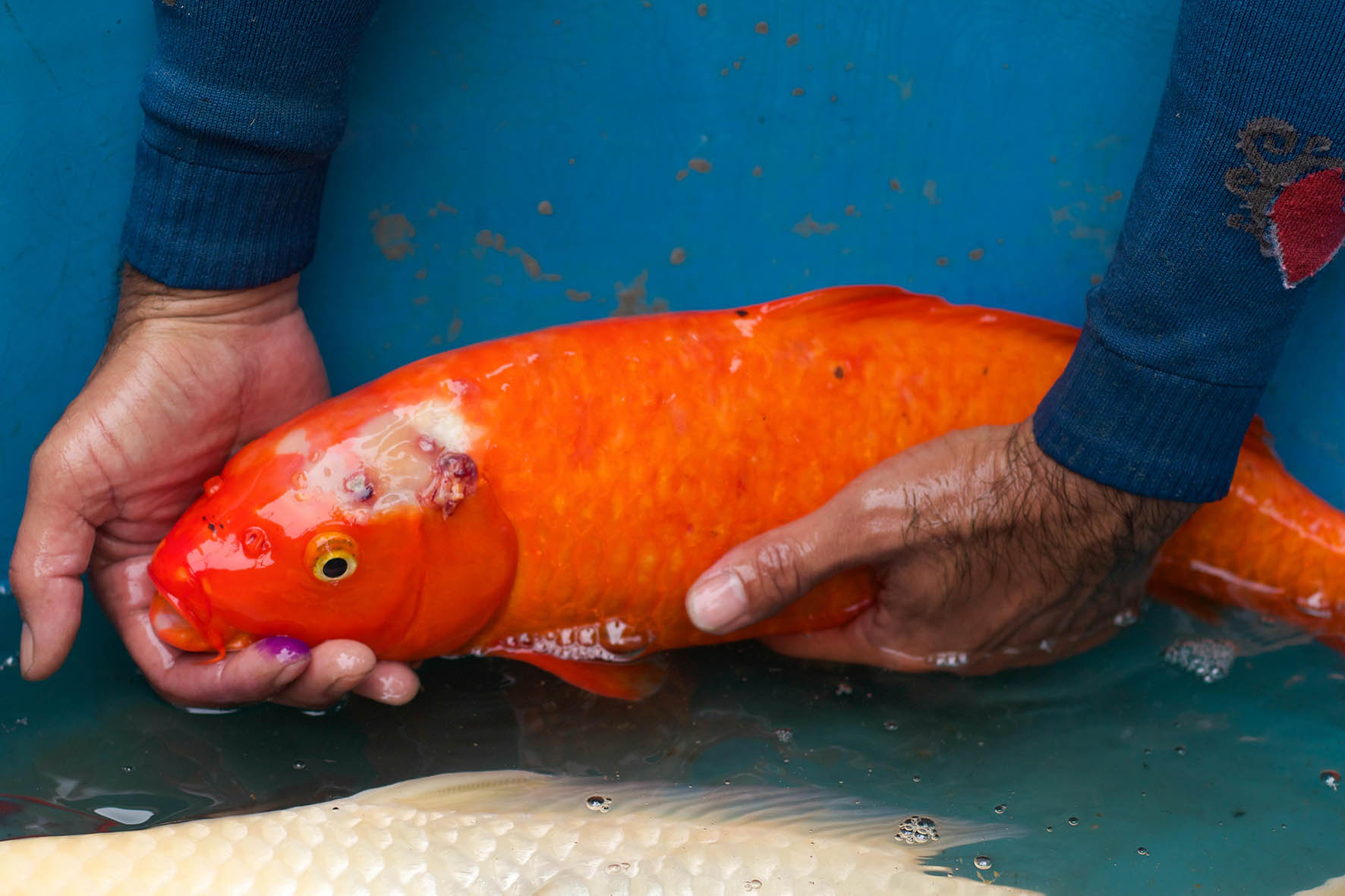
Physical injuries to a fish are usually obvious, with cuts or abrasions plainly visible. These can be from knocking against something in the pond, spawning injuries, or an animal attack such as a heron or cat.
In the biological soup that is pond water, infections can set in quickly, so when a lesion is spotted, it should be treated directly with an NT Labs Paramedic Kit. This will involve removing the fish from the pond, sedating it, cleaning the wound and then sealing it to reduce the risk of secondary infection – the kit contains all you need to do this.
Ulcers start out looking like red sores anywhere on the fish, developing into a hole with a white edge. Left untreated, ulcers can become severe and, in some cases, fatal.
In the first instance, cleaning with the NT Labs Paramedic Kit will help, especially if followed up by a course of NT Labs Anti-Ulcer, Finrot & Flukes treatment in the pond where appropriate. Extremely aggressive ulcers that don’t respond to treatment early on may need further diagnosis and prescription medicines from a vet.

Frayed and Damaged Fins
Split fins are often the result of rough handling, and as long as the conditions in the pond are sanitary they will eventually heal over and repair themselves. Have a bottle of broad antibacterial medication on standby if things deteriorate, but don’t panic if the area looks clean.
If the fins rays are intact but the delicate skin between them is rotting away (often with a white tinge or edging) then you are looking at a far more dangerous incident of finrot, caused by various pathogenic bacteria. This will need immediate treating, as if the bacteria reach the body the disease will become systemic, infecting the entire fish and killing it quickly.
In the event of finrot, begin by looking at the conditions in the pond. This infection often goes hand in hand with poor pond hygiene, so a partial water change and removal of detritus from the base of the pond and from inside filters is a must.
To treat, there are many generic ‘anti finrot’ medications on the market, and these are good at treating the early stages of finrot. For a severe infection (especially where most of the fin has eroded away) consider treating solely with acriflavine.

Obvious Parasites
A couple of larger parasites that can become visible on a fish are fish lice (Argulus) and anchor worms (Lernaea). Unless introduced on new fish, both are extremely unlikely to appear in a garden pond.
Fish lice look like small olive-green scales that cling to the fish’s body. Typically, they move about, including from fish to fish. The resulting bite marks left on fish can become infected, leading to bacterial infections and ulcers. A heavy infestation will weaken a fish to the point of death. If you see fish lice, and it is possible to catch the fish easily, they can be carefully removed with a pair of tweezers. The pond will still need treating, however.
Anchor worms, despite the name, are crustaceans with a hooked head that buries in the flesh of a fish. The point of entry is usually red and inflamed, and the parasite is visible, often with two white ‘tails’ which are the egg sacs of females. Never try to remove an anchor worm physically, as the head will either cause considerable damage coming out, or may break off and remain in the fish, leading to a deeper infection.
An infection of either will cause fish to appear irritated, scratching and flicking against objects in the pond. Secondary lesions may also be observed from parasite attacks.
In a case of fish lice or anchor worms, a treatment of emamectin, such as in Vetark Lice-Solve should be used to kill off both adult and larval parasites. Remember to follow the manufacturer's instructions.
Fluffy Growths
Distinct fluffy patches growing on a fish are indicative of a fungal infection. These white tufts can appear at any part of the fish, though frequently they form at the site of an injury. In extreme cases, fungal growths can appear green as the fungal strands become contaminated with algae growing on them.
Fungus is almost always associated with poor hygiene and water conditions, and these will need to be addressed before any treatment can take place. Perform some water changes and remove detritus from the pond base and filters.
While fungus visually looks limited to the surface of the fish, hyphae are boring into the fish’s tissues, destroying them and providing nutrition for yet more fungi. Never ignore a fungus tuft.
Treatment is straightforward and can be carried out with any broad-range anti-fungal medication such as Blagdon Anti Fungus & Bacteria. Improvement of water conditions is vital for treatment to work though.
Waxy White Lumps
Small lumps that look like the fish has been dripped with candle wax is an indication of carp pox, and appears especially common in strains of koi.
Carp pox is a viral infection that cannot be treated. Symptoms usually appear throughout winter and disappear on their own at the arrival of spring. The only time to worry about them is if they also become infected with fungus or bacteria, in which case you should treat for whatever the opportunistic pathogen is.
Bulging Fish
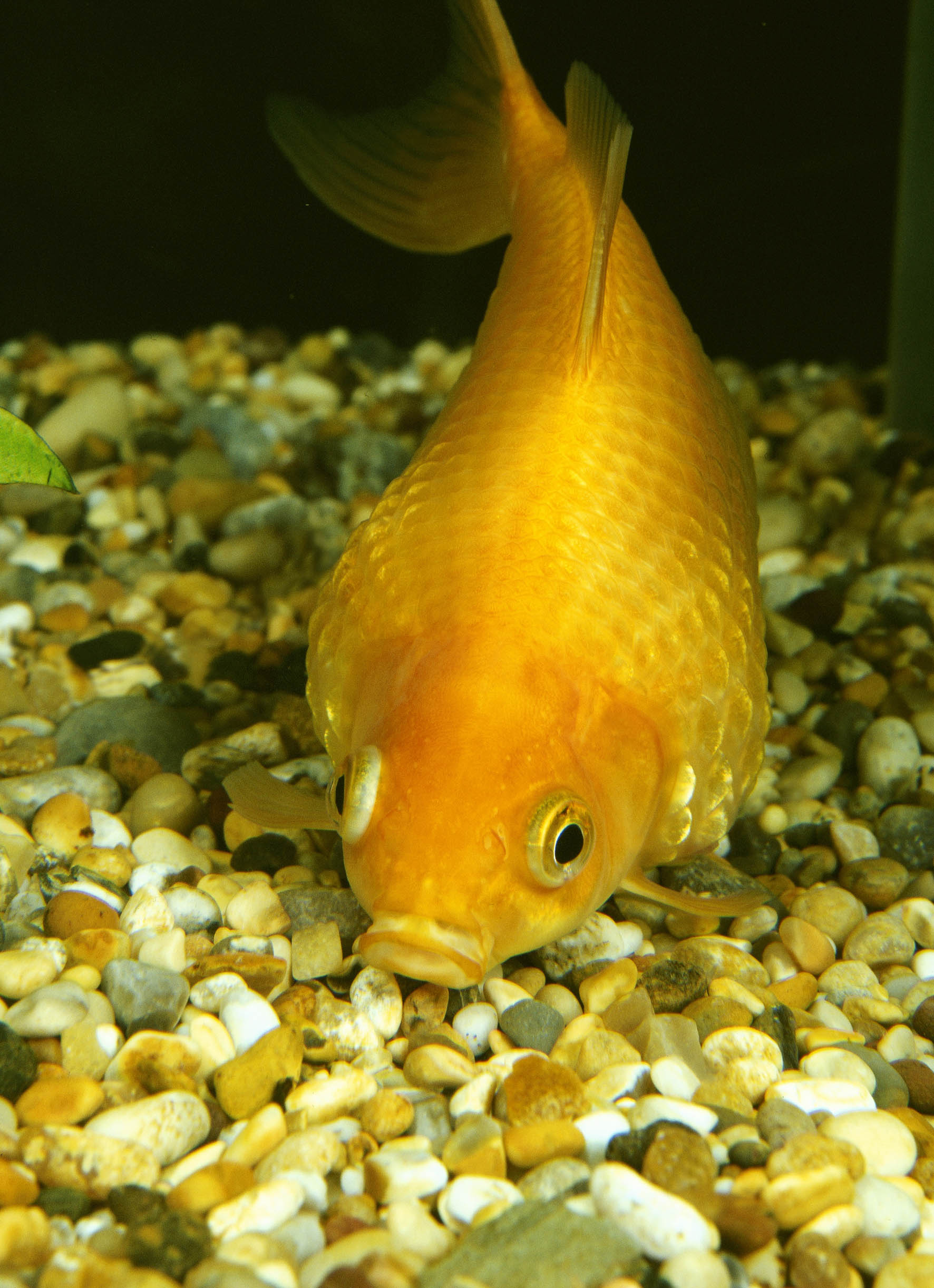
A fish that looks distended and bloated may be suffering from one of a few conditions.
In the first instance, it’s important to differentiate between an illness and an adult female fish filling with eggs. A fish carrying eggs will look larger than usual, but will not have buoyancy issues, will not have bulging eyes, will not have scales sticking on end, and will be behaving normally. It’s also normally the case that she will be pursued by the males in the pond.
If the fish is bloated to the extent that the scales are protruding (think of an open pine cone) then the fish is suffering from one of the many illnesses under the umbrella term of dropsy. Dropsy is not a disease in itself but a symptom of serious internal illness, where the fish loses its ability to regulate body fluids.
Dropsy may be bacterial, it may be from a physical injury, it may be age related, it may be diet related, and it may be genetic. It is also incredibly hard to treat (in part as diagnosing the cause is difficult. In the case of bacteria dropsy, off-the-shelf antibacterial medications may help, but more often a vet will be required to prescribe antibiotics).
The outlook of a dropsy diagnosis is bleak and the fish should be isolated in a different body of water to the other pond fish.
Ingested gas from feeding at the surface will also cause bloating specifically in the gut region, and will also cause swimming and buoyancy issues. At its most extreme, the fish may be belly-up and floating at the pond’s surface. If this is a recurrent problem, consider using a sinking pellet food instead of floating foods.
Sunburn
In a pond sited in direct sunlight, it is more than possible for fish to suffer from sunburn, expressed as a red rash across white parts of the body. Sunburn can compromise the fish’s immune system by damaging the mucous layer, leaving the fish open to subsequent bacterial or fungal infections.
However, similar symptoms can also be caused by poor water quality or disease, so always check water parameters before assuming sunburn is the cause.
While there’s no medication directly for sunburn in fish, symptoms should be addressed by providing the fish with ample cover in the pond. This may involve the addition of floating plants, tall marginal plants, and wide-leafed waterlilies, or even adding some cover in the form of basic caves for fish to retreat into.
Small White Spots
Whitespot, caused by the protozoan parasite Ichthyophthirius, is one of the classic fish diseases, and outbreaks are largely the result of new additions to a pond. Symptoms may not be apparent until you see the fish quite close up, but early warning signs include flicking, scratching, gasping at the surface, and increased slime production.
An infected fish will look at though it has been flecked with tiny white spots of paint. This can be visible on any part of the body, or indeed all over it in extreme cases.
Whitespot is highly infectious and can spread through a pond rapidly, so treatment at the first sign is essential.
There are several effective whitespot medications available, including Colombo FMC-50. Just be sure to follow a complete course of whichever medication you use, even if symptoms disappear within a day or two – Ichthyophthirius has a complicated lifecycle with multiple stages, and only the free-swimming stage is usually susceptible to treatment.