


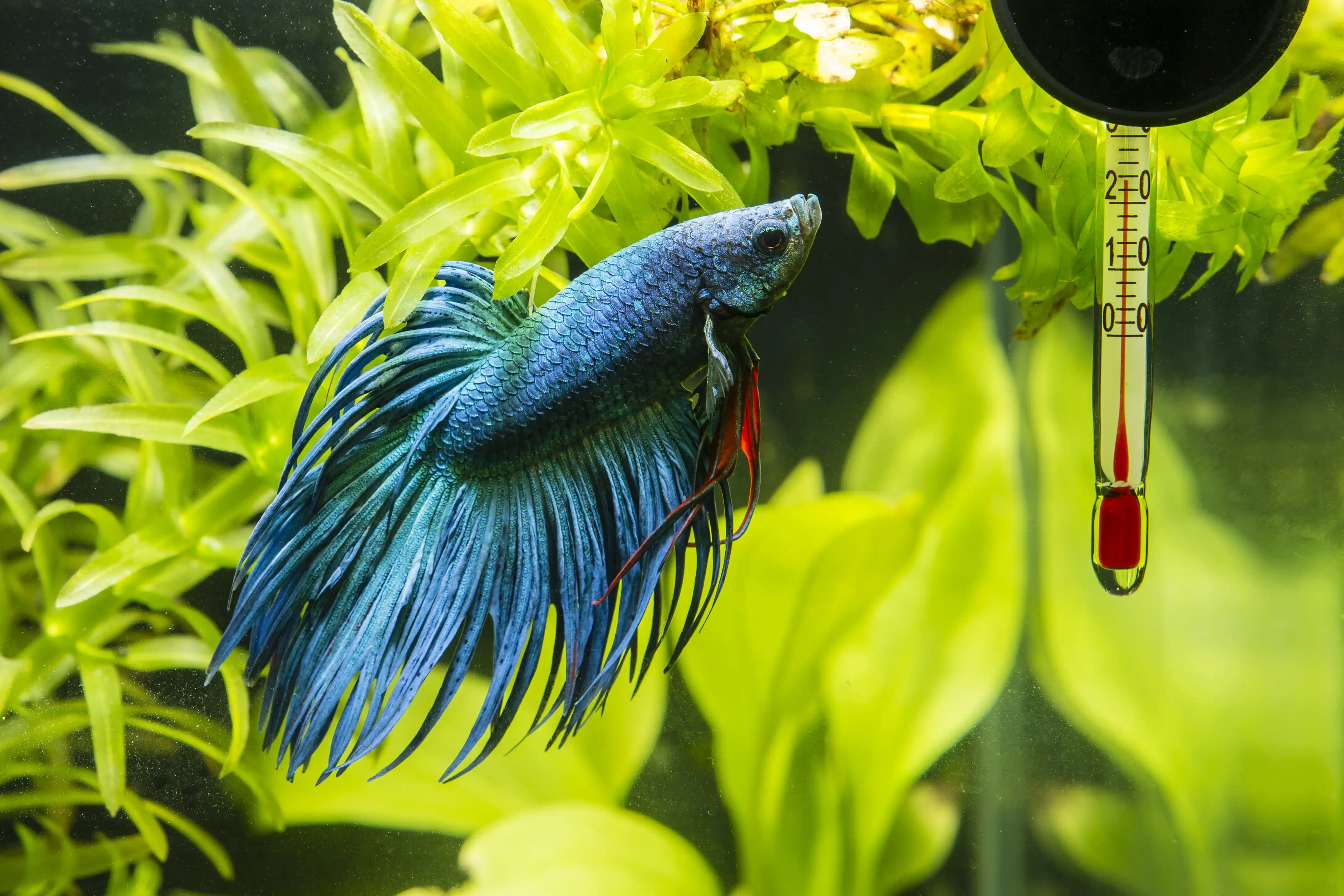
Ever wondered why different temperatures are recommended for different fish? We take a look at some of the common questions relating to temperature and the way it affects your fish.
What temperature should my tropical aquarium be?
All aquarists need to ensure the environment they create in an aquarium is suitable for the inhabitants. Temperature is a critical component of this environment and as such should be just as carefully researched and monitored for your fish, we will get to why temperature is so important a little later on.
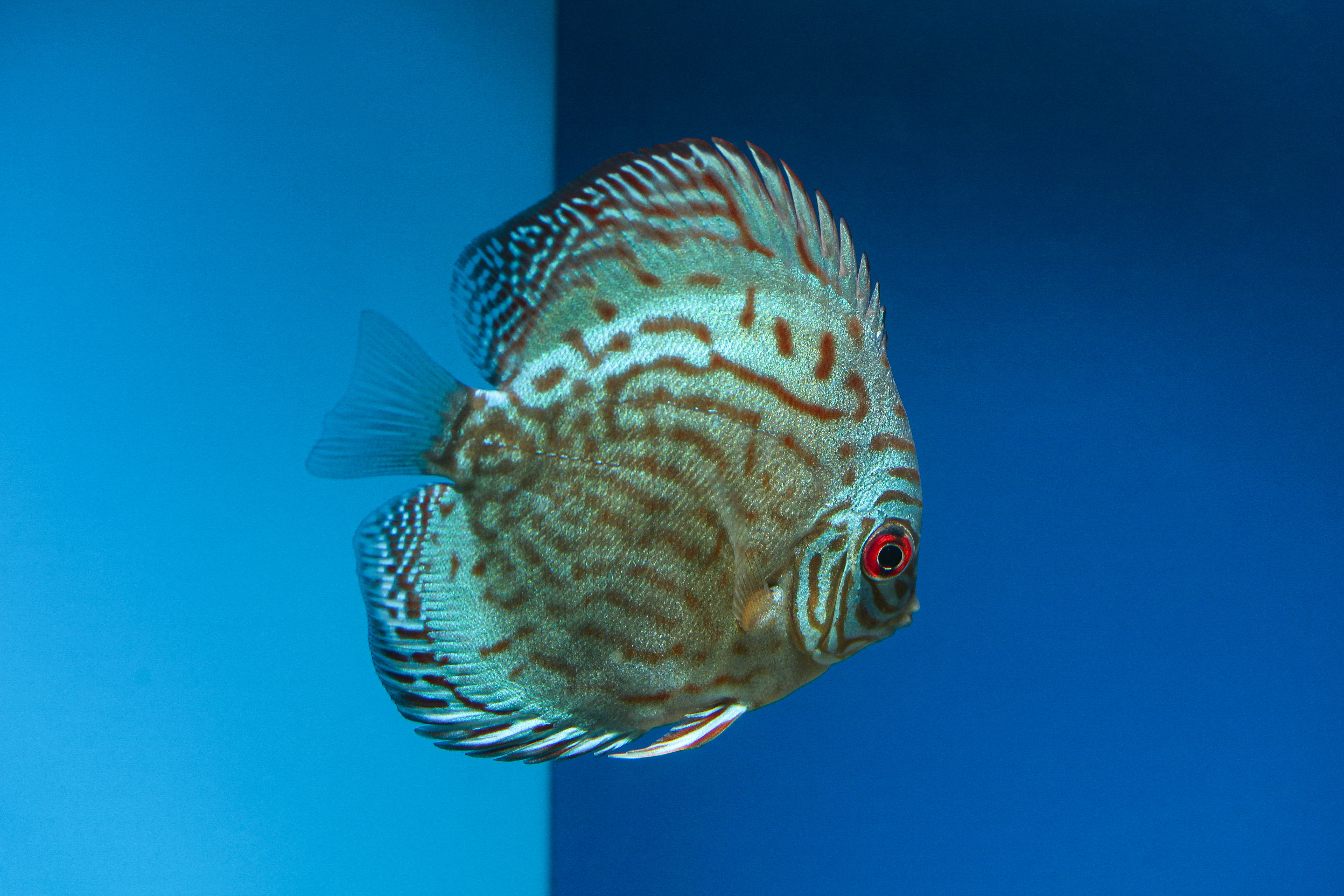
We often categorise the fish we see in shops as coldwater, temperate, or tropical. While this classification can help guide you towards appropriate temperature conditions, it is a far better idea to research the specific temperature of the animals you like the look of before finalising your stocking plans. For example, while discus are classed as tropical fish, they need to be kept a minimum 26°C/79°F which is pretty warm. Neon tetras are also classed tropical fish, but their optimal temperature range is between 21 and 25°C (70-77°F) which would not be compatible with discus!
Websites like https://www.seriouslyfish.com/ are a good resource for suggested temperature ranges (and lots more information) for many species so you can check if the various fish you like the look of are compatible.
How does the water temperature affect fish?
Temperature affects a number of physiological processes. For example, pond fish become inactive during the winter months because their metabolic rate slows in lower temperatures.
At higher temperatures, water holds less dissolved oxygen. Fish also have a greater demand for oxygen at higher temperatures so this combination can result in breathing difficulties or oxygen starvation for our fish which is definitely something we want to avoid.
Rapid temperature changes also effect the bodily functions of fish and can be harmful, particularly to those adapted to specific temperatures, such as cool, well-oxygenated rivers. This is one of the reasons why it is important to acclimatise new inhabitants correctly.
Are fish sensitive to changes in temperature?
Fish can detect small changes in temperature - some as small as 0.03°C. Some fish will succumb to whitespot and other stress-related diseases if they experience a temperature change, while others tolerate it fairly well, as long as it's gradual.
Marines, fishes from large stable ecosystems like big lakes, and those adapted to cool water (or very warm water) are generally least tolerant of fluctuations.
As species have evolved to live at different water temperatures, each has a different tolerance. The maximum tolerable temperature is called the Upper Incipient Lethal Temperature (UILT) and the minimum is called the Lower Incipient Lethal Temperature (LILT). However, some fish are "eurythermal" and can tolerate a wide range of temperatures.
Goldfish, for example, can live in water from 1-40°C/34-104°F providing they are properly acclimatised. Other species, are "stenothermal" and have a narrower temperature band. If the temperature is too close to the LILT the fish suffer from hypothermia, and if it's too close to the UILT they suffer from hyperthermia.
In many cases the LILT and UILT change as your fish mature, which is why fry and young fish are much more sensitive to changes one of the reasons breeding and raising fish can be difficult.
Related article: Getting started in fish breeding
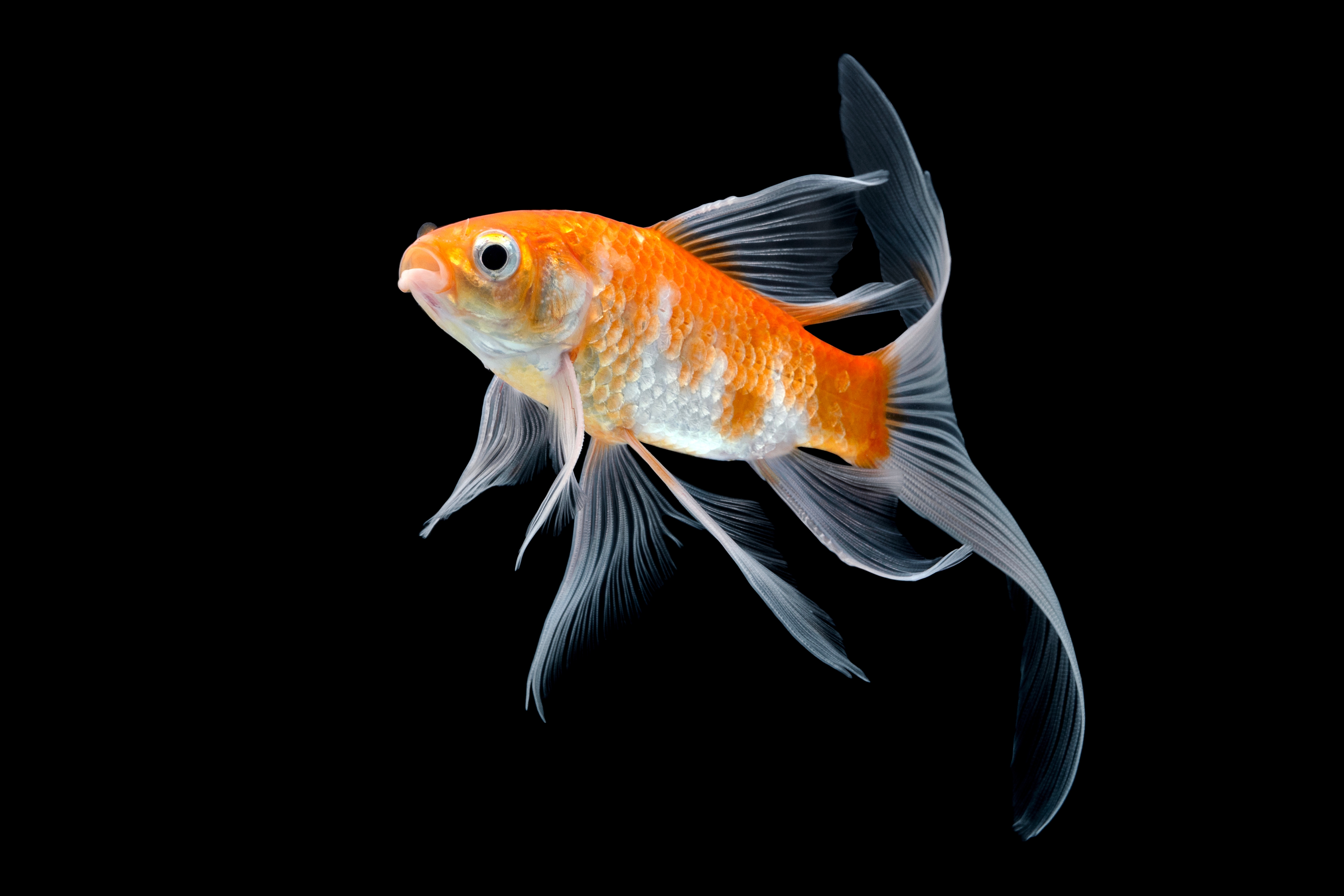
Goldfish are tolerant to a wide temperature range. Photo by Shutterstock
Can any fish tolerate extreme temperatures?
A few fish are capable of withstanding very high water temperatures. Some killifishes from the Death Valley area live in water up to 45°C/113°F, and some tilapiine cichlids can safely swim through hot springs of 70°C/158°F. Few can survive long periods in water over 45°C, as their proteins begin to denature above this level.
Lots of fish can tolerate very cold conditions, too. At both poles, fish have developed special biological antifreezes, based on glycoproteins, which stop them freezing when the seawater drops below zero.
Interestingly, the notothenioids at the Antarctic and the cods at the Arctic have evolved almost identical antifreezes independently. Many polar fishes are so well adapted for life in the freezer that they die if temperatures rise to just 5°C/41°F.
What do I do if my tank gets too hot?
Because fish need more oxygen when they are warm (and warm water holds less oxygen), they usually succumb to oxygen starvation so it is important to not lets tanks overheat! The first thing to do if you notice the temperature starting to increase is to try and boost oxygen levels by adding extra aeration. This can be done by adding an air stone powered by an air pump or by lifting the filter outlet to create more surface agitation and bubbles. You can also bring the temperature down by placing bottles of cold water in the tank, or conducting small water changes and topping up with colder dechlorinated water.

Aeration can help when temperatures get too high. Photo by Shutterstock
Should I turn off my heater during the summer?
The easy answer is no, there is no need to turn off your aquarium heater during the warm days of summer. Most aquarium heaters have a built in thermostat so they do not turn on if the temperature is already above the set point. Some heaters, especially high end titanium ones, do not have a built in thermostat but they should only be used in aquariums with a separate controller which will turn it off when temperatures rise. Should you not trust the thermostat on the aquarium the answer should not be to turn it off but instead to buy a new one you do trust!
Can I keep "tropical" fish without a heater?
Although some tropical fish can tolerate slightly lower temperatures than normal if slowly acclimatised, the process could be stressful, so we don't recommend it.
We could probably survive fairly well sleeping outdoors without any bedding, but we'd probably find the experience rather uncomfortable and would soon catch a cold or flu. You should always try to keep your fish under conditions they would experience in the wild.
However, there are some species that are often found in the tropical tanks of fish shops that are what is known as temperate fish. These are species that naturally experience water temperatures close to what we experience in our homes in the UK. Jeremy Gay set up a tank many years ago showcasing some temperate fish species in a tank that looks rather tropical. Check out his guide to temperate fish here for some inspiration should you fancy giving it a go!
Should the water I add be the same temperature as the tank?
You should ensure that replacement water is close in temperature to the water in the tank. However, topping up with cold water can trigger many fish species into spawning if the fish have been conditioned. The difference in temperatures should never be too extreme though as you could still shock these fish if the water you add is too cold. Start off with a few degrees cooler initially and ask fellow hobbyists with experience with the species you are trying to spawn to see how cold they can tolerate.
As sea temperatures don't fluctuate as much, replacement saltwater should be the same temperature as that in the tank, this is even more critical for sensitive inhabitants like corals!
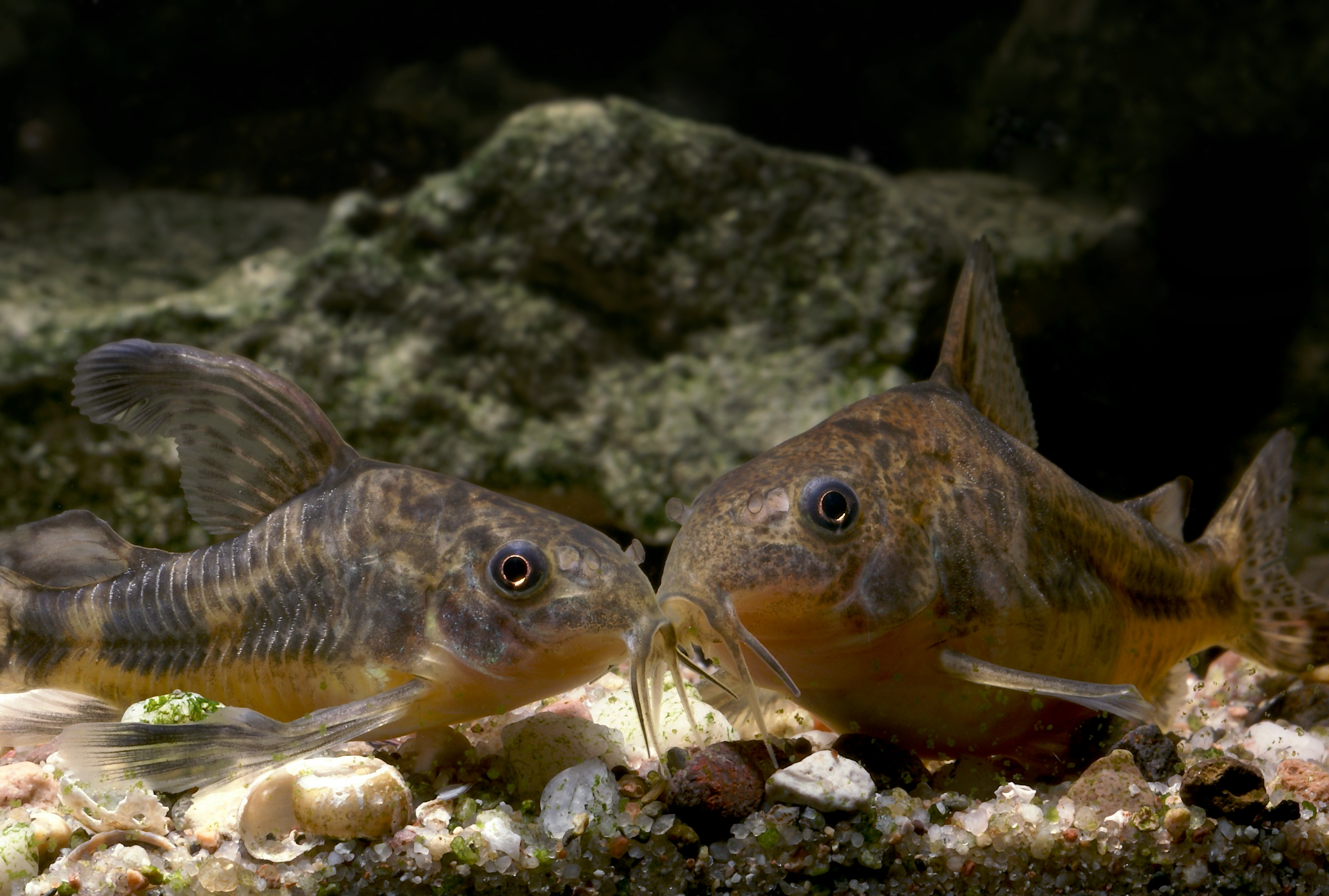
Species like these peppered 'corydoras' can be triggered to spawn by cooler water. Photo by Shutterstock.
How long does it take new fish to adjust to the tank's temperature?
As we mentioned earlier, it is critical that we acclimatise new arrivals correctly to prevent a sudden temperature change. But how long does this process need to be? Well, while it can take fish a long time to truly acclimatise to a new temperature (or different chemistry), research shows that floating fish bags on the water surface for a few minutes prior to unpacking increases their resistance to thermal stress. A polystyrene fish box or picnic hamper is useful for keeping new purchases warm (or cool during summer) on your way back from the shop to ensure the difference between their bag and your tank remains small. In truth, there is no exact time and using a simple glass thermometer to check that the bag has reached the same temperature as the tank is a good idea.
Are fish cold-blooded?
Sort of. Fish are poikilothermic, so when the water temperature changes so does their body temperature. A few fish, including some catfishes, can change their body temperature, and some tunas and sharks maintain a body temperature a few degrees centigrade above the ambient water temperature but they still rely to some degree on the temperature of the environment around them.
This is an item from the Practical Fishkeeping website's archives. It may not be reproduced without written permission.