


There are so many species ready to trick the unsuspecting fishkeeper into making the wrong purchase; we showcase five to avoid, along with some helpful alternatives.
All fishkeepers' will be aware that some species found in your local fish shop aren't suitable for a community tank. However, with Halloween here we shine a light on some of the species that dress up to as the perfect inhabitant.
Ok, they don't literally dress up, but there are many species that are aquarists buy only for them to cause plenty of headaches. It may be thanks to incorrect identification, bad advice or because they may 'fix' a problem in your tank.
Let's highlight five tricks to avoid this autumn, and five treats that you can pick from instead.
Fool's gold gourami!
Who wouldn't choose a brilliant gold centrepiece for their tank? These bold, striking, and metallic fish often look like a perfect community fish in the shop tanks when juvenile. However, a gold gourami is a mistake many fishkeepers will have made during their time in the hobby. They are much more pyrite than 24 carat.
When they mature, these fish, which are a colour variant of the three spot gourami, turn mean! Forget throwing eggs at houses, they will become belligerent, constantly harassing their tank mates, especially other gouramis. Potentially even killing them, in extreme cases.

How to tame Trichopodus trichopterus is a topic that features in our Fishkeeping Answers section often. The answer is usually to rehome the offending fish. Breaking the lines of sight or adding more gouramis never usually works, unless in the largest of aquaria.
Pearls are better than gold
While they may not have the metallic golden hue, pearl gourami are a great alternative. Equally as beautiful when they mature, males develop a deep red-orange pigment on their throat, which can spread onto their flanks during courting. This is a real treat to see. Even without this, the intricate lace like pattern of pearlescent sheen down the flanks of females and juvenile males is still eye catching.
These fish are far more placid than their relatives, making them well suited to community tanks. They do reach a good size of 12cm (4.7") so their tanks need to be on the larger side. One thing to note, their slow swimming style and long fins can make them a target for more boisterous species.

For smaller tanks, opt for the honey gourami or sparkling gourami. They too are fairly peaceful, and beautiful species. In fact, a yellow variety of the honey gourami is available for anyone that wants that golden gourami look.
Sand sifting gobies
A dirty sand bed is not a good look for most aquariums, least of all a pristine reef tank. So, unsurprisingly, a question asked often is what fish can I buy to keep it looking that vibrant white. Enter the sand sifting gobies, commonly the chalk goby (Valenciennea sexguttata) or blue cheek goby (Valenciennea strigata), pictured below.

These gobies constantly grab mouthfuls of sand, sifting out edible morsels before expelling the sand back out. Through this process they do turn over the sand effectively, keeping it visually clean. However, here lies the first issue.
A clean sand bed has little in the way of food, and since these gobies can reach 15cm (6") they need quite a bit of it. It does not take long for these fish to clear their dinner plates, and slowly they may start withering away. Of course you may be lucky enough to get them feeding well on alternative foods, but even then it may not be enough.
Other issues with these fish include digging under the rock work and dumping sand onto your beautiful corals. Neither ideal when all you wanted was a clean sand bed; now you have unstable live rock and dying corals to contend with. They may solve one problem, but they'll then trick you by causing a handful new ones.
Alternative sand cleaners
Nothing beats a gravel vacuum on the end of a siphon hose, whether fresh or saltwater. For a clean sand bed, this is your best option. Actually, it is quite a satisfying treat watching all that muck rise up out of your aquarium.
Some reefers prefer not to disturb the sand to this extent, leaving it up to a couple small inverts to gently turn the sand. A popular choice is nassarius snails, a real treat for your reef. They'll eat left over foods including the likes of Mysis and brine shrimp and move through the sand keeping it aerated. No risk of starving, and no risk to your reef.

Pest snail eater
This will certainly be a trick many of you will be aware of, but one that is always worth mentioning. A clown loach or two is not a good option to remove pest snails from an aquarium, despite what some people may say. They are social animals needing large groups of conspecifics to thrive. Plus, they can reach a monstrous 30cm (12"), so the tank needed to house a group will need to be huge.

Also, it is worth noting that a common cause for snail populations exploding is overfeeding. This can cause water quality issues, and clown loach need pristine water to thrive. Can you see the problem arising here?
Let's leave those horror clowns in the past, unless you have a large enough tank for them. They certainly shouldn't be sold as the perfect snail solution!
Solving the source of the issue
Like we said, overfeeding is the common cause of snail problems. So, fixing this is the first step in solving an exponentially growing pest snail population.
However, to remove these snails in the meantime there are two good options. Firstly, the manual removal of snails is going to be your best bet. Snail traps are available and work well, or place a slice of cucumber in the tank overnight and pull it out the following morning. The snails will be gorging on the cucumber treat and you can remove them quickly and easily.

If a snail eater is what you have your heart set on, opt for a Gastropod assassin. These bumblebee striped snails will eat other snails, but slowly. Typically, each assassin will eat a couple snails a day so they will not remove a population single handedly.
However, a small group can keep your pest snails in check. They'll slowly breed themselves allowing you to build an army, what a treat!
You can always pass on surplus assassin offspring to other hobbyists that are facing the same struggles you had.
Algae eaters or slime eaters
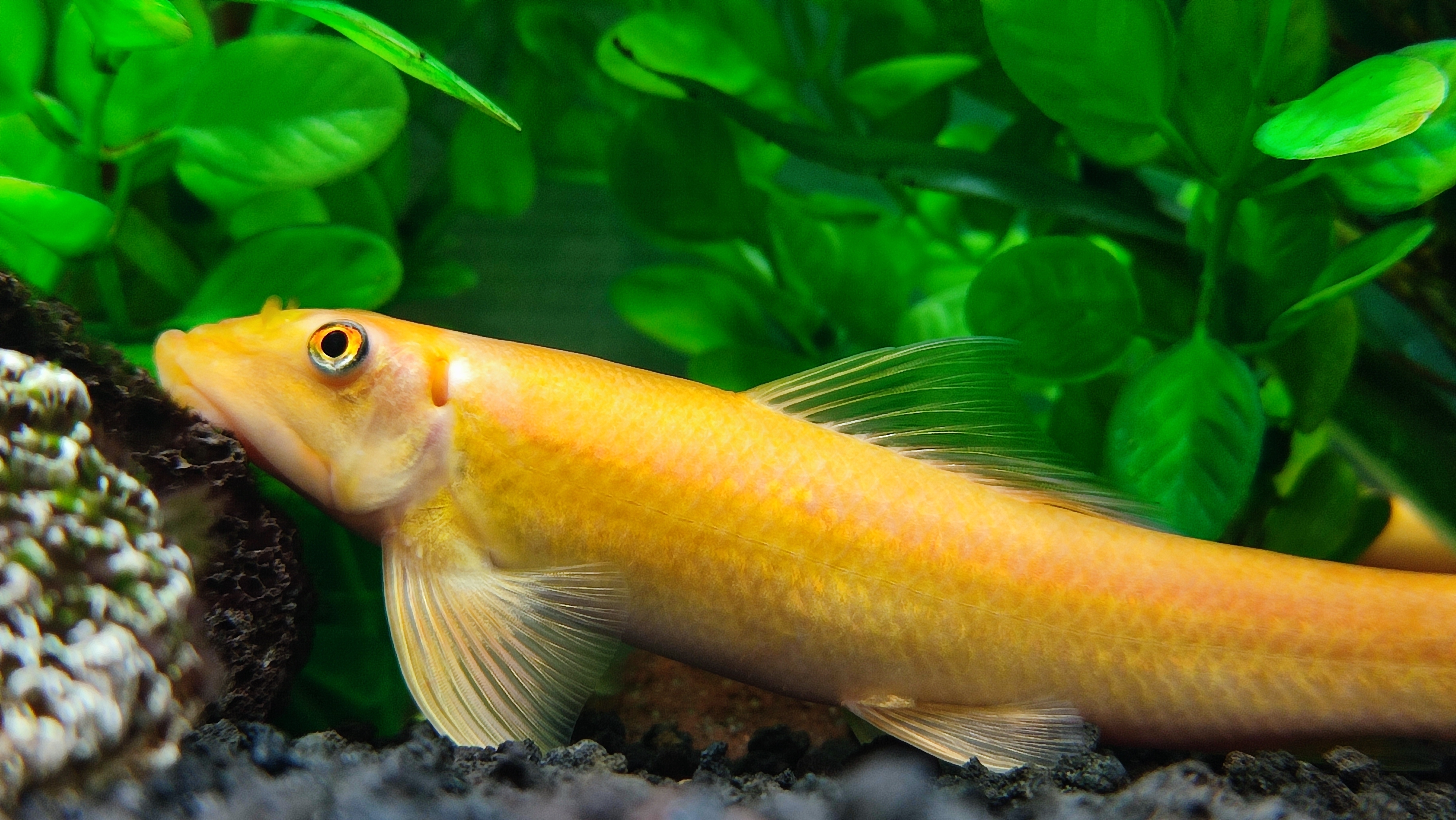
The Chinese algae eater has long plagued aquarists' tanks. Purchased small to tidy up some greenery on the rocks or glass, they'll soon trick you and turn into a menace. Reaching over 20cm (8") in length as they mature, these fish stop eating much algae as adults. Instead they have a tendency to rasp on the flanks of larger fish and become quite territorial.
Ignore the pretty gold exterior, and the cheap price tag. This is not the answer to your algae problems!
Alternative algae solutions
Carry out some water tests, check the lighting and look for signs in any live plants to see what the cause of the algae could be. The type of algae may help you narrow down the cause so that you can win the algae battle.
If an algae eating species is what you truly desire there are some lovely alternatives. Bristlenose plecos (Ancistrus spp.), Amano shrimp and Siamese algae eater are all an absolute treat for your planted aquarium.

House plant imposters
The final trick in the hobby to mention is terrestrial plants sold alongside true aquarium plants. This is less common now but certainly still occurs. We won't cover this in detail as we already have a feature the 21 plants to avoid.
You can turn these tricks into a treat though, by simply placing them above the water line. Many of the house plants grow well with their roots in the water. The added foliage above the water line can look incredibly effective!
Related article: 5 great house plants to grow above your aquarium!