


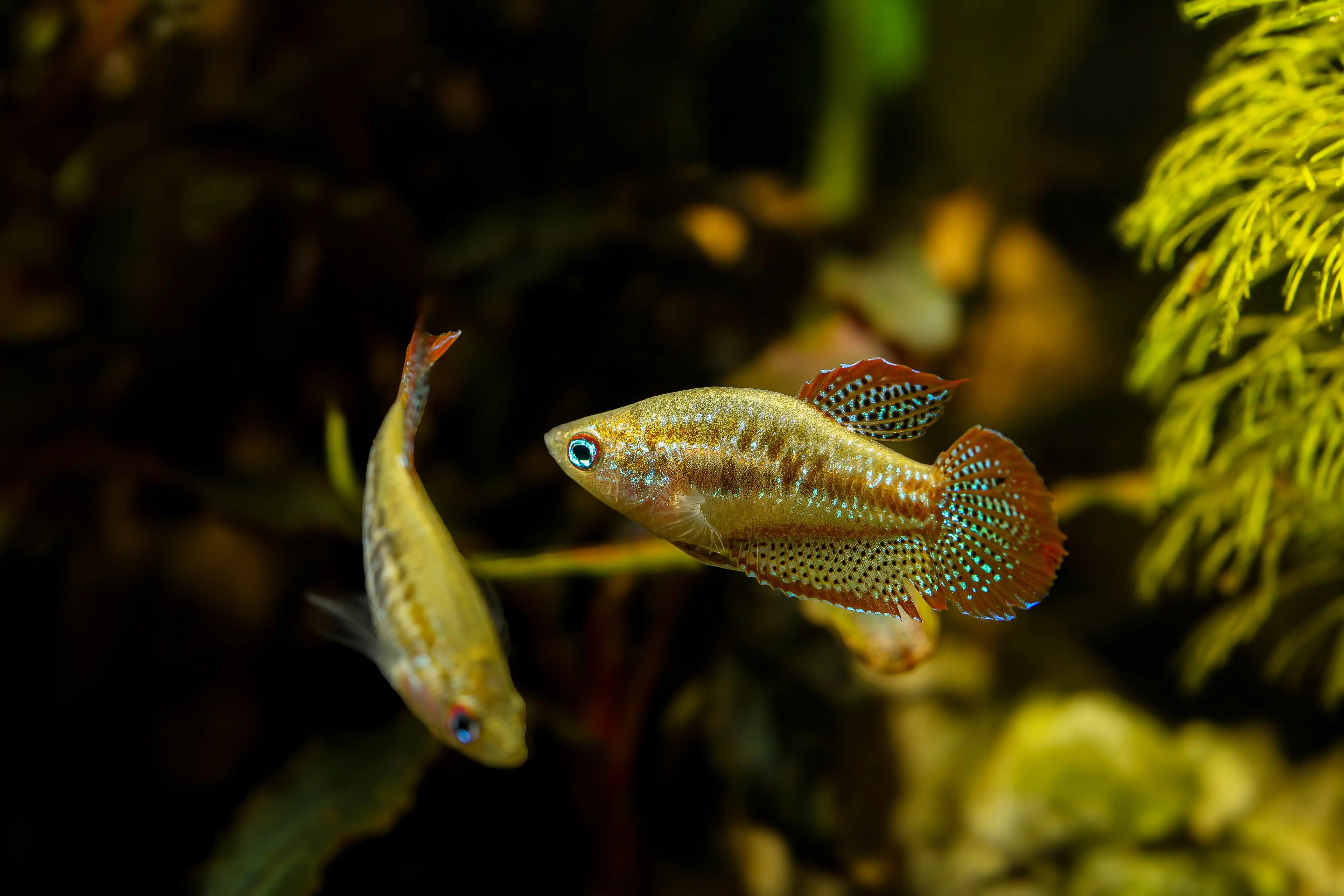
Our editor, Alex Bell, explains all you need to know about the small gourami, Trichopsis pumila. A small fish that is suited to life in planted aquariums.
I recently wrote a piece on how I recommend liquorice gouramis as the perfect inhabitant for your first blackwater aquarium because of their small size, awesome personality and behaviours. Well, I did not want to leave out those with tastes that are a little greener.
What size aquarium do sparkling gourami need?
Enter the sparkling gourami (Trichopsis pumila), the perfect option for your nano planted aquariums. Reaching no more than 4cm (1.5”), about the same size as the Parosphromenus, small groups of these fish do well in tanks of about 45cm (18") long or larger. Breeding pairs could be kept in aquariums measuring 30cm (12") though ensure that you get a male and female as two males will squabble. These tanks are slightly larger than what I would recommend for liquorice gourami as from my experience, I see more aggression with this species. There are occasionally rips to the beautiful fins of the sparkling gouramis from territorial disputes and therefore a little extra space for the smaller individuals to retreat to is important.
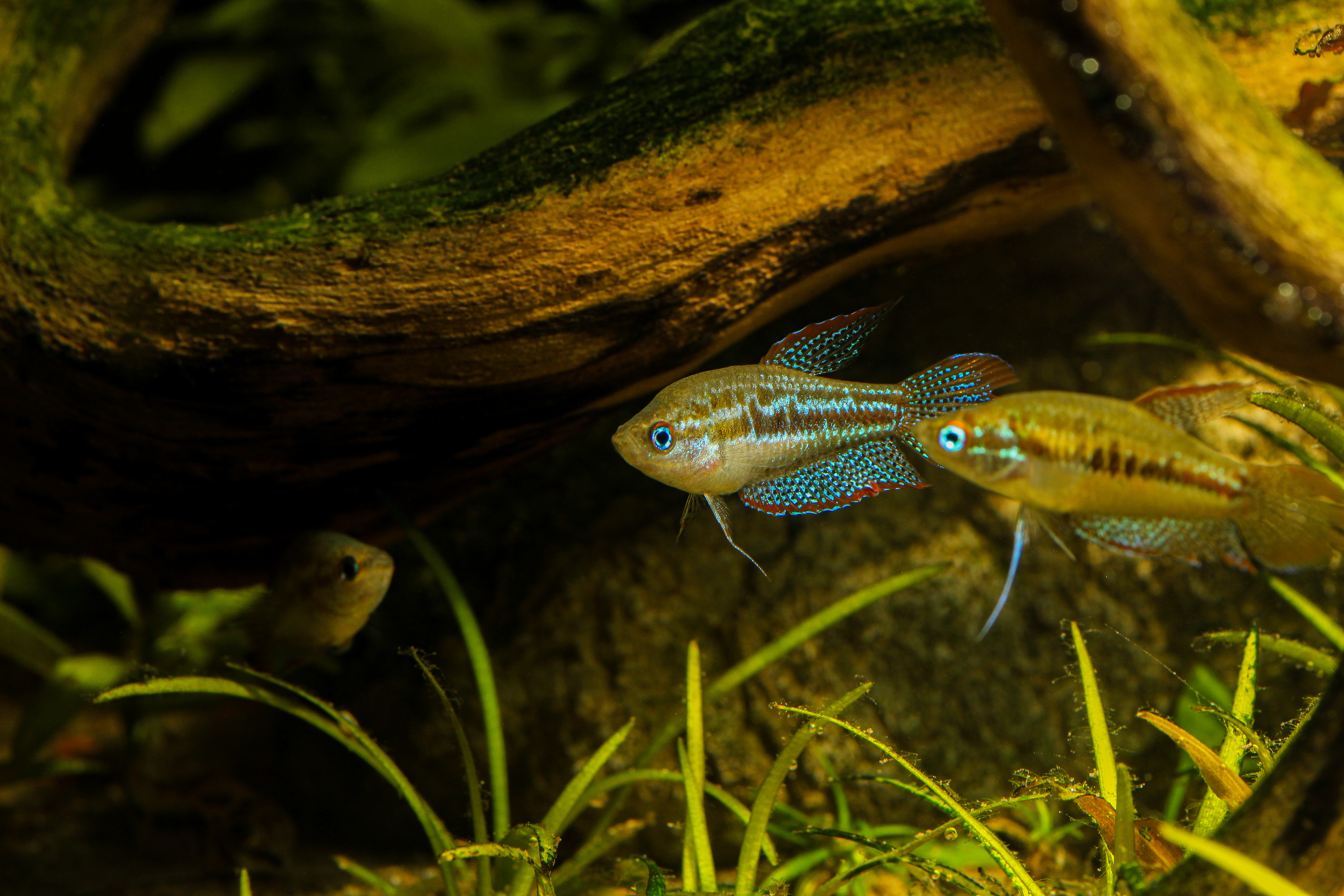
Wild habitats of Trichopsis pumila
In the wild these fish are found in a wide range of habitats but one thing they have in common is slow moving water. Whether that is tannin-stained peat swamps, floodplains of dense vegetation or even roadside ditches, these fish have been found there. Their distribution spreads across Cambodia, Thailand, Vietnam and Laos within the lower Mekong River basin and within this wide area they seem to show a preference to dense aquatic vegetation. This is one of the reasons why I think they are perfect for many planted aquariums, although, it is clearly not essential for them given peat swamps rarely support dense growth of aquatic plants and yet they are found there too. With this in mind, and despite predominantly focusing on how to maintain this species in beautiful aquascaped aquaria, don’t feel like you cannot add a handful of botanicals to their aquarium, as they will certainly enjoy that too.
They have been spotted in the rice fields of Thailand alongside least rasbora (Boraras urophthalmoides), croaking gourami (Trichopsis vittata), Somphong's rasbora (Trigonostigma somphongsi, pictured below), cherryspot and red tailed rasbora (Rasbora rubrodorsalis, R. borapetensis) and the striped snakehead (Channa striata), although the latter would not make for a good tank mate.

High tech or low tech for gourami?
While the fish will certainly enjoy the dense growth of a high-tech aquarium, and even seem to tolerate quite bright lighting, there is one thing they will not enjoy that seems a bit of a staple in these beautiful aquascapes. You guessed it, strong flow. I see countless small aquariums with huge, overpowered external canister filters on them to ensure an even distribution of plant fertiliser and CO2 and that absolutely makes sense for the plant’s health. However, in doing so you are restricting yourself to fish species that can tolerate this torrent of water movement, and thus preventing you from the opportunity of keeping this species, and many others.
When planning an aquarium to showcase the sparkling gourami I would recommend finding a bit of a balance. Feel free to continue to utilise plant substrates as the plants will still love to grow in it without the high flow, giving strong root growth and beautiful foliage. It will even slightly affect your water chemistry bringing the pH down to below 7, which will be very much appreciated by the gourami given their preference for slightly softer and acidic conditions. You don’t need to worry too much about chasing specific numbers though, they’ll be content with a pH of between 6 and 7.5, just ensure stability. With this substrate and a reasonable LED unit you can grow a very successful planted aquarium with just a routine fertiliser addition by utilising some of the less demanding, but still beautiful, plant species available.
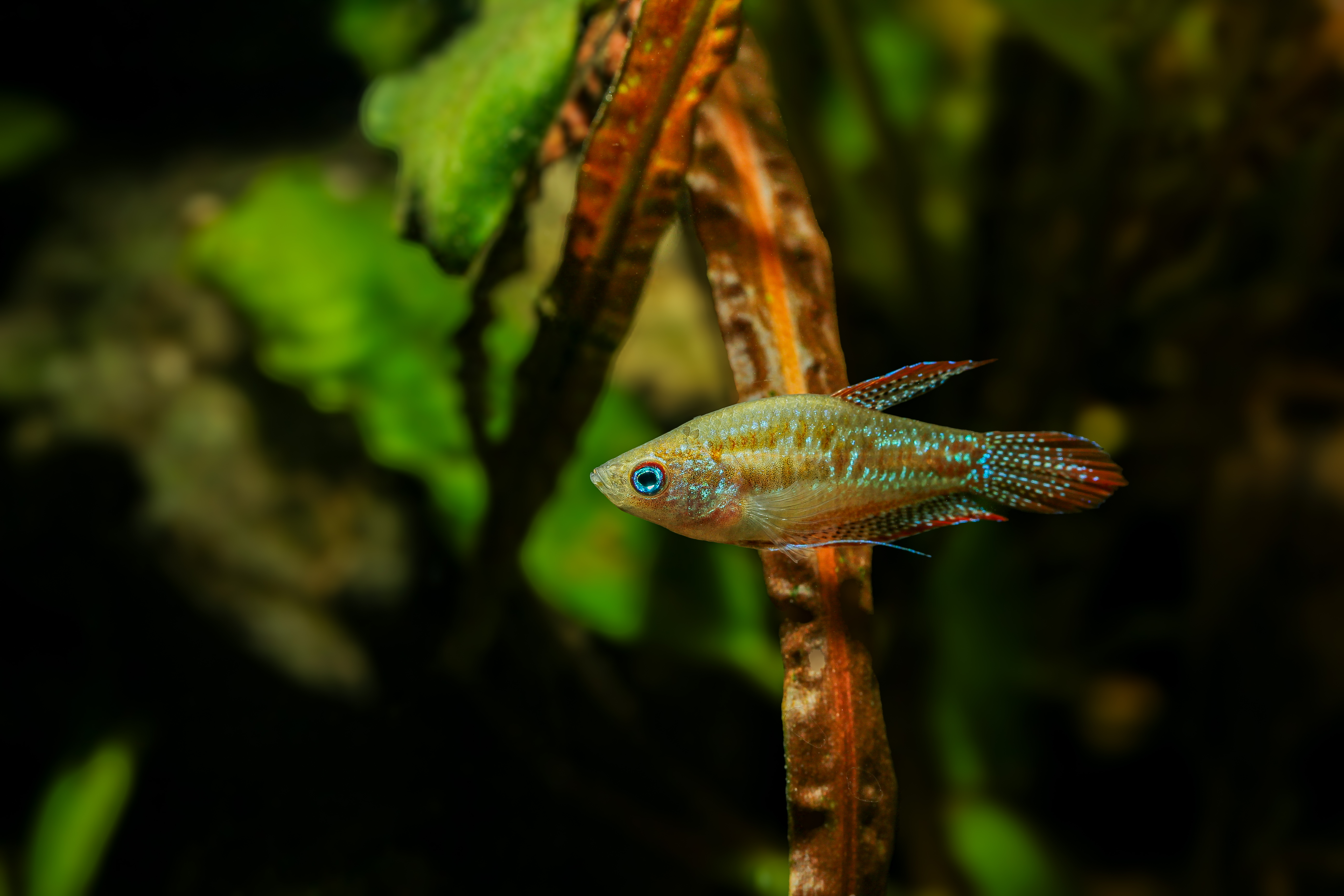
Feel free to inject CO2 and have high end LED lighting if you wish, as always it is about finding the right balance between all of these for your aquarium to run successfully and perhaps this is your method at achieving that. You may find, however, by providing everything your plants could need to grow but without the higher flow rate that some stems start to struggle in some of the slower moving areas of your tank. In which case, it may be best to dial the intensity of your light, CO2 and fertiliser additions back a little and utilising some of the slower growing rosette plant species like Cryptocoryne and Echinodorus that can tolerate these conditions a little better. There are some beautiful species in these genera that will still very much appreciate the slight addition of CO2 and a high end light.
Related article: An introduction to aquascaping
Do I need a lid to keep sparkling gourmi?
With beautiful planted aquariums, it can be really tempting to get a rimless, ultra clear glass aquarium to display it within. However, I urge you to reconsider that for this tank. Like all anabantoids, sparkling gourami enjoy a layer of warm humid air above the tank as they can gulp air to breath using their labyrinth organ. They are also known to jump, so a lid is definitely your best bet to both keep them off of your carpet and provide that layer of air for them to use should they need it.
If you are dead set on utilising a rimless aquarium, of course it may be the only one you have available, set it up with a reduced water level, perhaps even as a paludarium style layout with plenty of emergent plant growth. These fish are quite happy in shallower waters and it can look extremely effective in your home, especially if the room also has plenty of house plants dotted around. In doing this, should the fish jump they are extremely unlikely to go so high to end up on the floor and instead will harmlessly plop back into the water.
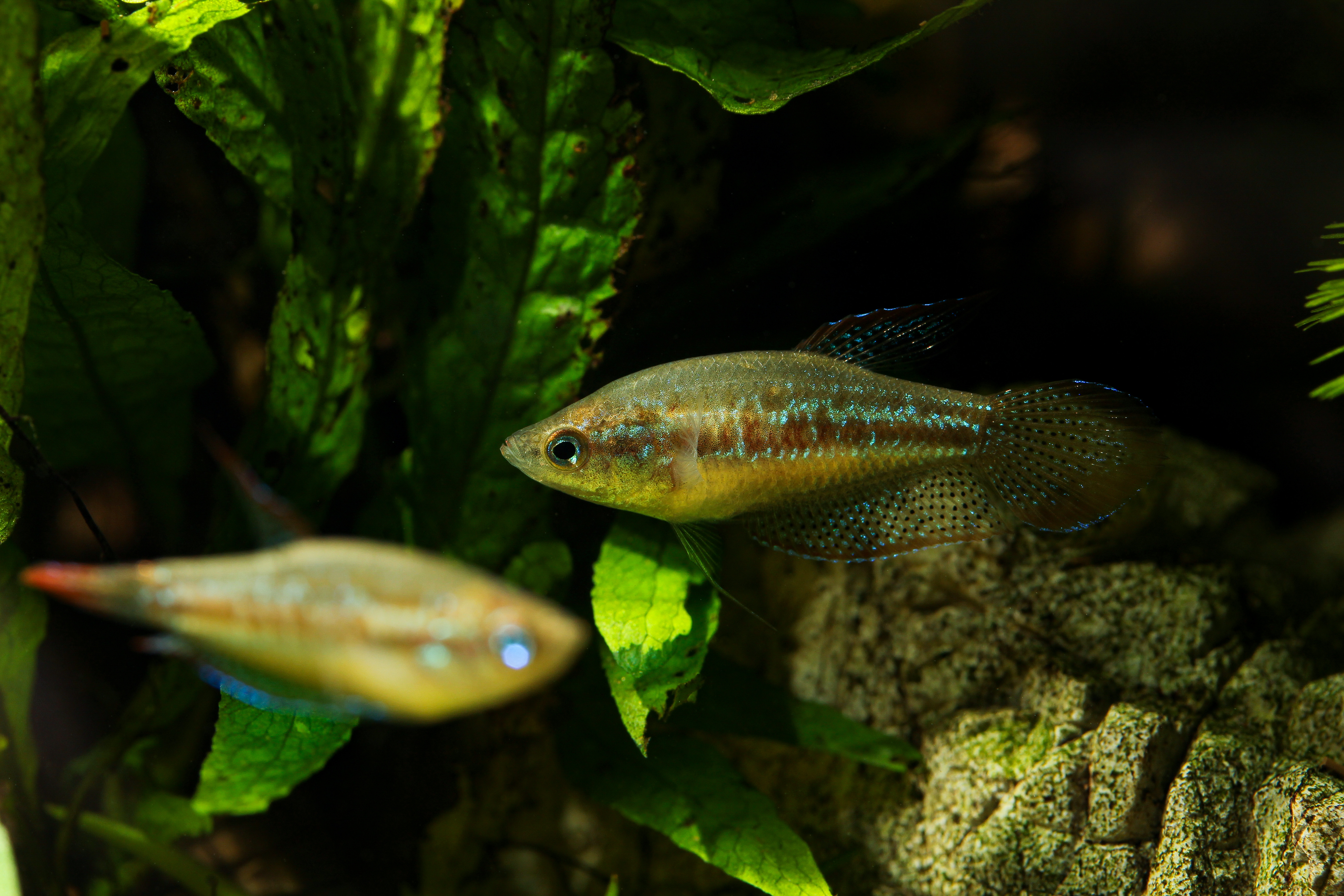
Will sparkling gourami breed in aquariums?
If breeding T. pumila is your goal, it is best to have a dedicated species only breeding tank for them. I have witnessed fry once in a community tank but the tiny young did not last long with other fish in the aquarium. These fish are bubble nesters so decorate the tank with plants with broad leaves, tubes, caves and even some areas of dense fine leaved plants so the male has plenty of choice in where to build his nest. He typically will not tolerate other gouramis, even females, near his chosen location until the nest is fully constructed but once done he will attempt to woo his chosen mate before spawning occurring just below the nest. The male wraps himself around the female in an embrace before a small number of eggs are released and fertilised before being transferred to the bubble nest in the males mouth. This is then repeated several times until the female has laid all her eggs.
At this point the male assumes sole responsibility for the parental care, collecting any eggs or young fry that fall from the nest and returning them. The eggs hatch after an average of 2 days, with a further 2 days before emerging as free swimming fry. At this point, the male no longer cares for them, and it is essential to have a very tight-fitting lid as warm air is a must for the development of the fry’s labyrinth organs. Feeding can be challenging as they are very small, infusoria is your best bet initially before small vinegar eels, microworms and baby brine shrimp can be introduced to their diet.

Can I keep shrimp with sparkling gourami?
In planted aquascapes it is common place to have a team of shrimp to do some of the tidying up for us. But you should think twice before you add any of the smaller species to an aquarium with sparkling gourami as they are excellent shrimp hunters. They are unlikely to take down a fully grown shrimp unless it has just moulted their hard exoskeleton, but any shrimplets you were hoping to see will be seen as snacks and a large population can soon dwindle. As such, I would recommend going down the route of snails and perhaps a troupe of larger Amano shrimps instead.
Related article: What can I keep with shrimp?
Fact File
Sparkling gourami
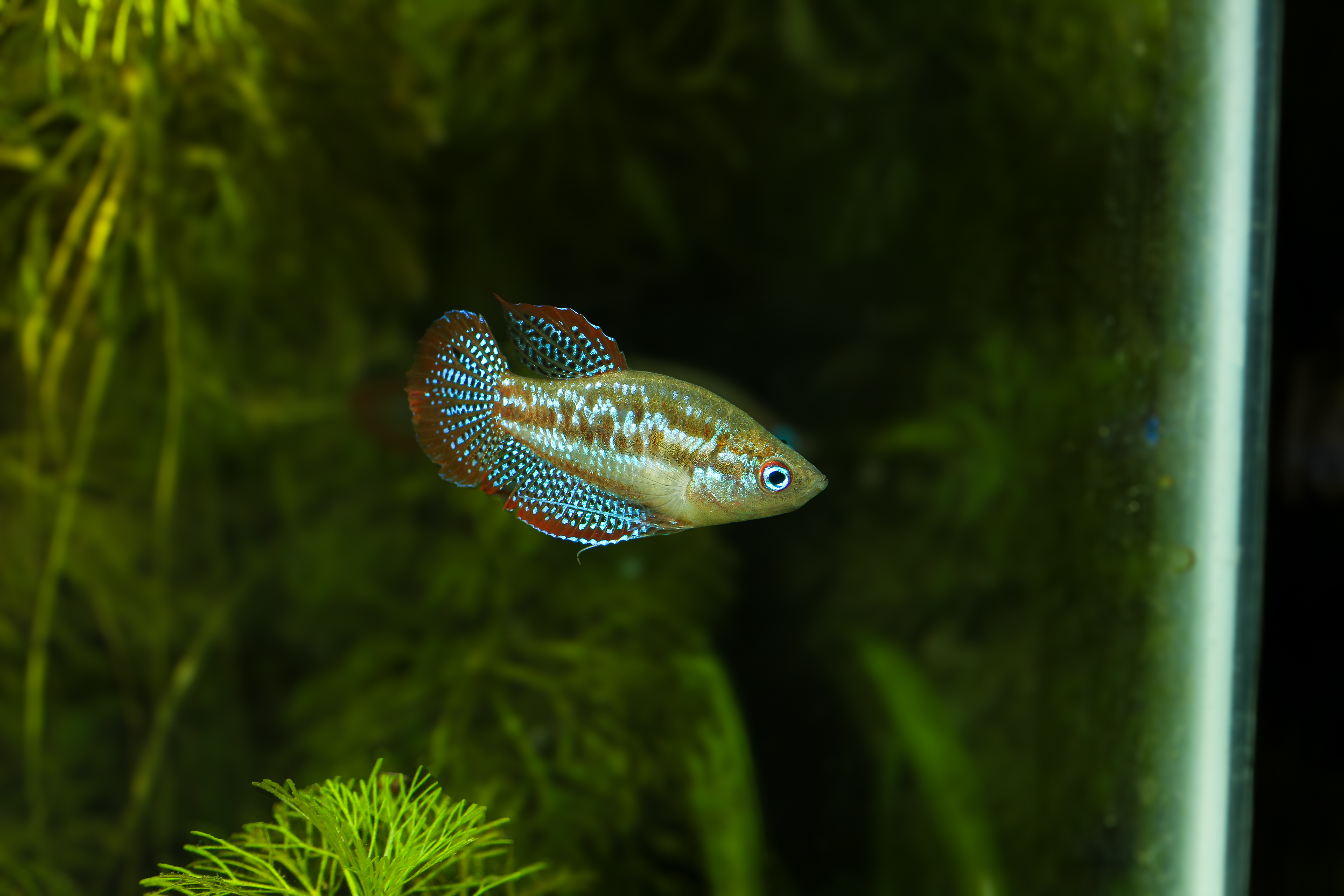
Scientific name: Trichopsis pumila
Size: 4cm (1.5”)
Origin: Found across Cambodia, Thailand, Vietnam and Laos within the lower Mekong River basin
Habitat: Found in a range of habitats including but not limited to: floodplains, canals, small tributaries, roadside ditches and peat swamps. Shows a preference for areas with dense aquatic or marginal vegetation.
Tank size: 45x30x30 for a group (18x12x12”)
Water requirements: 6-7.5 pH with less than 15°H
Temperature: 22-28°C (71-82°F)
Temperament: A generally peaceful fish although males may squabble, suited to a community of small fishes. Easily out competed by larger boisterous fish so these should be avoided. Will eat small ornamental shrimp.
Feeding: In the wild likely to predominantly consume invertebrates. In home aquariums they will readily eat prepared foods like flakes and pellets but offerings of frozen or live food should be included to well-condition the fish.
Availability & cost: Regularly available although the quality can vary so it is worth shopping around. Expect to pay around £4 a fish.
Want more fish keeping advice like this?
Sign up to our FREE newsletter for further fish keeping advice, useful fish keeping tips, competitions, latest news and updates, straight to your inbox! Sign up here.