


A practical guide to identifying, controlling and preventing common freshwater aquarium algae to help you keep your aquascape looking great.
Algae is one of the most common challenges faced by freshwater aquarium keepers. From a light dusting of green on the glass to thick, unsightly growth covering plants, rocks, and decorations, algae can quickly become a frustrating problem. While some algae in an aquarium is completely normal and even beneficial, excessive growth is usually a sign that something in the tank’s environment is out of balance.
The good news is that aquarium algae can usually be brought under control without resorting to harsh treatments. In fact, adding an algae treatment will generally only provide a short-term solution unless the underlying cause is addressed. You may kill or remove the algae, but if the conditions that allowed it to thrive in the first place remain unchanged, it is likely to return.
The key is understanding which type of algae you are dealing with, what is causing it to grow, and how to address the underlying conditions that allow it to thrive.
In this guide, we’ll look at some of the most common types of freshwater aquarium algae, including how to identify them, the typical causes behind each type, and the most effective ways to control and prevent them.
Common Types of Freshwater Algae
Let's get straight into the types of algae you are most likely to encounter in your freshwater tank. Whether you have a classic community aquarium, a low-tech aquascape or a high-tech underwater garden, one of these is bound to rear its ugly head at some point.

Photos by Shutterstock unless otherwise stated
Black Beard Algae (BBA)
When people picture algae, it is often green. But one of the most stubborn and frustrating types is not actually a vibrant green colour. Black beard algae, sometimes called black brush algae, is a red algae that forms small, hair-like tufts, usually on hardscape and plants.
While it is a red algae species, it can look purple, grey or black in the aquarium, depending on the lighting. Several factors can encourage it to proliferate, including:
- Elevated levels of organic waste
- Fluctuating CO2 levels
- Unhealthy live plants
You may also notice that BBA often thrives in higher-flow areas of the tank. Areas with turbulent or inconsistent flow patterns can create small pockets of fluctuating conditions where this algae can thrive.

Controlling Black Beard Algae
The first step is to investigate the potential causes above and try to establish which could be contributing to your algae problem. Simply removing the visible algae without addressing the conditions that caused it is unlikely to provide a long-term solution.
In a high-tech aquarium with carbon dioxide injection, maintaining consistent CO2 levels is particularly important. For example, if your canister runs empty and you leave it for a week before getting it refilled, the resulting fluctuation could contribute to a BBA problem.
A drop checker can help you monitor CO2 levels and identify significant changes. It is also worth having a second canister available, allowing you to swap it over as soon as the first one runs out.
If black beard algae is concentrated around your filter outlet, consider whether the flow could be contributing to the problem. Changing the type or position of the outlet may help distribute water more evenly throughout the aquarium. A spray bar, for example, can provide a broader and more consistent flow pattern than a narrow jet.
Organic waste should also be considered. If your filter is becoming clogged quickly, the substrate is littered with decaying leaves, or there is a noticeable build-up of other organic debris, a thorough aquarium clean may be a good place to start. Following this up with a more consistent maintenance routine can significantly improve your chances of getting on top of a persistent black beard algae problem.
Once you have identified and corrected the underlying cause, you can turn your attention to removing the algae that remains:
- Manually remove it: Use a suitable brush to scrub the algae from rocks and wood, and perform a water change afterwards to remove any algae that becomes dislodged.
- Remove heavily affected leaves: If a leaf is badly covered in BBA, remove it to allow the plant to concentrate its energy on producing healthy new growth.
- Consider a targeted treatment: Liquid carbon products containing glutaraldehyde can be used as a spot-dosed treatment.

Photo by AquaDip
Green Dust Algae (GDA)
Green Dust Algae typically appears as a dusty green coating across the aquarium glass. It can also settle on plant leaves and other surfaces. Unlike some more stubborn forms of algae, GDA is relatively easy to wipe away, but the frustrating part is how quickly it can return.
There are several factors that can contribute to green dust algae, but it is particularly common in aquariums with high nutrient levels and strong lighting.
As with many algae problems, the overall health and quantity of your plants is also important. Increasing healthy plant mass gives plants a greater ability to utilise available nutrients and compete with algae.

Photo by Alex Bell
Controlling Green Dust Algae
The first step is to look at the balance between lighting, fertilisation and plant growth. If your aquarium is brightly lit but contains relatively little healthy plant growth, there may be more light and nutrients available for algae than the plants can effectively utilise.
Rather than just wiping the glass every few days, you need to rebalance the aquarium. Don't change everything in one go; instead, slowly tweak the aquarium until you find the right balance by reducing the amount of fertiliser (or increasing water changes if high nutrient levels is due to high fish stocking), reducing the intensity of your lighting, or adding a few more fast-growing, easy stem plants.
If green dust algae has become well established, you can resort to a more drastic approach:
- Consider a blackout: Turning off the aquarium lights and keeping the tank completely dark for several days can deprive the algae of the light it needs to grow. A blackout of up to seven days can be effective in some extreme situations, although some plants may suffer with prolonged blackouts.
Top Tip
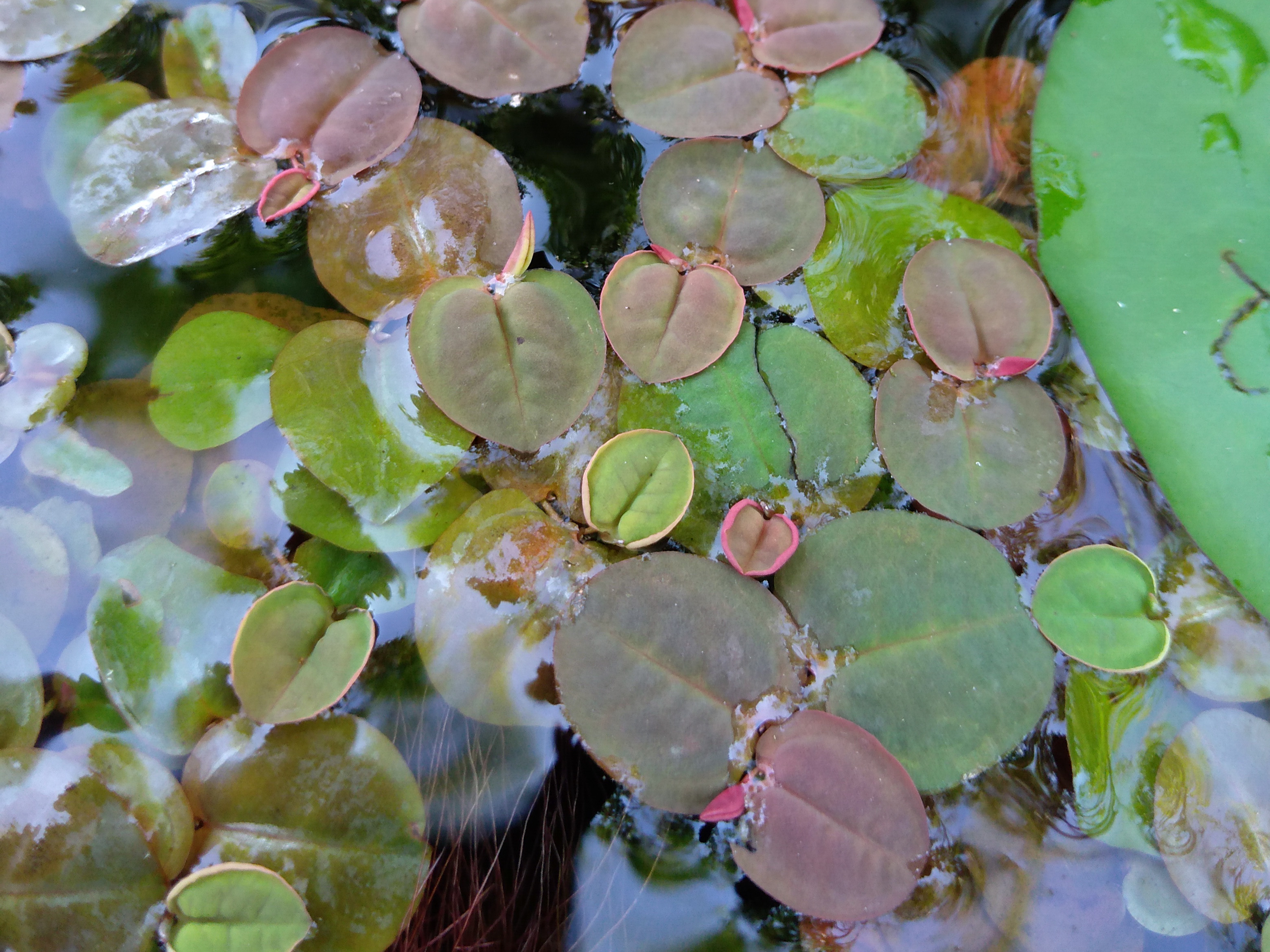
Don't underestimate floating plants when it comes to algae control. They can be extremely effective because they grow quickly, absorbing nutrients directly from the water column while also shading the aquarium below.
Just remember that floating plants can grow incredibly quickly, so remove excess growth regularly to prevent them from completely covering the surface and blocking too much light from reaching your submerged plants.

Blue-Green Algae (BGA)
Blue-green algae is one of the more distinctive and unpleasant aquarium growths you can encounter. It typically appears as a slimy blue-green coating, often forming across the substrate, although it can also spread over plants, rocks and other surfaces.
Despite its common name, it isn't actually an algae at all. It is cyanobacteria, a group of photosynthetic bacteria that can colonise aquariums when conditions are favourable. One of the easiest ways to distinguish it from many other types of aquarium algae is its texture. Rather than forming individual spots, hairs or dusty coatings, cyanobacteria often forms sheets or mats that can be peeled or siphoned away relatively easily.
It also has a distinctive smell. If you remove a significant amount from the aquarium, you may notice a strong, unpleasant odour, which is another useful clue that you're dealing with cyanobacteria rather than conventional algae.

Controlling Blue-Green Algae
The first step is to look at the conditions that may be allowing the cyanobacteria to establish. Insufficient water circulation, low oxygen levels, low nitrate levels, excessive organic waste and too much light can all contribute to blue-green algae becoming a problem.
You can increase the flow and oxygen levels by adding a second filter or wavemaker positioned so that more surface agitation is created. Similarly, an airstone can help add a little extra water movement whilst creating more surface agitation, and therefore oxygenation.
You can increase nitrate levels fairly easily by using a nitrogen specific fertiliser, giving the plants a chance to outcompete the blue-green algae. Similarly, LED lights can usually be dimmed using the built-in controller or app. However, direct sunlight can be more of a nuisance to solve. Keep curtains or blinds closed during the day or drain and move the tank to an area with less ambient light.
Combine the above with either or both of the following to attack the cyanobacteria from all angles:
- Siphon out the algae: during a water change, suck up the sheets of 'algae' taking care not to simply break it apart and spread it around the aquarium.
- Consider a blackout: Turning off the aquarium lights and keeping the tank completely dark for several days can deprive cyanobacteria of the light it needs for photosynthesis.
There are aquarium products specifically designed to target cyanobacteria. These can be useful when environmental changes and physical removal alone aren't enough but must not be relied upon as the sole solution.
It's also worth checking what products are legally available in your country. Some cyanobacteria treatments contain antibiotics, which are prescription-only medicines in certain countries, including the UK. Always follow the manufacturer's instructions and make sure any treatment is suitable for the fish, plants and invertebrates in your aquarium.

Photo by Alex Bell
Filamentous Algae (Hair Algae)
There are many different types of filamentous algae, but most have similar causes and can be controlled using similar measures. Filamentous algae typically appears as short or long green hairs, which can quickly become tangled among the plants and hardscape.
Like many other types of algae, biologically immature aquariums can be particularly susceptible. Anything that increases ammonia or organic waste can potentially contribute to an outbreak, including stressed plants, decomposing plant material and fish waste. Even something as simple as a root tab that hasn't been pushed far enough into the substrate can cause problems.
Excessive lighting can also cause filamentous algae to take over rapidly. Also, changes to the aquarium environment can place plants under stress, giving the algae a chance to take hold.

Controlling Filamentous Algae
The first step is to identify the cause of the outbreak.
In newer setups it may be as simple as you haven't found the right balance yet. Consider reviewing the lighting, fertiliser routine, and planting density.
For mature tanks that suddenly have an outbreak, look at what's changed. If you've changed the light unit, brightness, or schedule recently, this could well have been the cause. Alternatively, if you have skipped a few water changes recently and allowed waste organics to build up, that could be the trigger. If so, a more thorough clean followed by strict routine maintenance might help.
The last thing to check is your plant health. Stressed or dying plants can be a magnet for filamentous algae. Trim unhealthy or badly affected leaves, or remove plants that are dying completely. Replace these dying plants with easier, faster growing species to help outcompete the algae.
Once the underlying conditions have been addressed, there are several ways to bring filamentous algae under control:
- Manually remove it: Remove as much of the algae as possible by hand or with suitable aquarium tools. If it has become tangled through affected plants, removing the worst-affected leaves may be easier than trying to separate every filament.
- Consider a blackout: As above, turning off the aquarium lights and keeping the tank completely dark for several days can deprive filamentous algae of the light it needs to grow.
- Consider an algae treatment: As above, algicidal treatments can help you in your battle against filament algae.
Related article: Can I rescue this tank from algae?

Brown Algae (Diatoms)
Brown Algae, commonly referred to as diatoms, is one of the most common types of growth to appear in a new aquarium. It typically forms a brown or greenish-brown dusty coating across the aquarium. Unlike many other forms of algae, diatoms are usually soft and relatively easy to wipe away.
Diatoms are particularly common during the cycling phase of a new aquarium. They can make a newly set-up aquarium look rather untidy, but in most cases they are nothing to worry about. Diatoms are usually a temporary problem and will often decline naturally as the aquarium matures.
Controlling Brown Algae
In most new aquariums, the best approach to dealing with diatoms is simply to remove them as part of your normal maintenance routine and allow the aquarium time to mature. There is usually little benefit in aggressively treating them when they are likely to disappear naturally anyway.
If the brown coating has become particularly heavy, there are several things you can do to improve its appearance and support the development of a mature aquarium:
- Manually remove it: Wipe algae from the glass and remove it from hardscape and plants during your regular maintenance. Siphon the substrate afterwards to remove the remaining diatoms that you have disturbed.
- Consider beneficial bacteria: Adding a reputable aquarium bacterial supplement or mature filter media may help speed up the cycling process.
- Introduce suitable algae eaters: Once your aquarium is properly established and suitable for the species concerned, algae-eating fish and invertebrates can help graze on diatoms.
- Be patient: In a newly established aquarium, time is often the most effective solution. As the biological ecosystem matures, diatom growth will commonly reduce without any drastic intervention.

Green Spot Algae (GSA)
Green Spot Algae appears as small, hard green spots that typically develop on the aquarium glass, hardscape and plant leaves. It is particularly common in aquariums with higher lighting levels and can be one of the more stubborn types of algae to remove.
Unlike softer algae, green spot algae can form a hard crust that doesn't simply wipe away. A blade-type algae scraper or the edge of an old plastic card can make removing it from the aquarium glass much easier. Take care when using a blade around silicone seals and avoid using them on acrylic aquariums, as they can be easily scratched or damaged.
Controlling Green Spot Algae
The first step is to check your phosphate levels and consider whether your lighting is particularly strong. If phosphate is depleted, increasing its availability can help encourage healthier plant growth and reduce the conditions that favour persistent green spot algae.
Once the underlying conditions have been addressed, the existing algae can be removed:
- Manually remove it: Use a suitable algae scraper, razor blade or old plastic card to remove the algae from aquarium glass.
- Remove damaged leaves: Trim heavily affected leaves and remove older or unhealthy plant growth. This encourages the plant to produce fresh, healthy growth.
- Reduce light levels around affected plants: Low-light plants such as Anubias and Bucephalandra are particularly prone to green spot algae when exposed to strong lighting. Try positioning them beneath taller plants or hardscape to provide some shade and reduce the amount of light reaching their leaves.

Staghorn Algae
Staghorn Algae appears as short, grey or grey-green hairs that attach themselves to aquarium plants, hardscape and other surfaces. The individual strands often branch as they grow, giving them an appearance similar to stag horns – hence the name.
Staghorn Algae can be particularly stubborn once established and is not always easy to remove manually. It is often associated with unhealthy or struggling plants, while fluctuating CO2 levels and sudden increases in organic waste can also contribute to an outbreak.
As with many forms of aquarium algae, looking at the overall health of the aquarium is important. Poor plant growth can leave more resources available for algae, while unstable conditions can make it difficult for plants to compete effectively.
Controlling Staghorn Algae
Battling Staghorn Algae is a challenge, as it is usually rather stubborn. You can make the aquarium less favourable to Staghorn Algae in a few ways.
Aim to maintain consistent levels of CO2 throughout the lighting period. Avoid large fluctuations caused by inconsistent injection or interruptions to your CO2 supply as this can trigger algae growth.
You should also regularly remove dead and decaying leaves and other organic waste from the substrate during water changes as well as any unhealthy plants and leaves. Replace badly affected plants with new, fast growing species to help outcompete the algae and ensure you provide adequate fertilisation to ensure the plants are thriving.
Physically removing the staghorn algae can be difficult.
- Manually remove algae with a toothbrush: Use a clean, new brush to remove the algae from hardscape and comb through the plants. The bristles work well for trapping the long strands of the staghorn algae.
- Consider an algae treatment: As above, algicidal treatments can help you in your battle against staghorn algae. Spot dose the badly effected areas while the filter is turned off for a few minutes.

Photo by Jozef Scury
Cladophora Algae
Cladophora has a branching, bushy growth habit, with coarse filaments that are noticeably tougher than those of many other filamentous algae. It can form dense, tangled clumps among plants and hardscape, and is one of the more difficult types of algae to remove once it becomes established.
Densely planted areas with deteriorating plant growth or poor water circulation can be particularly susceptible to Cladophora. However, unlike some algae that are strongly associated with unhealthy plants or poor aquarium conditions, Cladophora can also appear in otherwise healthy, well-maintained aquariums.
Its ability to become tangled among healthy plant growth makes it particularly frustrating. Removing the visible algae without disturbing the surrounding plants can be difficult, and any remaining fragments can potentially allow the problem to persist.
Controlling Cladophora Algae
Cladophora is notoriously difficult to eradicate, so early intervention is important. Encouraging healthy plant growth to outcompete the algae, along with making the aquarium less favourable by increasing water flow to remove any dead spots, can help.
Otherwise, it's all about removal.
- Manually remove it: Carefully remove Cladophora by hand or with suitable aquarium tools, taking care to remove as much of the growth as possible.
- Remove old plant growth: Trim away heavily affected or deteriorating leaves and discard badly affected plant material.
- Consider spot treatment: Targeted algae treatments may help control stubborn patches once the algae has been manually removed as far as possible.
Algae... Is It All Bad?
Algae is a perfectly natural part of any aquatic environment, and a small amount in your aquarium is nothing to be feared. Small patches can be easily kept neat and tidy as part of your normal aquarium maintenance, and in many cases are simply a sign of a healthy, functioning ecosystem.
It is when algae begins to take over that action is needed. Severe outbreaks can quickly become unsightly and may indicate that something in the aquarium is out of balance.
Remember, removing the algae is only part of the solution. You need to address the underlying cause of the outbreak too. Otherwise, you'll find yourself removing algae as quickly as it grows – and that's a battle you're unlikely to win in the long term.