


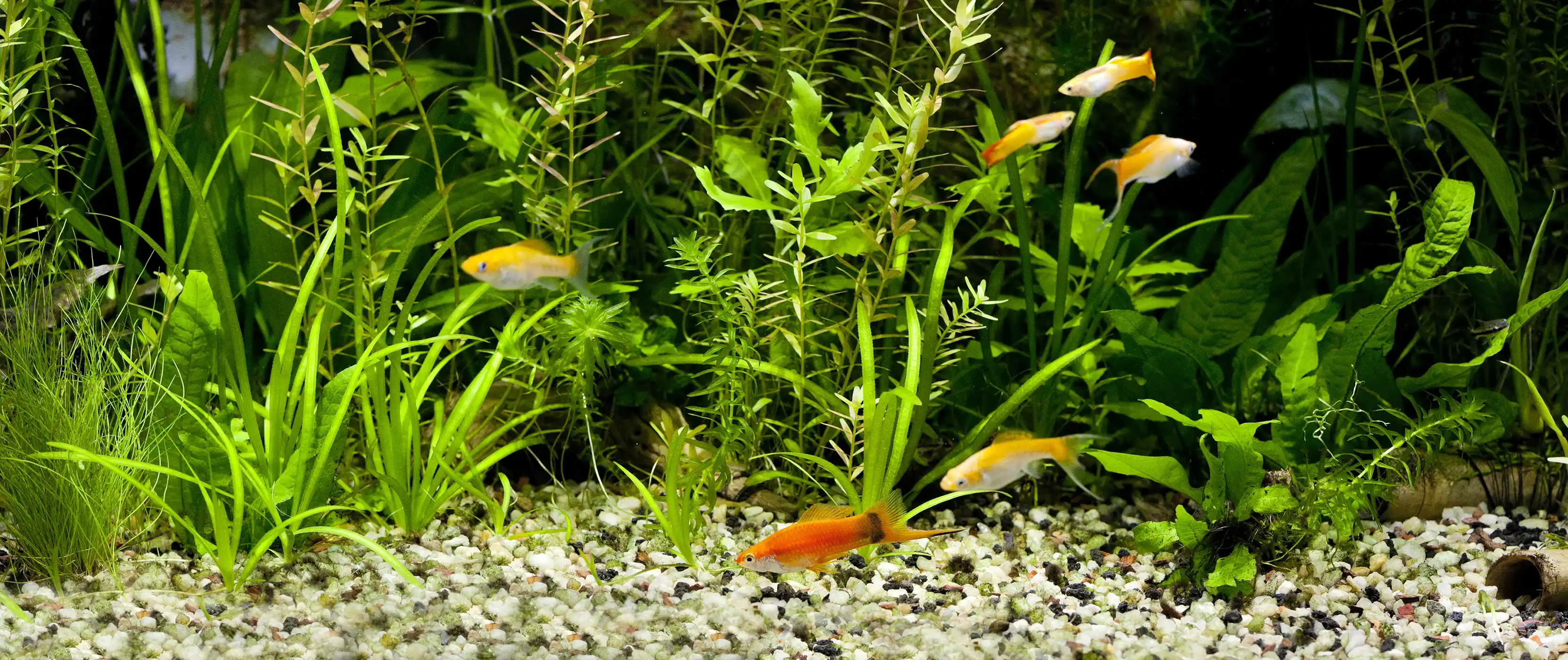
Beginner fish tank kits are great but there are some additional products you will need to buy before starting your first aquarium. We have produced a shopping list of the essentials to help you.
Starting your first aquarium can be an exciting but daunting adventure. Many aquariums come as a complete kit. These include a suitable aquarium filter, aquarium heater, lighting and sometimes even a sturdy stand. However, there's plenty more products required to successfully set up a fish tank.
We have broken up our shopping list into small sections depending on the purpose of the products. This means you can skip down to the section that you need to know about.
Keeping the water safe for fish
Clean water is key to having a successful aquarium, and the fish tank's filter is only a small part of this. You must make tap water safe for fish and have a way of testing the water parameters. A filter bacteria starter can be useful to help kick start your aquarium's cycle, getting your tank safe for fish.
The exact shopping list depends on your chosen method to cycle your tank. We recommend fishless cycling where possible and the below list will have everything you need to do this.

- A concentrated aquarium dechlorinator like NT Labs Optimus.
- An aquarium test kit like the API Master Test Kit
- Beneficial bacteria, this can be mature media from a friend or purchased as an off the shelf starter.
- Aquarium thermometer, so you can check that the water temperature is the correct for your choice of fish. You can get simple glass thermometers, or external digital ones.
- An ammonia source like Dr Tims Ammonium Chloride Solution.
Aquarium decoration
Writing a complete list for required decoration is almost impossible. Your own personal preferences and the type of aquarium you are creating will dictate what you need to buy. For a classic community tank, the below is a general guide of what you need.

- Aquarium substrate, an inert sand or gravel is best for most community aquariums. Research the requirements of the species you want to keep as some fish are not suitable for gravel.
- Aquarium hardscape, this can be natural wood, rocks or even a classic shipwreck.
- Aquarium plants, you can opt for live plants or fake aquarium plants depending on your personal preference. You can create some great looking aquariums using plastic plants. If using live plants, consider buying some root tablets and liquid plant fertilisers.
- Caves are critical for the wellbeing of some species including many catfishes, loaches and cichlids.
Aquarium maintenance essentials
Cleaning your fish tank is a task that needs doing regularly. So having the right equipment for the job is important as it will make your life easier.

Photo by Shutterstock
- A gravel vac will allow you to keep your substrate clean. Also, it removes water easily from your aquarium for your partial water changes.
- A bucket, or two, is key for transporting water from, and to your aquarium during water changes.
- A 2-litre measuring jug is always helpful to have on hand. Whether you are adding water back in, holding plant trimmings or just to place wet things in.
- Algae cleaners, the glass will go green from time to time and nothing beats manually scrubbing it off. You can opt for a simple sponge pad, a long handle scraper, or a magnetic algae cleaner.
- A fish net is not only great for moving fish, but they can also be great at catching plant trimming during maintenance.
- Fish food is, somewhat unsurprisingly, essential for keeping fish. Most community fish will do well on a classic flake food, or small granule. Larger fish may need a chunkier pellet and algae eaters need a plant based wafer. Consider a treat tablet that sticks to the glass for added fun during feeding time!
Helpful electronics for your aquarium
While the complete beginner aquarium kit will have the key electronics, there's a couple additions that can be helpful.
- A multi socket extension lead is often essential. Not many of us have 3 sockets close together for the three key electronics, but they may not be in the right place either. An extension lead means you can position the tank in the best place in the room without worrying about where the sockets are. Plus, it ensures you can keep a drip loop on your cables by not having to stretch them too far.
- A plug in timer for your lights is almost as essential as leaving the lights on for too long will cause algae issues. Generally, 6-10 hours is perfectly fine and having a constant day-night pattern will be beneficial to your fish. Simple analogue timers work well, but consider a Wi-Fi controlled plug, too.

Now you can start keeping fish
Now you have all the products you need, you can start keeping fish. A word of warning, it is addictive and you will likely want to upgrade to a bigger tank, or buy a second one.
Why not get a subscription to Practical Fishkeeping magazine? You will learn more about fascinating fish, amazing aquascapes and get more aquarium tips and advice!
Some of the links provided are affiliate links which we may earn commission from if you make a purchase via the provided link. This will not cost you extra.