


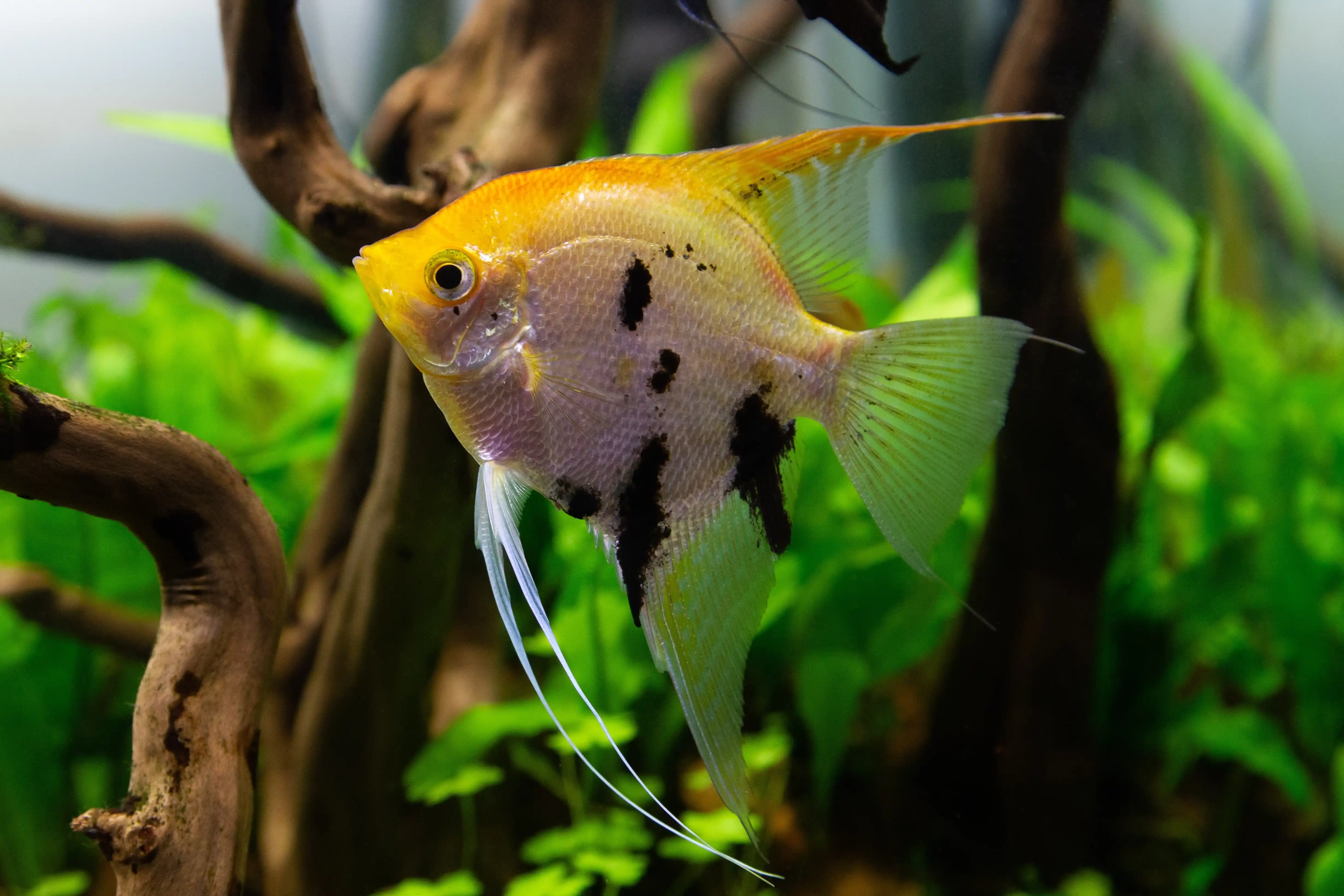
Almost every aquarist will have had some sort of interaction with angelfish, but which species is suitable for you? We provide a quick guide to each species of Pterophyllum
All photos by Shutterstock
I imagine that in every aquatic store you visit you see at least one tank of freshwater angelfish. These fish, of the genus Pterophyllum, have been a staple in the hobby for a long time, and for good reason.
They entered the trade in the early 1900s and quickly gained admirers. Their unusual body shape and elegant fins made them stand out. Back then they had a hefty price and reputation for being difficult to keep, but a lot has now changed.
Here are three fact files that will give you the basics of what you need to know to care for each species of angelfish.
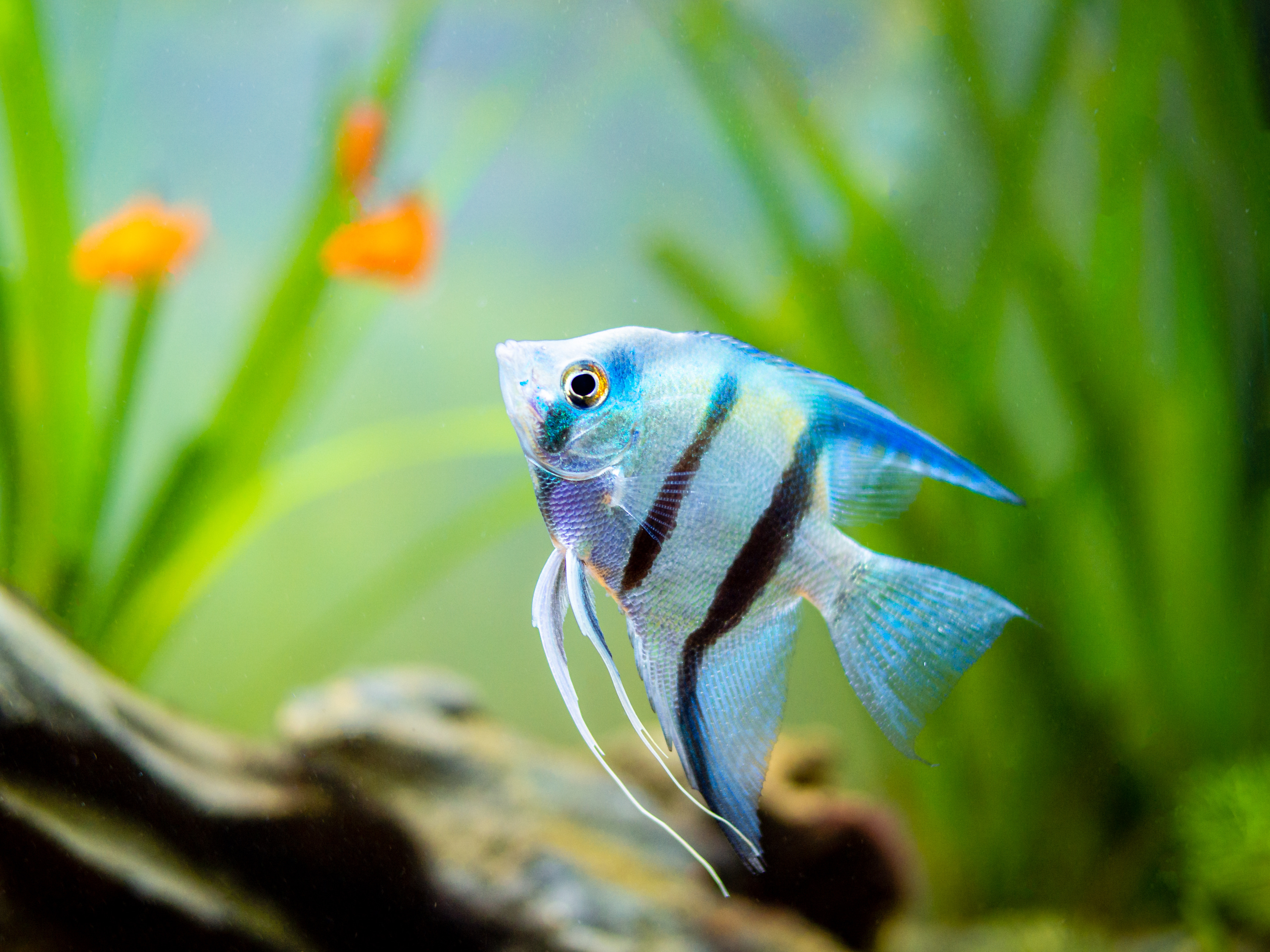
Captive bred angelfish care
The majority of the angelfish we see today will be captive bred. Keeping these fish is far easier than keeping their wild ancestors. They are more tolerant of a range of water parameters.
These captive bred angelfish are available in a variety of colours and patterns. These varieties all belong to the same species of angelfish, Pterophyllum scalare.
Keeping angelfish in your home aquarium is now fairly easy. The fact file below will give you a basic guide to follow for success. They are actually a cichlid, and like many cichlids they do become aggressive when breeding in a community aquarium. Therefore, you need to consider this when choosing potential tank mates.
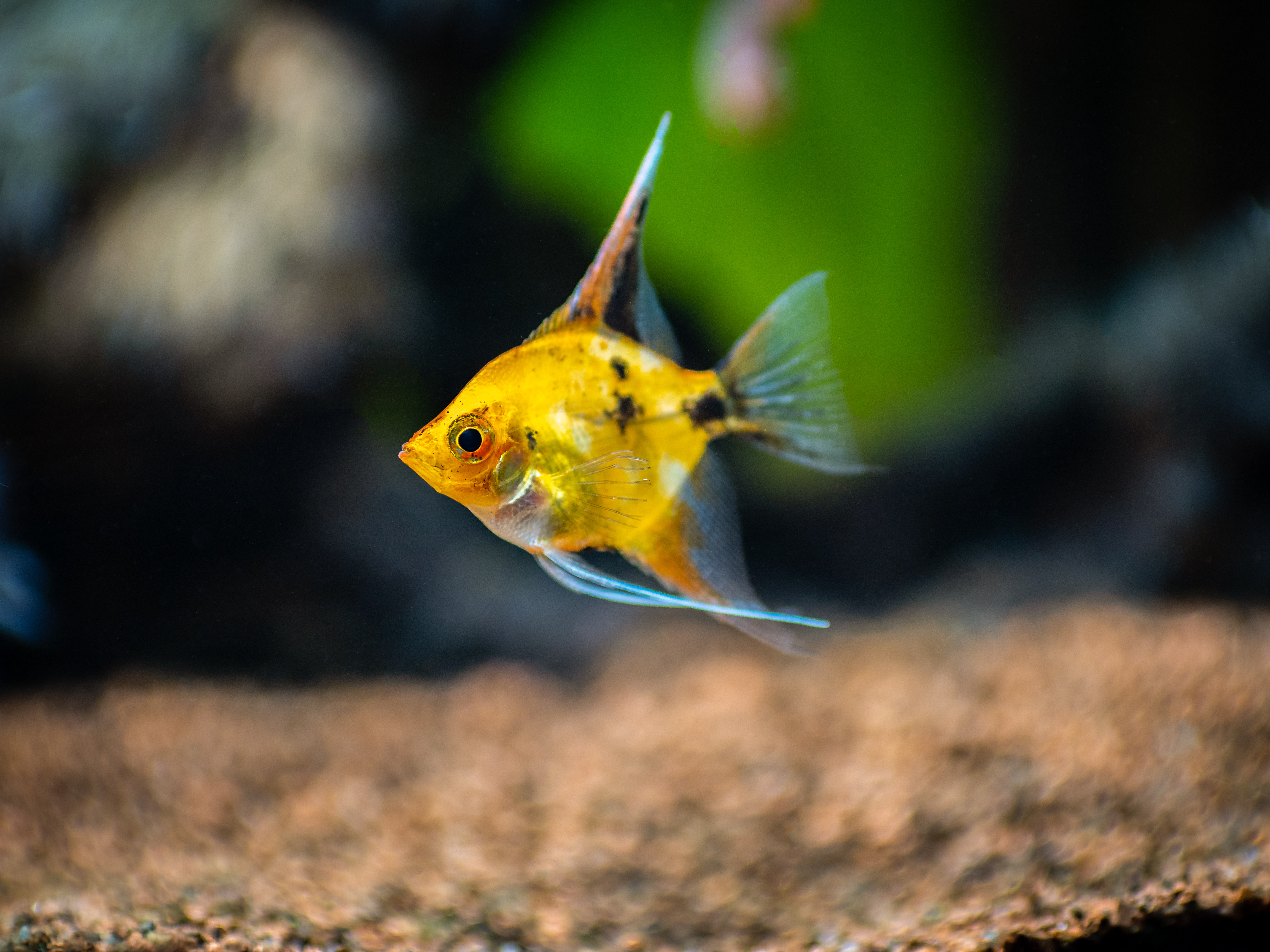
Angelfish fact file
- Scientific name: Pterophyllum scalare
- Size: up to 15cm (6”)
- Origin: Wild angelfish occur in river basins across the northern parts of South America. They are native to Brazil, Peru, Colombia and many other countries in this area.
- Tank size: 120x40x50cm (48x15x20”) for a group
- Water conditions: 6-7.5pH, 0-15°H, 24-30°C (76-86°F)
- Temperament: Aggressive when breeding and will eat small fish but otherwise suitable for larger fish community tanks.
- Feeding: Unfussy, will take to prepared diets like flake and granules. Supplement with frozen and live foods to condition the fish.
- Availability and cost: Common and found in most fish stops. Expect to pay from £5 a fish depending on variety and size.
Wild Angelfish
On the odd occasion, you may be lucky enough to encounter something a little rarer with P. altum, P. leopoldi, or even wild caught P. scalare sometimes available in the trade. Many biotope enthusiasts crave these fish for their slice of a South American habitat.
Compared to when angelfish first appeared in the hobby, keeping wild angelfish is easier now. Technology like reverse osmosis being readily available means anyone can create the water required to keep them.
They take a little longer to settle into life in an aquarium, and they are a little more demanding. However, for many it is worth the effort.

Altum fact file
- Scientific name: Pterophyllum altum
- Size: They can attain a length of 18cm (7”). Large adults can reach 25cm (10") tall including fins.
- Origin: Found in the upper Rio Negro and Rio Orinoco basins across Columbia and Venezuela.
- Tank size: 120x50x50cm (48x20x20”) but larger is better.
- Water conditions: pH below 6, negligible hardness, 28-32°C (82-90°F).
- Temperament: Aggressive when breeding and will eat small fish. Best kept in a biotope inspired set up replicating their natural habitat. Utilise plenty of branches, soft sand and botanicals.
- Feeding: Unlikely to take to dry foods. Expect to mostly feed live and frozen foods until the fish are accustomed to life in an aquarium.
- Availability and cost: Uncommon but good freshwater shops should be able to source them. Expect to pay at £50 a fish for small individuals.

Leopald’s fact file
- Scientific name: Pterophyllum leopaldi
- Size: up to 10cm (4”)
- Origin: Lower Rio Negro in both clearwater and blackwater habitats, but the water always slightly acidic.
- Tank size: 100x40x45cm (40x15x18”)
- Water conditions: 5-7pH, negligible hardness preferred, 22-29°C (72-84°F)
- Temperament: Generally more aggressive with others of the same species. However, because of their smaller size they are more suitable for tanks with smaller fish. They will still eat anything that can fit in their mouths.
- Feeding: Unlikely to take to prepared diets immediately unless captive bred. Start by offering frozen and live foods and try to wean them onto dry foods if you can.
- Availability and cost: Rare, seek specialist shops and expect to pay upwards of £75 a fish.
Related article: How do I move from community to angels?