


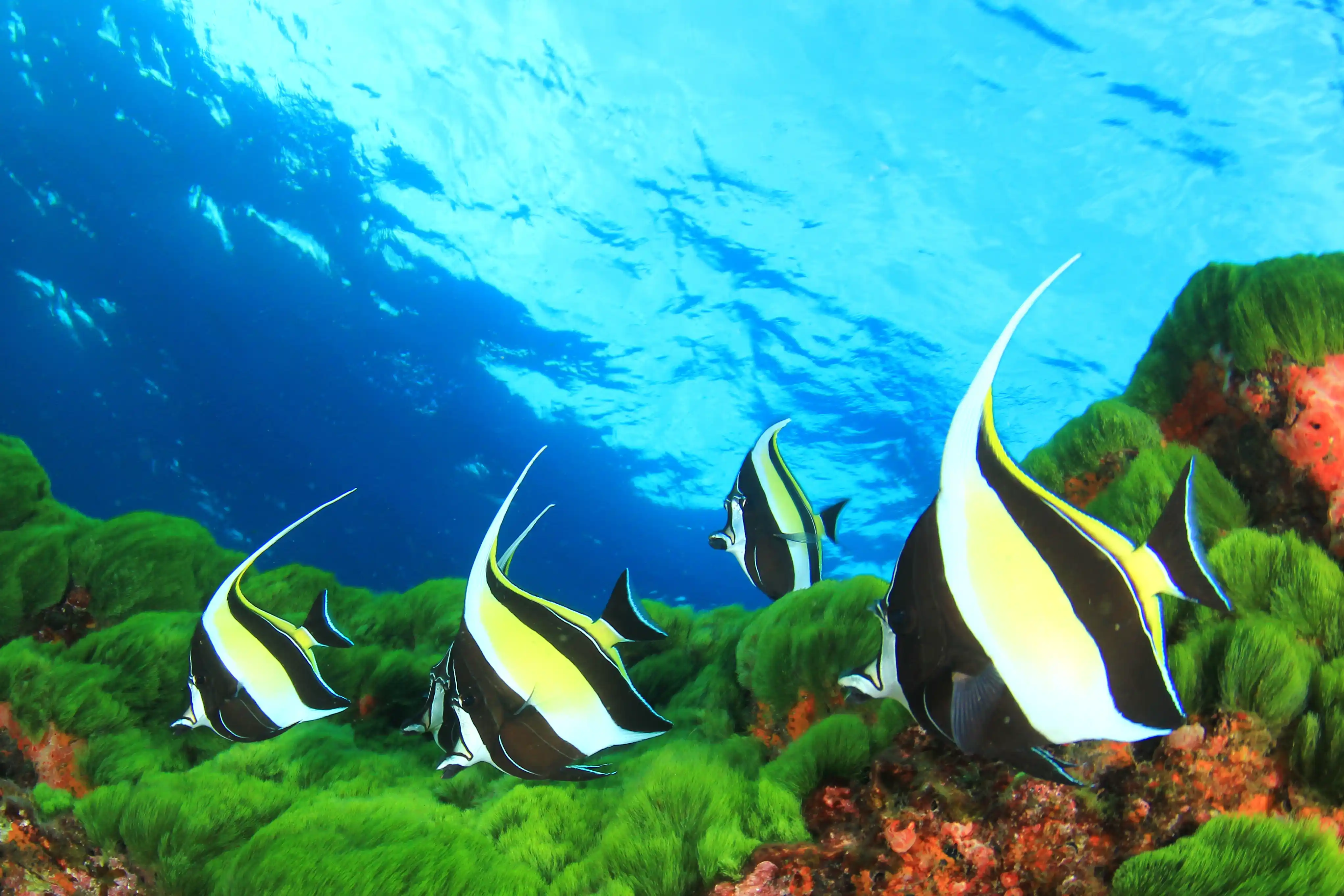
Moorish idols have a reputation for being difficult to care for in a marine aquarium. One of our reader's asks if this is still the case, and Jeremy Gay is on hand to explain all.
I’ve seen a couple of moorish idols (Zanclus cornutus) for sale recently. I remember that people would often say they were difficult to keep. I wondered if advances in fishkeeping meant they are easier now.
Would I be able to keep one in a 450-litre (just under 100 gallons) fish-only marine aquarium? What sort of diet would it require? I can tailor the tank to suit.
Which fish would make the best tank mates? I currently have a 120-litre (26 gal) reef set-up which is three years old, but I know he won’t fit in there…
NOAH PHILIPS
All images by Shutterstock.
Jeremy Gay's advice on keeping moorish idols
I’ve been asked this question for over 25 years, and compared with other reef fish, moorish idols are still difficult. The first thing to do is check that is feeding in the first place. If the individual isn’t feeding in the shop tank, it won’t feed in your tank either.
The only moorish idols that I’ve seen survive long-term in home aquaria recently did so because they were in large reef tanks. In these marine fish tanks, they would supplement their diet by eating the corals.
Psychological factors are also at play with this species. This includes the requirement for other fish to be feeding in the tank to give the moorish idol confidence that it, too, should feed. Therefore, it is worth considering this during any quarantining. Have a confident fish that is feeding well alongside it in the quarantine tank to help the moorish idol settle.
Tank mates must not be too boisterous, though. Moorish idols will not do well if they feel threatened and stressed by territorial fish, like tangs.
They consume sponges in the wild, so the best option would be to offer bits of nuisance sponge from established reef tanks. Supplement this with a myriad of dry and frozen foods offered several times per day to see which, if any, it prefers. I’ve lost count of the times someone has told me their fish was feeding, only for it to slowly starve to death over the next few months.
Moorish idols love to swim, and so a slightly larger tank than your proposed 450-litre would probably be better for long term care. Include plenty of live rock to provide an assortment of marine life for the fish to naturally graze on.

Moorish idols do best in reef tanks as they will graze on the corals, meaning they are not reef safe.
Moorish idol fact file
Scientific name: Zanclus cornutus
Size: up to 23cm (9")
Origin: Indo-Pacific
Habitat: Occurs in lagoons, reef flats and outward rocky reefs.
Tank size: 150x60x55cm (5x2x2') aquarium holding 500 litres (110 gallons)
Compatibility: Not safe with sessile invertebrates, in the wild they occur in small groups and large shoals. In aquariums, it is best to keep them singularly.
Feeding: Can be difficult, offer a variety of different options and see what they will take. Algae sheets, sponges, clams, Mysis and even prepared foods can sometimes work.
Availability & cost: Often available in the trade, perhaps too often for a fish that is so difficult to keep. Prices vary depending on source and size, expect to pay upwards of £75.
Like this? Try this…
A similar, but much easier, alternative to the moorish idol is the long-fin bannerfish (Heniochus acuminatus). This stunning black and white butterflyfish reaches around 25cm (10") in size, its dorsal fin lengthening as the fish matures. This butterfly is also not a reef safe species, they will pick at corals and zoanthids. However, it is a great choice for a fish-only aquarium and is easy to feed on all the usual marine fare.
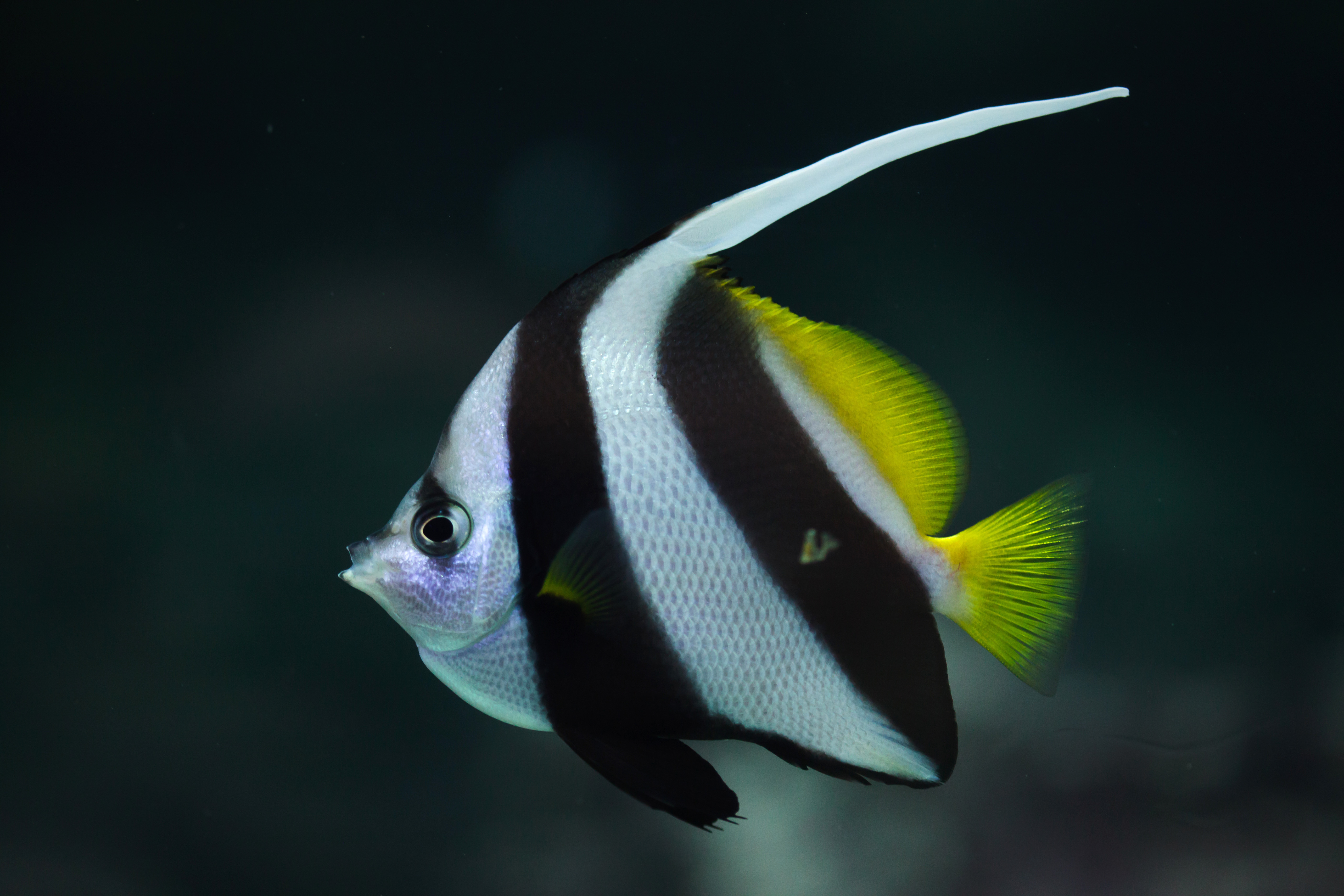
The long-fin bannerfish, also known as the heniochus butterfly
This question was originally published in the June 2025 issue of Practical Fishkeeping. You can email your questions to [email protected].