


They may not be cheap, or easy to find, but wow this small fish is worth the effort for your nano marine aquarium.
Despite their common name, this is not actually a species of goby that associates with pistol shrimp. Instead, they gain protection by hiding in the tiny crevices formed between the corals and rubble that covers their home.
Their other common name is the spikefin goby, and perhaps this one is more apt. They display a long lance like dorsal fin which creates a rather spectacular display as they move about on the sand. As always it is usually best to use their scientific name, Discordipinna griessingeri, alongside any common name for clarity. Especially when putting your request in with your local shop.
One extremely colourful goby
So, why do I believe this is the coolest nano fish? Well, one glance at the colours and patterns of this little goby will surely tell you all you need to know. This is both a weird looking fish and an extremely colourful fish.
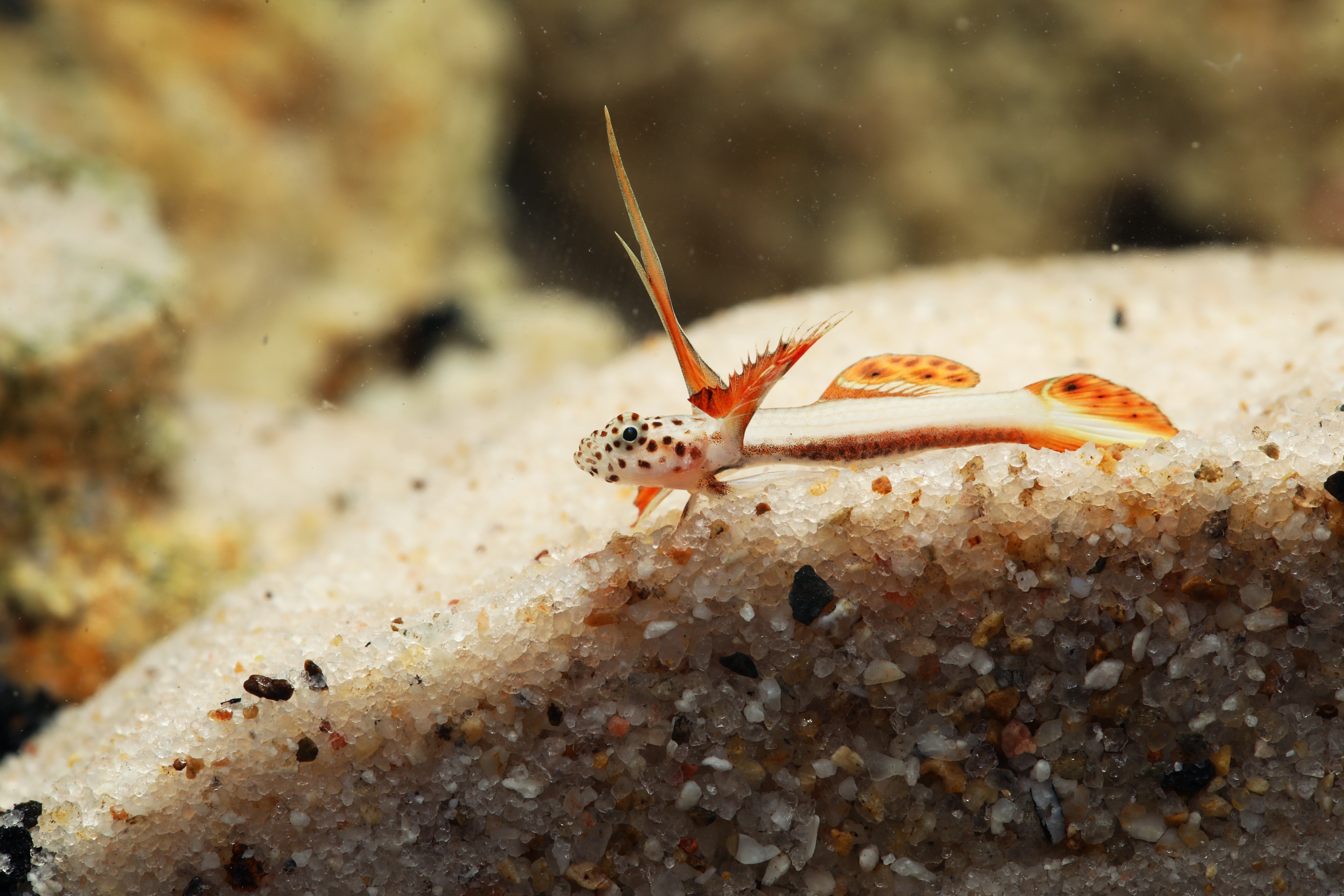
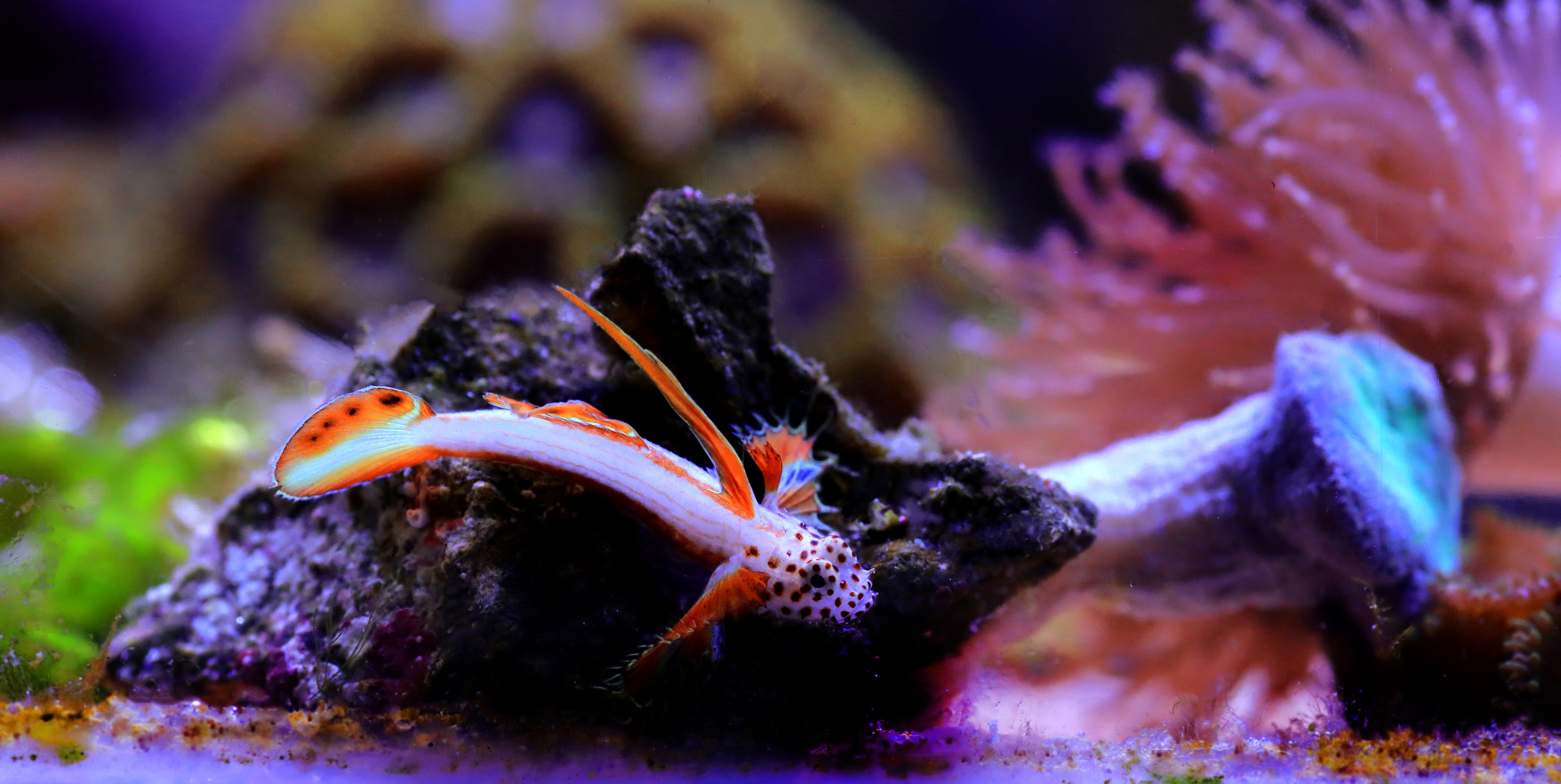
Their head is a pale white with dark reddish-brown spots. Their fins are long and flamboyant, sporting oranges and reds with dark brown-black spots. The body adds contrast into the mix, being mostly white with a dark horizontal stripe along the ventral half of their flanks.
All photos by Shutterstock
From photos of this fish, with their intricate details and exotic appearance, you could think that this is a sizeable species. But no, they reach a maximum size of just 3cm (1.2") showing that great things can come in tiny packages.
Many aquarists enjoy having a fish species that not many others have. And this fish certainly ticks that box as well, being rather uncommon in the trade. Add to that their price tag that is in excess of £100 when they are available. You can certainly understand why not too many reefers have one of these dwelling in their tanks.
Discordipinna griessingeri in the wild
Inhabiting shallow coastal waters from the Red Sea through to Japan, and Indonesia, this fish is not rare in the world's oceans. Why then, is it so rare in the hobby and so expensive, isn't it usually deep water species that command high prices?
Absolutely, the cost of going to the depths that species like the peppermint angelfish (Centropyge boylei) is a problem. However, for this tiny goby the issue isn't getting to their habitat, it is finding them within it.
Their habitat consists of dense coral reefs, thick layers of rubble and swathes of sand. The gobies have mastered utilising the network of tunnels in these areas to hide from predators, including divers. While each dive may not be problematic on their own, the number of dives needed to find, and then catch, a spikefin goby is.

Their relative D. filamentosa, the only other member of the genus, inhabits deeper waters. You won't be surprised then that you are even less likely to encounter this fish when browsing your local retailer.
Aquarium care
Thanks to their diminutive size, they are actually better suited to smaller tanks than a busy large reef. A few issues exist when trying to add this fish to a mixed community style reef. Firstly, they compete poorly for food, secondly other fish may view them as food. And finally, they will likely hide away all the time and you'll never see your prized fish.
They are a reef safe fish so a small reef tank dedicated for this species is the best way to go. Tank mates, if chosen, should not compete for the copepods that the flaming prawn goby requires, they must also be small, and peaceful.
Decorate your nano tank with a smooth, sandy substrate and plenty of live rock rubble forming crevices. Larger pieces of rock can work well too, and here you can place peaceful corals that won't pose a risk to your little fish.
Related article: Back to saltwater: starting simple with beginner corals
Feeding can be problematic, so a mature reef with plenty of 'pods is a must. Adding live phytoplankton can help sustain the populations so your fish gets enough food. You may, in time, get to supplement with frozen food and such like but this is not always a guarantee.
Using live rock can help to kick start the natural microscopic lifeforms, but it can also introduce unwanted hitchhikers. Even a large pest anemone could take out a small goby, let alone some of the nastier decapods that can arrive on rocks. Examine your live rock closely, and run your tank for at least a few months to check for pests. Plus this will give your copepods time to establish a good population.
This may well be the most stunning goby for small aquarium. Perhaps one day I will get to keep this fascinating fish. Until then I will keep admiring photos and videos of this wonderfully cool species. For those with a nano reef that want some more affordable options, we have you covered: Colourful gobies for your nano reef tank.