


Tai Strietmen suggests six beginner friendly biotopes, three utilising hard water and three with soft water. Give one of these displays a go in your next fish tank.
A biotope aquarium is a display where we try to mimic a natural habitat, usually from a specific region. Although, some people will focus on a particular lake, river or even tiny pool.
The level of detail used to recreate a habitat is up to the aquarist. Some people will be happy to mix in plants which look like species found there, often because the native ones are not available. However, ‘purists’ wouldn’t dream of it sticking to species and even hardscape materials known from the exact habitat.
Unless you are entering a competition, like the AGA Biotope Competition or the BAC, there are no fixed rules. The thing which is most important however, is that you cater to the needs of the fish species you keep. Especially the water quality and parameters, but the overall aquarium layout should make them feel safe and secure.

Watch us create this biotope inspired aquarium here!
Only brown and botanicals?
One thing that comes up time and again is that biotopes are mostly brown. Brown, tannin-stained water, brown botanicals in the form of leaves, seedpods and twigs, brown décor in the form of branches. While the aquarist may be keen, the partner/spouse/housemate might not be thrilled. Of course, biotopes refer to any natural habitat and there are plenty with clear water, stuffed with aquatic plants.
Luckily, the range of fishes available to us these days means that we have so many options to choose from. We can have soft water, hard water, slow or fast flow, live plants, or no plants. The needs of the fishes we choose to keep determines the aesthetics of the aquarium we end up with.

Six biotopes perfect for beginners
I have outlined six different biotopes below that make a great entry into this niche of the aquarium hobby. I have included a range of tank sizes to suit everyone along with fishes and plants which are generally easy to keep and find.
The ideas below are just a rough outline, allowing you to use other resources to fill the gaps. Thus creating an aquarium unique to you. Whether it is a blackwater habitat or a calcium carbonate rich lake you should find something that inspires you.
Hardwater biotopes
These biotopes are especially suitable for those of us who live in hardwater regions. Additionally, the fishes kept within them are hardy and engaging, from affordable to more pricey species.
Lake Tanganyika community
The rift lakes are well known for their liquid rock water. If you have this coming out your tap, why fight it? An abundance of amazing fishes are suitable from these lakes and our favourites are the Lake Tanganyikan cichlids. Below is how I would set it up:

Tank Dimensions: 120x50x50cm (48x20x20”)
Equipment:
An external filter with a flow rate of around 1550lph.
Lighting: 2x 70w LED units – full strength for 7 hours.
CO2 injection: Not required.
Water parameters:
The water should be hard and alkaline with a pH of 7.4 to 8.5 and between 5 and 25°H. Maintain the temperature of the aquarium between 23 and 27°C (74-81°F).
Décor: Large river boulders dominate the hardscape layout providing plenty of hiding spots.
Substrate: Pale aquarium sand.
Fishes:
Calvus cichlid (Altolamprologus calvus)
Masked julie (Julidochromis transcriptus)
Lemon cichlid (Neolamprologus leleupi)
Blue neon cichlids (Paracyprichromis nigripinnis)
Multifasciatus shell-dweller (Neolamprologus multifasciatus)

Australia East Coast estuary
This is a great alternative hardwater biotope, and an area often forgotten. Utilising a slightly smaller aquarium, this could be a little more achievable as a first biotope. Meanwhile, there is enough room for some fascinating fish in an eye catching aquascape.

Tank Dimensions: 90x45x45cm (36x18x18”)
Equipment:
An external filter with a flow rate of around 1200lph.
Lighting: 1x 60w LED Light– Full strength for 7 hours.
CO2 injection: Not required.
Additives: Daily plant fertiliser.
Water parameters:
The water should be hard and alkaline with a pH of 6.5 to 7.5 and between 8 and 15°H. Maintain the temperature of the aquarium between 20 and 26°C (68-79°F).
Decór: Large flat stones with high mineral content to help maintain the water chemistry needed.
Substrate: Aquarium silver sand.
Plants:
Australian tapegrass (Vallisneria australis)

Fishes:
Pacific blue-eye (Pseudomugil signifer)
Indian glassfish (Parambassis ranga)
The Indian glassfish represent juvenile Parambassis gulliveri in this display. This Australian species gets too large, is predatory and is not available in the hobby.
Myanmar Wetland
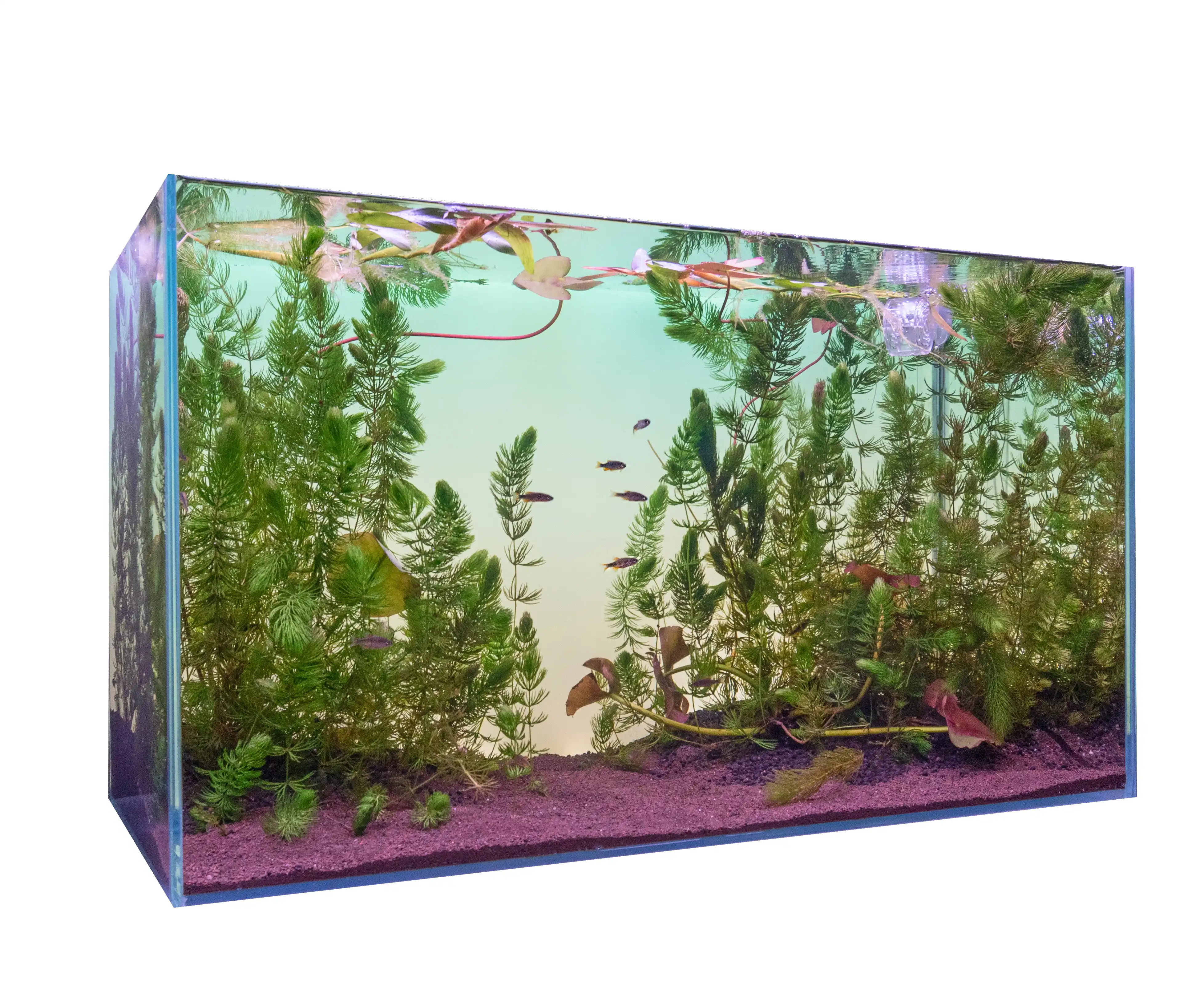
This is the best area to replicate for a smaller hardware biotope. The fishes here provide colour and activity in tiny packages. It also provides the best array of aquarium plants to choose from for those that want greenery in their tank.

Tank Dimensions: 60x30x36cm (24x12x14”)
Equipment:
An internal or small external filter with a flow rate of around 700lph will work well.
Lighting: 1x 40w LED Light– Full strength for 7 hours.
CO2 injection: Not required.
Additives: Daily plant fertiliser
Water parameters:
The water should be neutral to hard, and alkaline, with a pH of 7.0 to 8.0 and between 12 and 15°H. Maintain the temperature of the aquarium between 20 and 24°C (68-75°F).
Décor: No hardscape required, leave all that space for the wonderful plants.
Substrate: Aquarium plant soil, reddish aquarium sand.
Plants:
Hornwort (Ceratophyllum demersum)
Pygmy waterlily (Nymphaea tetragona)
Fishes:
Celestial pearl danio, also sometimes called galaxy rasbora (Danio margaritatus)
Inle loach (Petruichthys brevis)

Softwater biotopes
These displays cater to fishes from calm, soft water, acidic habitats. However, the species included are commonly captive bred. Meaning that they are suitable for water with a neutral pH.
If your tap water is hard I'd recommend you use reverse osmosis water for these displays. Split it 50:50 with your local water to reduce the hardness. Alternatively, use solely RO water, but remineralise it before use.
Guayana forest stream
South America is one of the most popular areas when people think of soft water, tannin stained biotopes. So, it makes sense to start with a perfect example of this featuring an underrated species of tetra.

Tank Dimensions: 75x40x25cm (30x16x10”)
Equipment:
An internal or external filter with a flow rate of around 800lph.
Lighting: 1x 38w LED Lamp – Full strength for 7 hours.
CO2 injection: Not required.
Additives: Blackwater Extract
Water parameters:
The water should be soft, acidic and tinted, with a pH of 5.5 to 7.0 and between 2 and 15°H. Maintain the temperature of the aquarium between 24 and 27°C (75-81°F).
Décor: Bogwood, jungle vines
Substrate: Aquarium plant soil, orange aquarium sand.
Botanicals: Seedpods, leaves, twigs
Plants:
You could use a variety of houseplants with ‘jungle’ origins for this display. Philodendron hederaceum is an easy to find and an affordable option.
Fishes:
Glowlight Tetra (Hemigrammus erythrozonus)

Sri Lanka forest stream
Like the Australian estuary, this is an area of the world under appreciated by biotope enthusiasts. Featuring the humble cherry barb, with vibrant red males, any aquarist will appreciate this blackwater aquarium.

PFK visited a Sri Lankan stream back in 2009.
Tank Dimensions: 60x35x35cm (24x14x14”)
Equipment:
An external or internal aquarium filter with a flow rate of around 800lph will provide enough water flow.
Lighting: 1x 40w LED Light– Full strength for 7 hours.
CO2 injection: 2 bubbles per second (3 hours before lights on, goes off 1 hour before lights off).
Additives: Daily plant fertiliser, root tablets and blackwater extract.
Water parameters:
The water can be acidic to slightly alkaline, with a pH of 6.0 to 8.0 and between 5 and 20°H. Maintain the temperature of the aquarium between 20 and 27°C (68-81°F).
Decór: Large stones
Substrate: Reddish aquarium sand
Botanicals: Small catappa leaves
Fishes:
Green panchax (Aplocheilus blockii)
Cherry barb (Rohanella titteya)

Araguaia River basin shallow stream
This habitat is a personal favourite having visiting the area and swam with the ember tetras in the wild. Their small size means that a nano biotope is possible for this display so there is no excuse not to give it a go.

Tank Dimensions: 30x30x30cm (12x12x12”)
Equipment:
A small internal filter will suffice, but I would opt for an external or HOB filter to remove equipment from the display.
Lighting: 1 x 20w LED Light – full strength for 7 hours.
CO2 injection: Beneficial but not essential. If using it 2 bubbles per second (3 hours before lights on, goes off 1 hour before lights off) will work well.
Additives: Blackwater extract, daily plant fertiliser
Water parameters:
The water can be acidic to neutral, with a pH of 5.0 to 7.0 and between 1 and 10°H. Maintain the temperature of the aquarium between 20 and 28°C (68-82°F).
Décor: None
Substrate: Aquarium plant soil, aquarium sand
Plants:
Giant Hairgrass (Eleocharis montevidensis)
Chain sword (Helanthium bolivianum)
Fishes:
Ember tetra (Hyphessobrycon amandae)

More biotope inspiration:
Step by step guide for a Brazilian tetra biotope.
How to set up an African biotope aquarium.