


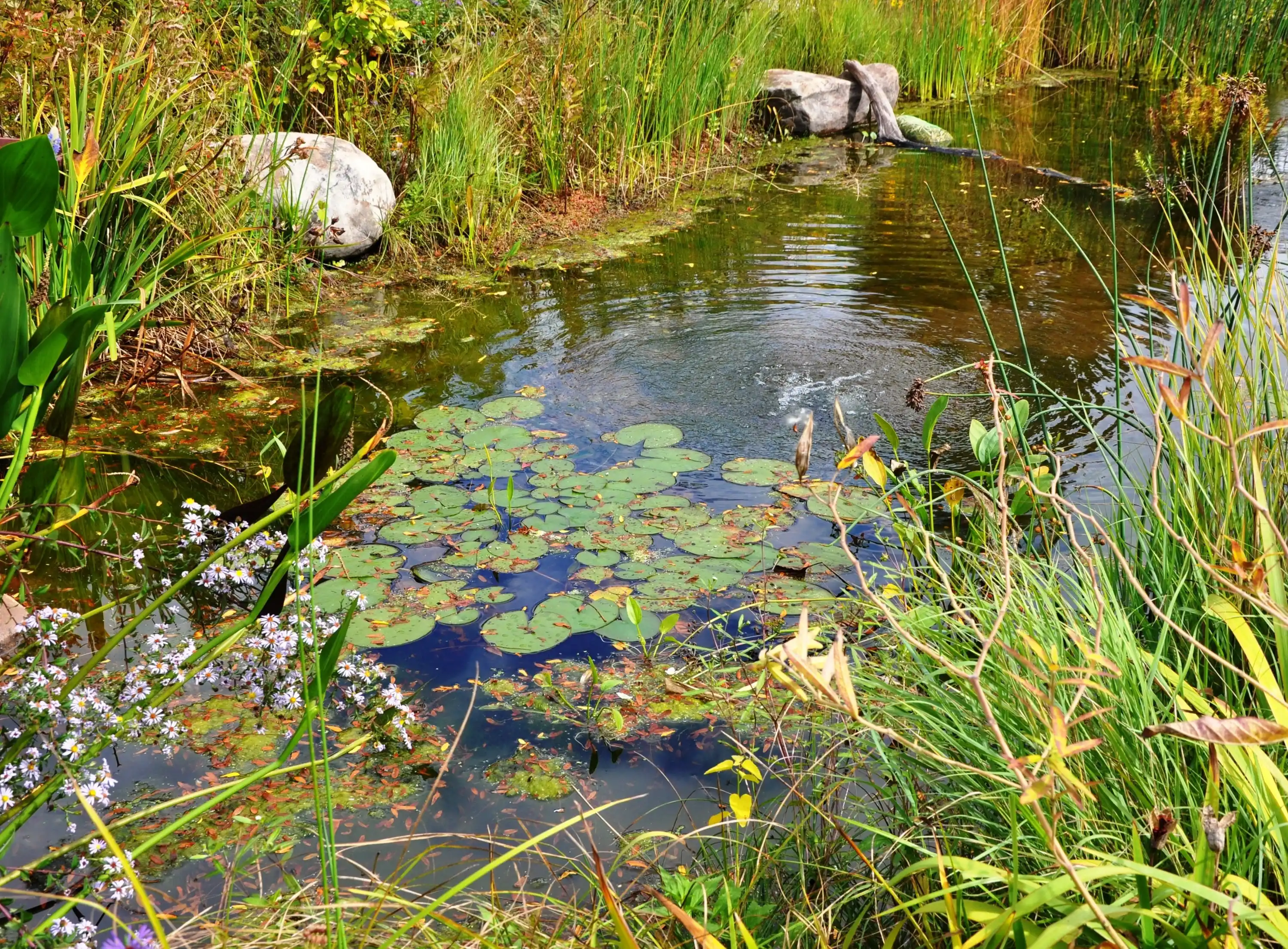
Adding a wildlife pond in your garden is rewarding, but what plants are suitable, can you add fish and do you need a pond filter? Jeremy Gay explains all.
A nature pond is a great way to help attract wildlife to our gardens. They can be relatively cheap projects that are fun and easy to build. Whether you want to see dragonflies flying above tranquil waters, or a frog on a lily pad, a nature pond is what you need.
These ponds differ from a traditional garden pond for fish. We cover the basics of positioning nature ponds in your garden, and constructing them from pond liners here. So, rather than go over the same topics, instead we shall discuss pond plants, stocking fish and water movement in this article.
Adding pond plants
UK native species of plants are a good idea as the animals we want to attract use them for feeding, breeding and camouflage. Your pond life may be richer as a result of adding native plants.
However, you can still use water lilies, marginals, floating or oxygenating plants from other countries. Just ensure they aren’t on the banned list! A good water garden centre wouldn’t be able to sell invasive species to you anyway.

Despite not being native, pond lilies are great for providing shade and shelter for animals. Photo by Canva
Most pond plants need repotting into aquatic plant baskets, with aquatic compost. You likely won't have fish (more on this later) so you won’t need the gravel top-off layer. If you have a shallow boggy area you won’t even need the plastic basket.
You can order bare root pond plants online and again, a good supplier will flag up which ones are British native. Plant heavily to help avoid early algae issues and aim to have two-thirds of the pond covered by plants in the long term. Plants are your natural defence against algae and bring balance to the pond.
Banned plants in the UK
Whatever greenery you opt for, the following species cannot be purchased from stores in the UK and should be avoided at all costs.
- Water fern, Azolla filiculoides
- Parrot’s feather, Myriophyllum aquaticum
- Floating pennywort, Hydrocotyle ranunculoides
- Australian swamp stone crop, Crassula helmsii
- Water primrose, Ludwigia grandiflora
- Floating primrose-willow, Ludwigia peploides
- Water hyacinth, Eichhornia crassipes
- Cabomba, Cabomba caroliniana
- Curly waterweed, Lagarosiphon major
- American skunk cabbage, Lysichiton americanus
- Nuttall’s waterweed, Elodea nuttallii
- Alligator weed, Alternanthera philoxeroides
- Chilean rhubarb, Gunnera tinctoria
- Broadleaf watermilfoil, Myriophyllum heterophyllum
- Giant salvinia, Salvinia molesta
- Senegal tea plant, Gymnocoronis spilanthoides
Related article: Four more pond plants banned.
Do I need a pond pump?
We use pumps and filters in ponds for three main reasons:
- To experience and enjoy moving water from a waterfall or fountain.
- To keep the water clear.
- To make water habitable for fish long term.
You don’t need to worry about pollutants like ammonia as the pond’s ecosystem will quickly find its own balance. If the water goes green, and if you leave it, it will clear on its own — especially if planted. Plus, you don’t need gin clear water because there won’t be any fish to view

Filters and fountain pumps aren't needed for a nature pond, but are perfect for a fish pond. Photo by Blagdon
So that just leaves water features in the form of waterfalls and fountains. Water fountains aren’t natural and you don’t need the extra aeration they provide, so leave them and their pumps out. Waterfalls are of course natural and look and sound amazing. The problem is the pump.
We would normally recommend a solids-handling filter pump to power a waterfall. However, these pumps suck up and transfer large solid waste like uneaten koi pellets to a pond filtration system. The impellers scoop up waste whole or smash it into pieces for further processing, and therein we find the problem.
Nothing sucks up tadpoles, water fleas and invertebrate larvae like a solids-handling pump. A good one could cleanse a wildlife pond of most of the critters you’re trying to encourage. While frogs appear in thousands of filtered fish ponds, they’ve already run the gauntlet. Plus, the intricate food webs lower down the scale won’t be there.
If you have to have a waterfall then position it at the far end of a large, otherwise undisturbed pond. Use a fountain pump with small intake slots instead of a solids-handling pump. Net bags are available to place the entire pump into, or huge blocks of foam that go around the pump inlets to protect wildlife. But any waterfall will purely be for your benefit, not native pond life.
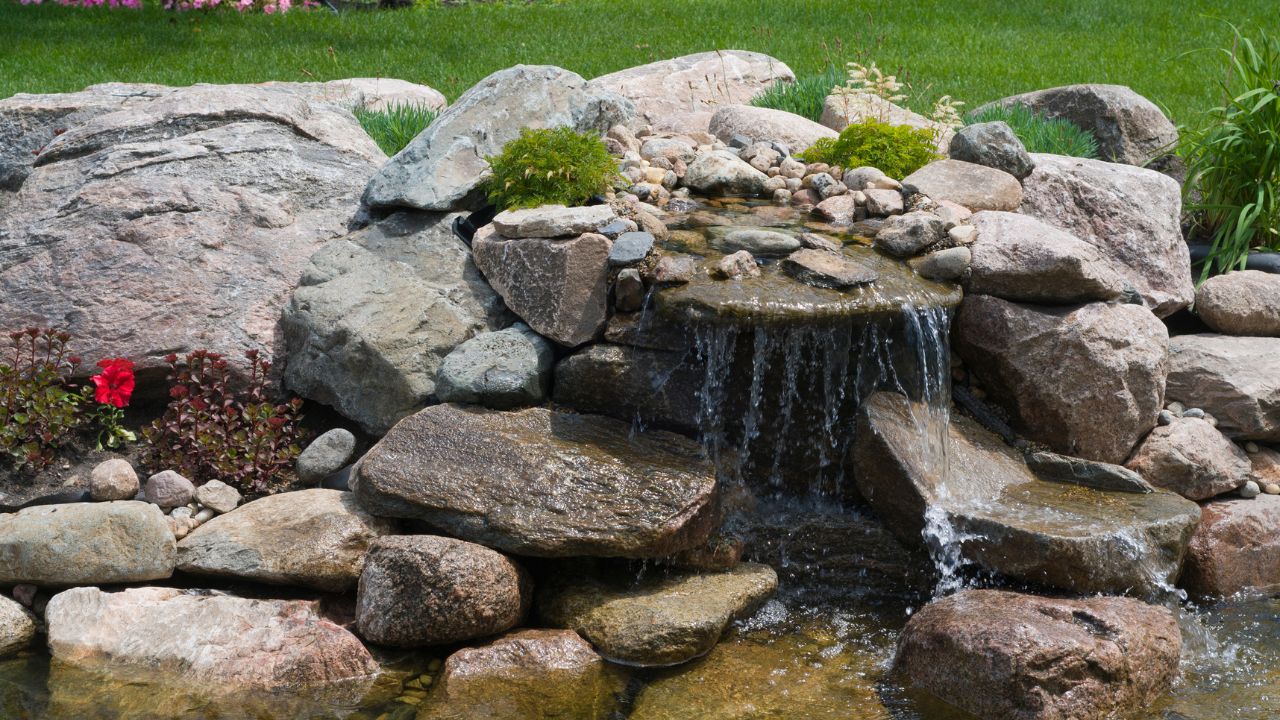
Waterfalls are attractive but are not required for a nature pond. Photo by Canva
You don't even need to add an air pump and air stone to a nature pond. The plants will be busy producing plenty of oxygen during those sunny days to keep the small animals thriving. When these plants switch to using oxygen at night, the waters should be cooler and will naturally hold more oxygen. Plus, without fish, the biological oxygen demand of the pond ecosystem is far lower anyway.
Related article: Which pond filter do I need for my garden pond?
So… what about fish?
And that brings us to the massive question — can you put fish in a wildlife pond? We are fishkeepers after all and that is a huge opportunity going begging when you don’t have room for any more tanks.
You can’t have goldfish or koi carp, they eat the tiny inverts you want to encourage and stir up plants and soil. Plus, you’ve just made the perfect entry point for a heron. The most wildlife-friendly fish to add to our pond would be sticklebacks as they are British native pond fish, tiny and plant-friendly. Herons and other fish predators are unlikely to bother with them either.

Ensure there is plenty of food in the form of Daphnia and mosquito larvae. Don’t feed them any prepared foods and they could be self-sufficient. However, even sticklebacks don’t just appear in small natural ponds unless they are near a river which has flooded. We’ve just designed a pond that will get incredibly hot in summer and may freeze solid in winter.
With this in mind, be sensible with stocking stickleback in your nature pond. You won't be able to stock them in small ponds, as they will deplete the invertebrates too quickly. Also, there may not be enough plant mass to use the nitrogen waste compounds produced.
However, if the pond is huge maybe consider some normal, natural coloured rudd — another British native fish. They will need a pond that is 10m (33') across and deep enough for fish.

Rudd may be an option for extremely large nature ponds. Photo by Shutterstock
Although any adult fish will eat small wildlife, fish fry are themselves part of the natural food chain and feed dragonfly larvae. So yes, it is possible. The critical thing is to create the pond in the first place. Do your own watery bit for UK wildlife, and enjoy bringing nature back.
Rain or tap water?
Speak to a hardcore ecologist and they will say that a you should fill a true nature pond with rainwater. This will make your pond more suitable for rare macrophytes. Rainwater is soft and low in nutrients so will naturally help to deter nuisance algae.
If you can use rainwater, do. If like most of us you’ll need to use tap water, use a dechlorinator. This will remove chlorine and chloramine and heavy metals that can kill the wildlife.