


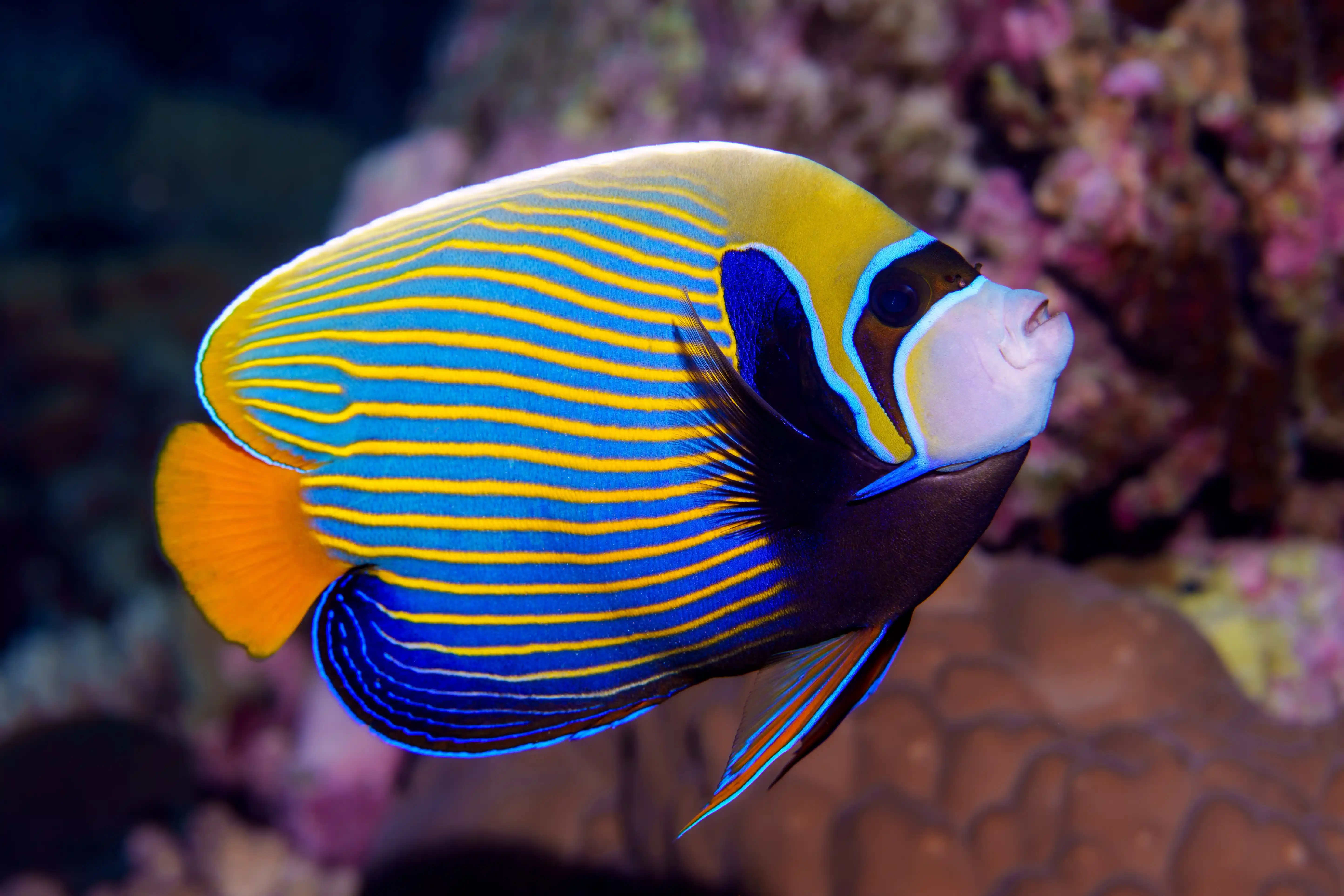
This large saltwater angelfish species captivates onlookers whether in their juvenile or adult colouration. We outline how to keep the stunning emperor angelfish in your marine aquarium.
I remember when I first saw a Pomacanthus imperator, the scientific name for the emperor angelfish, in the flesh. I had not kept marines before, but I was visiting a local store that had a good selection of marine fish. The blue body with pale concentric circles was bold and stood out from a long way away. I dreamt of keeping this fish, and did some research.
I soon discovered their potential full size, and that this fish would not stay looking like the one I saw. Realising that this was not a likely choice for any of my aquariums for the foreseeable, I gave up on that dream.
I am sure I am not the only person to have fallen in love with this species though. So, for anyone dreaming of keeping this large angelfish, I investigate the emperor angelfish (Pomacanthus imperator).
All photos by Shutterstock.
Emperor angelfish juvenile vs adult
As I already touched on, this species changes colour as it matures. The blue and white, almost hypnotic, markings make way for a colourful beast featuring bold, blue and yellow, stripes. The exact age or size that this change happens can vary depending on various factors.
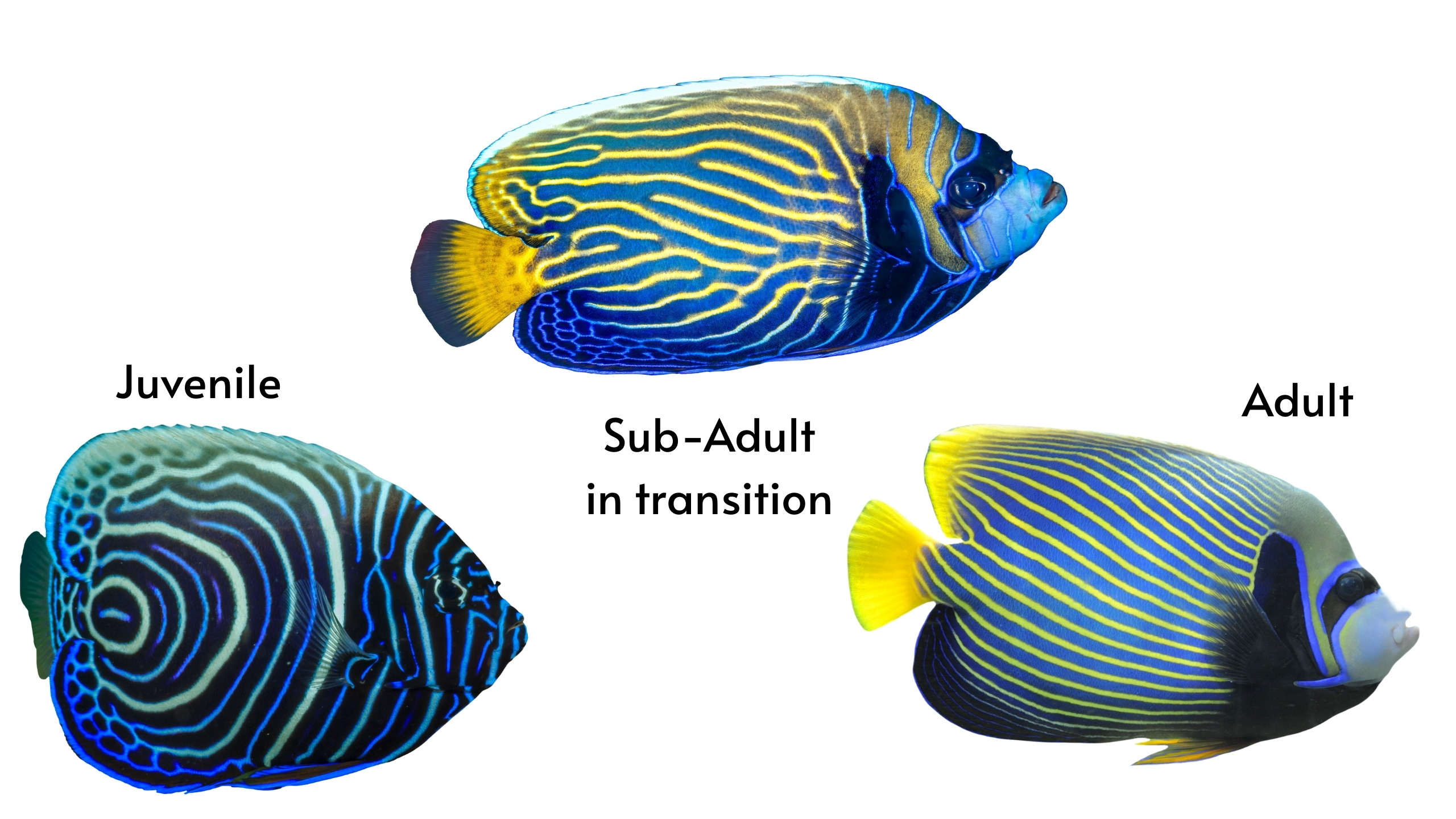
Typically, Pomacanthus angelfish will start transitioning before they reach 15cm (6") in length. However, some individuals may reach 20cm (8") before completing their outfit change. During the change, their pattern will be a mix of both their adult and juvenile colours. Emperors often begin changing at around 12cm (4.7").
Reef safe or not reef safe?
If you are lucky enough to see emperor angelfish in the wild, you'll see them inhabiting colourful coral reefs. Despite this, they are not a good choice for your large reef tank.
While they are a reef fish, they happily take a nibble of the corals as they pass through the reefs. In the confines of an aquarium this can quickly decimate your colourful and expensive coral collection. Fleshy LPS hard corals, clam mantles and soft corals, including zoas, are prime angelfish food. Meaning that the only real way to house this fish with corals is to opt for SPS corals.

SPS corals (like the Acropora pictured above) require pristine water quality to thrive and a large marine angelfish produce a lot of waste. Can you see the potential problem here? You will need a huge aquarium with substantial filtration systems to maintain suitable water parameters for SPS.
Instead, opt for a fish only aquarium. This will enable you to keep several other characterful marine fish that aren't suitable for reef tanks. You can still use live rock to decorate and help with filtration in what we call a fish only with live rock (FOWLR) tank.
Related article: How to make your own live rock.
Macroalgaes are becoming increasingly popular for marine tanks, especially those low on coral life. However, your angelfish are likely to graze on this too. You could keep some in your sump to help with nutrient control. When you need to harvest it, move some to the display for your fish to pick at.
Emperor angelfish tank size
This is certainly going to be the largest factor in deciding whether this fish is suitable for you. An adult emperor can reach 40cm (15.7") and therefore will require a sizeable aquarium. For an adult we are looking at a tank over 2m (6.6') long and even this will not be enough for a large specimen.
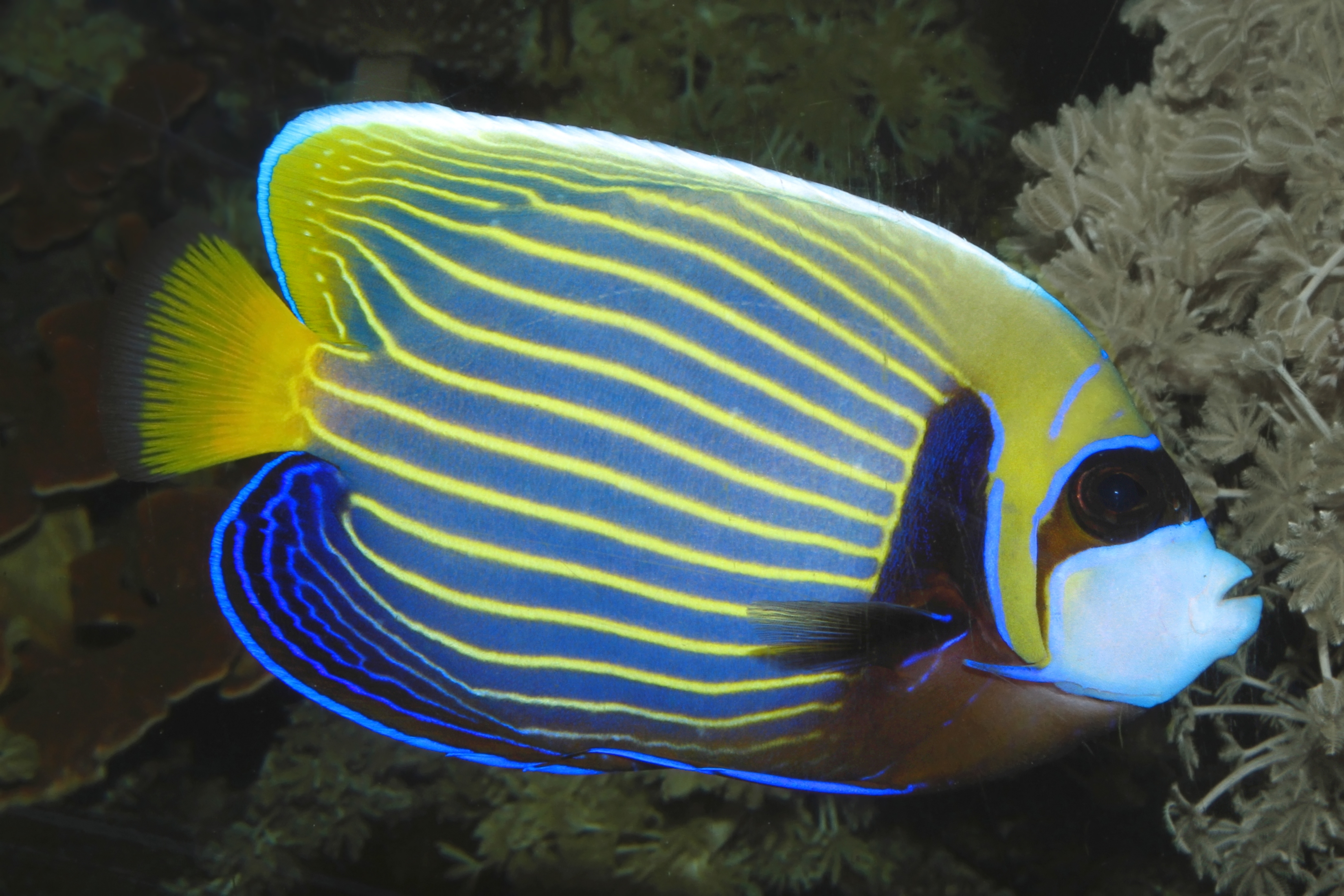
These fish are not just large, but they are active and require plenty of overhangs and caves to hide in. Providing enough rocks for this huge fish to shelter in without compromising on swimming room is certainly a challenge.
If this all seems out of reach for you, perhaps look at dwarf angelfish instead. Equally delightful, but these fishes are available in much smaller packages. However, if you can accommodate an adult emperor angelfish, read on.
Emperor angelfish care
So, you have a large saltwater tank suitable for their adult size, what else do you need to know?
Emperor angelfish can be territorial and aggressive, so it is best to keep just one Pomacanthus species. Mated pairs and harems occur in nature but you will need an incredibly spacious aquarium for success in captivity.
Choose tank mates carefully, avoiding peaceful, shy species that the angelfish may bully. Also, avoid fish that look similar to the angelfish. A mix of other larger fish that can hold their own can work well, including: snowflake moray eel (pictured below), lionfish, and larger wrasses.

Related article: Marine fish with character.
Angelfish can take a dislike towards new additions, so adding them last can help reduce aggression towards tank mates.
Feeding is always an important part of caring for any animal. In the wild they graze over the reefs, eating sponges, corals, algae and other invertebrates. Replicate this in captivity by offering a wide ranging diet.
Common frozen foods like krill, cockle and chopped squid all usually work, as do nori sheets to add some plant matter. Specific angelfish diets that include sponges in their make up are available and also make a good option. Offer various prepared marine foods tailored for omnivores as well to round off their diet. If you notice their colours fading, you may need to switch up their diet.
Decorate the aquarium with plenty of rocks which they can naturally graze on. Position them to create lots of overhangs and caves for the angelfish to rest in. Keep a large open space along the full length of the tank to allow this large fish to swim freely.

Emperor angelfish factfile
Scientific name: Pomacanthus imperator
Size: up to 40cm (15.7”)
Origin: Occurs in the Indian and Pacific oceans from the Red Sea to Hawaii.
Habitat: Juveniles swim close to ledges and holes on outer patch reefs and flats. Adults occur in areas thick with corals on seaward reefs and lagoons.
Tank size: 215x70x60cm (7x2.3x2') as a minimum.
Temperament: Aggressive and territorial, keep with dissimilar fish that can hold their own. They are not reef safe. They will eat fleshy LPS corals, some softies, sponges, clam mantles and ornamental, non-sessile invertebrates.
Feeding: Offer a wide variety of foods to keep them at their best. Frozen meaty fares, nori sheets and various dry foods should be staple offerings. Plenty of live rock will allow for natural grazing.
Availability & cost: Fairly common, juveniles start at about £65 depending on size.
Related article: Marine starter fish to avoid.