


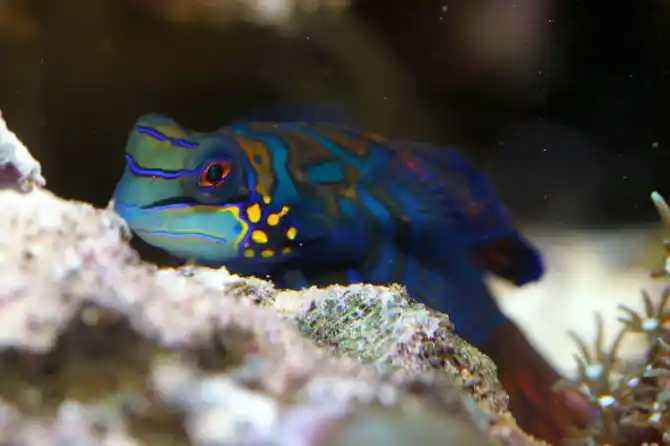
Mandarin dragonets are one of the most beautiful fish in the aquarium hobby. However, they have a reputation for being difficult to keep, let alone breed!
What are mandarins?
In the hobby there are two species of mandarin that we routinely see. Synchiropus splendidus is the one that reefers often picture. Their common name is either the red or green mandarin depending on pigmentation but they are all the same species. However, the spotted mandarin (S. picturatus) is also fairly common, sometimes referred to as the psychedelic mandarin.
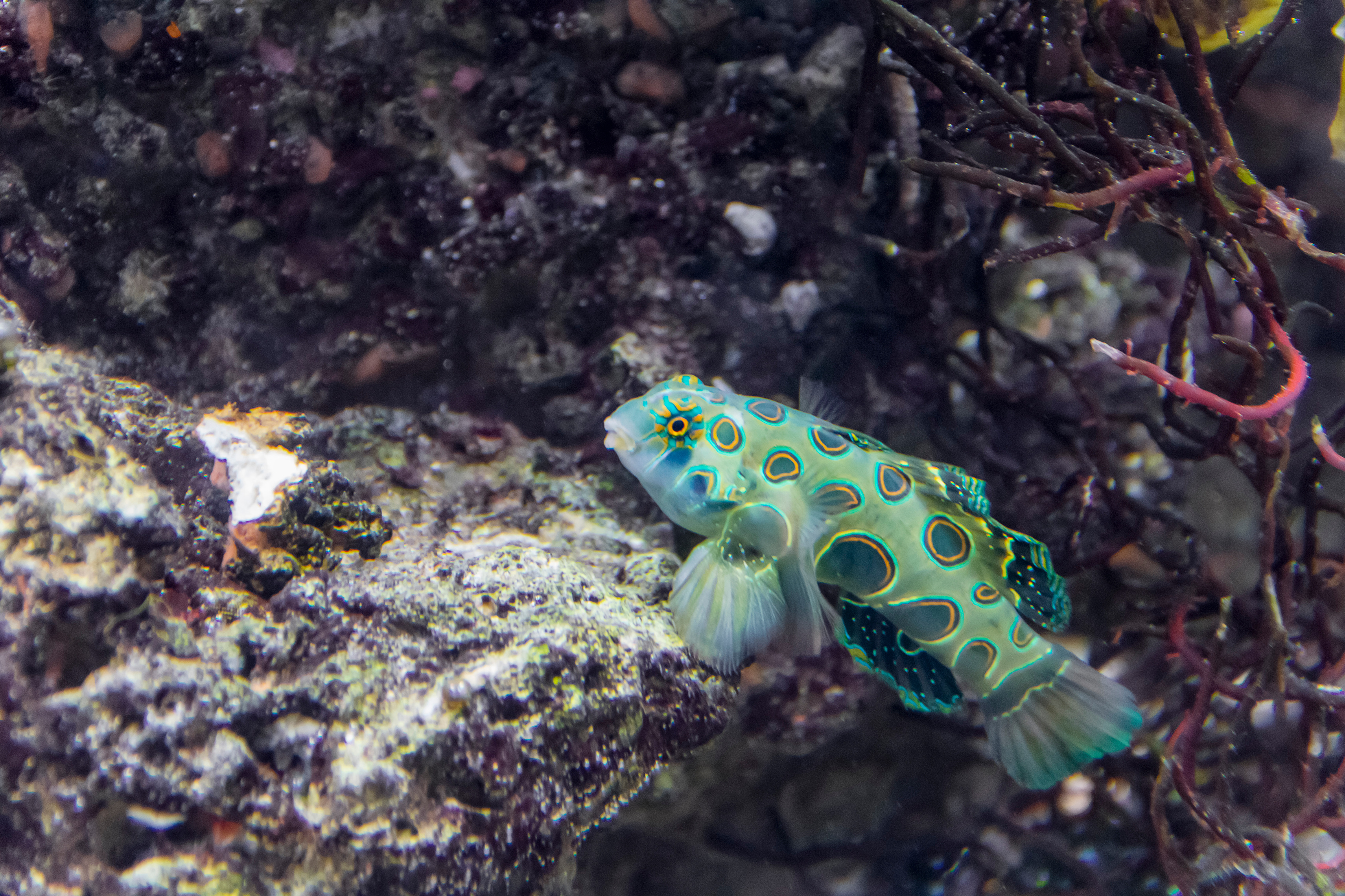
Spotted mandarin are also popular in the saltwater aquarium hobby, Photo by shutterstock.
The genus Synchiropus also incorporates the scooter blennies we also often see in reef tanks. Occasionally, websites and aquatic stores will refer to the mandarins as mandarin gobies. While using either of these names will likely get you the fish you want, they are in fact neither a blenny, nor a goby. These fish are dragonets from the family Callionymidae.
Keeping a mandarin dragonet
For this I will be focusing on the beautiful S. splendidus but much of it will be relevant for other dragonets. This reef fish typically grows to roughly 7cm (2.8") with males being slightly larger than females. This relatively small size may have you reaching for that nano tank but just hold on for a moment.
Many experienced reefer will warn you of the perils that await should you stock this fish in small aquariums. Being fussy feeders, they usually need significant live copepods living within the live rock to sustain them. To have enough copepods naturally in your reef for the long term you need a large aquarium.
You may find a mandarin in your local fish shop that is feeding on frozen foods which will give you a head start. However, after moving into your reef aquarium they may revert to old habits. The minimum tank size recommended is a 100x45x45cm (40x18x18") aquarium holding 200 litres (44 gal) of saltwater.
Should you wish to attempt them in smaller marine aquariums you will need to culture copepods externally. This is something you may have to do for the duration of the mandarin's life.

Copepods are essential for mandarins, Photo by Shutterstock.
Mandarin fact file
Scientific name: Synchiropus splendidus
Size: To around 7cm (2.8")
Origin: Western Pacific
Habitat: Benthic coral reef dweller
Tank size: 100x45x45cm (40x18x18")
Water requirements: Standard reef parameters will be suitable: pH 8.1-8.4, 8-12 dKH, 32-35ppt (1.023-1.026SG)
Temperature: 22-26°C (72-79°F)
Temperament: Notably territorial with its own kind, although sexed pairs can work, otherwise generally peaceful
Feeding: Can be extremely fussy, requiring copious amounts of live foods, notably marine copepods
Availability and cost: Regularly seen in the trade (perhaps too regularly). Expect to pay upwards of £30 depending on size.
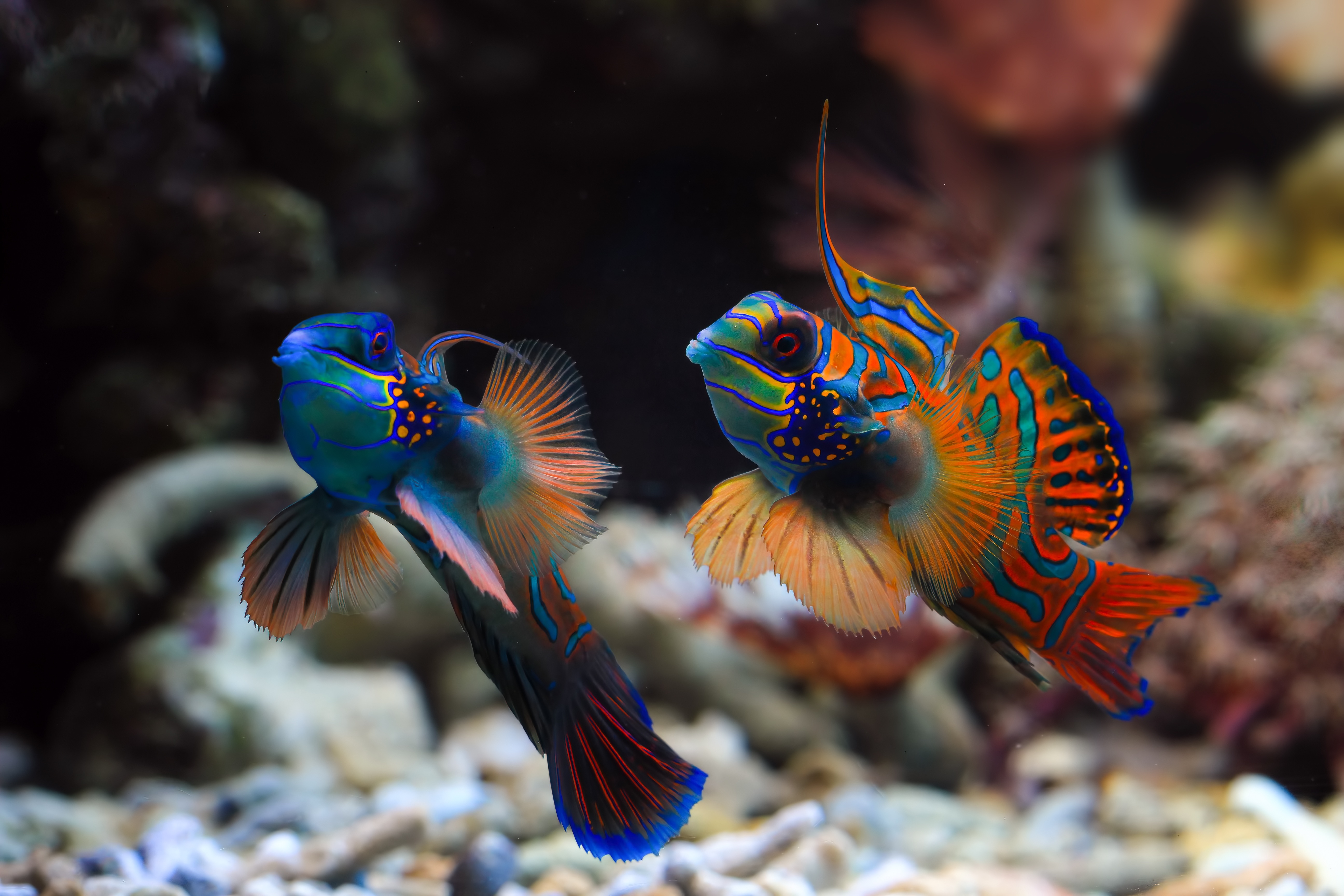
Male mandarins (with their elongated dorsal fin ray) will squabble with one another, Photo by Shutterstock.
Can you breed mandarin fish at home?
Marine fish breeding at the hobbyist level is difficult. However, there have been plenty of success stories lately. Robin Mannion of Pholium Maricultre UK shared his experience with mandarins in the July 2023 issue of the magazine. You can buy a digital copy to read the full story here.

One of Robin's juvenile mandarins, Photo by Robin Mannion
So the simple answer is yes, you can breed mandarins at home, but it isn't easy. Here is a simplified version of the steps.
- First you need a pair, fortunately dragonets pair relatively easily. Male mandarins have an elonngated first dorsal ray making identifying a pair fairly straightforward.
- The pair will need to be well fed to condition them. Ideally, you will need to wean them onto frozen foods as this will give you the best chance for success. This is a long process, and you will need plenty of live foods to sustain them while you attempt it. Culturing baby brine shrimp can help provide an alternative live food.
- They spawn by releasing their gametes into the water column at the surface of the aquarium. They do a beautiful courtship dance on their way up. The 30-150 eggs that they release are buoyant so will gather up at the surface.
- Collect the eggs from the surface water with a beaker. Transfer them into a rearing tank before 15 hours after spawning as this is when they begin hatching.
- At around day 3 the greenish larvae will turn a bright yellow and they are capable of independent feeding at this stage. You will need good stable cultures of Parvocalanus crassirostris, a pelagic copepod, to succeed here. Their nauplii are much smaller than a female rotifer, perfect for these tiny larvae.
- The larvae begin to settle at day 12, so don't be alarmed if you struggle to find them. From here on it is a waiting game as they are incredibly slow growing. Slowly increase the food sizes you are offering as they grow. Try introducing things like newly hatched Artemia and other small crustaceans.
- The mandarins can take almost a year to reach a saleable size. During this time is when most losses seem to occur. Make sure there is plenty of appropriate food available and water quality remains optimal. You should introduce prepared diets here, so that you end up with mandarins that will eat small granules and pellets.
Subscribe to Practical Fishkeeping Magazine to never miss an issue!