


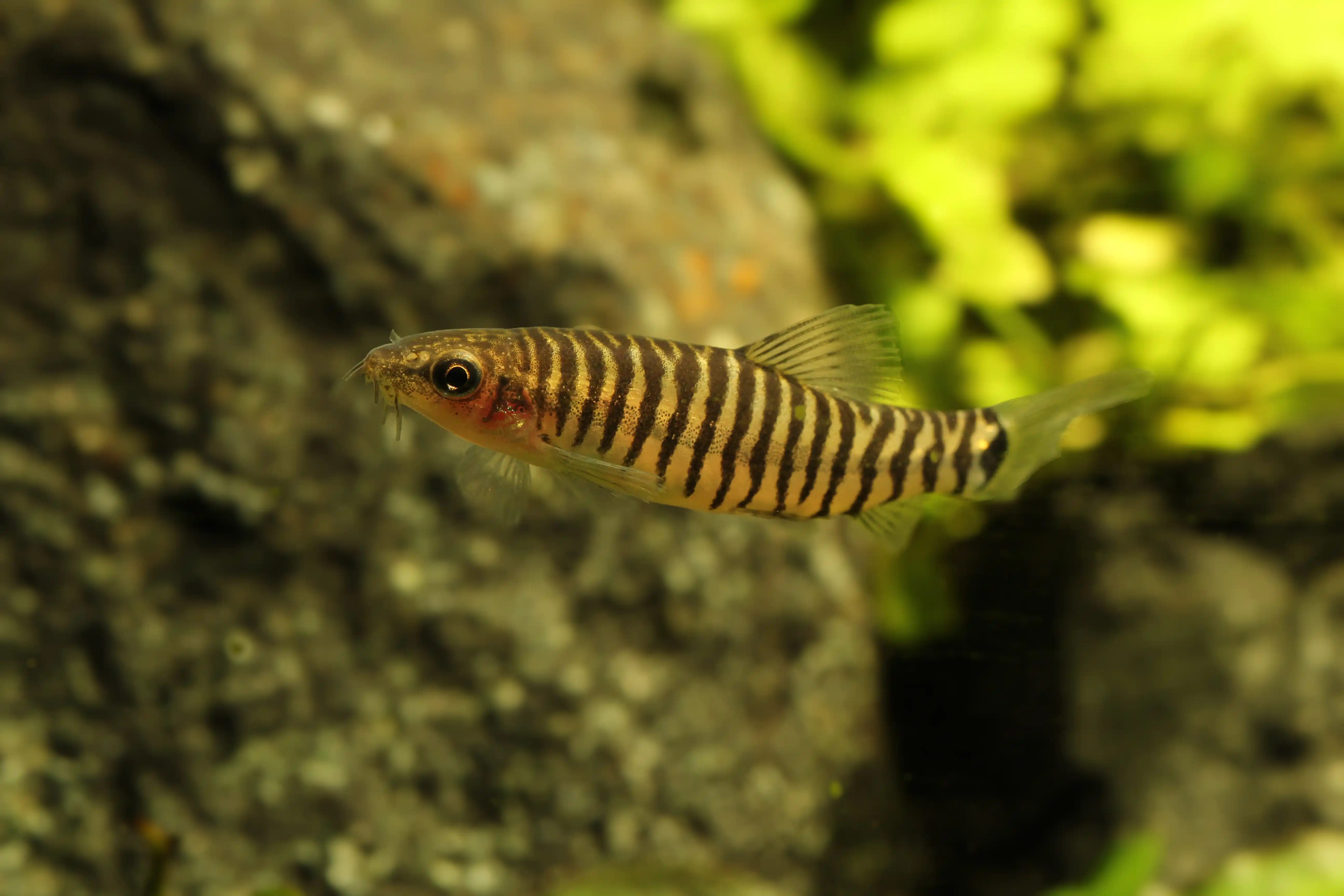
Alex wants to add a group of loaches to his aquascape for the first time. He explains how he decided to keep the wonderful hovering zebra loach.
In the fifteen plus years that I have kept aquariums, I had not once purchased a species of loach. While I routinely admired them in fish shops, I never had an aquarium that fulfilled their requirements.
Some loaches are too boisterous for a community aquarium (skunk loaches). While some simply get too large (clown loaches) or have specific requirements which meant my tanks were not suitable (weather loaches). Also, I had a long standing obsession with South American fishes which took over most of my aquariums.

Clown loaches can reach 30cm (12") meaning they require large aquariums for long term care. Photo by Canva
Fast forward to 2025 and things have changed. My house now features a 1m (39") planted tank with a community of fishes all from Asia. This was finally my opportunity to keep a species from this group of playful bottom dwellers. However, which species would be suitable for my freshwater aquarium that houses several small fishes.
I needed a peaceful loach that stayed small and would work well in a community tank full of live aquatic plants.
Choosing between two community loaches
Immediately, I had three species in mind for the bottom of this tank. One of which I quickly ruled out: the hillstream loach. This common name can refer to an increasingly large number of species. Luckily, they are all generally peaceful but, they do require fast flowing, well oxygenated water to thrive.
My filter's flow, while suitable for the tank, certainly doesn't replicate the fast flowing streams that these fish originate. Plus, with the injection of carbon dioxide (CO2) I felt this aquarium would not be the right home for any of the hillstream loaches. This narrowed my options down to two; I struggled to decide between them.
The options were the hovering zebra loach and the rosy loach. Helpfully, both species have some confusion around their scientific name. Physoschistura mango is the correct name for the rosy loach as of 2023 but many resources may not use this name.

Rosy Loaches stay smaller and have a beautiful orange glow. Photo by Tai Strietman
Meanwhile, the hovering zebra loach often goes by Yunnanilus cruciatus in the hobby. Yet, Eschmeyer's Catalog of Fishes lists Micronemacheilus as the correct genus as of 2012. Helpfully, they have several common names too, with Vietnamese multi banded zebra loach being another common one.
Both of these species thrive in fish tanks with plenty of live plants. They are both peaceful and will do well with fish like the Boraras and the Sundadanio that also call my tank home. The rosy loaches stay slightly smaller and have a pop of colour. The hovering zebra loaches have a bold pattern and often hang out in the midwater, hence their common name.
Both species of fish would likely be fine for the slightly acidic water created by the aquarium soil and CO2. However, the pH range for rosy loaches is slightly skewed above 7 (6.5-7.8) and this was the deciding factor.
I always aim to keep fish in what they will truly thrive in and thus I opted for the hovering zebra loach. Their requirement of a pH between 6 and 7.5 suits my aquarium and tap water perfectly.
Aquarium care for hovering zebra loaches
I kept searching for these loaches whenever visiting a shop and eventually found a group that looked well settled. They weren't the cheapest at £7.50 each, and given the need for group housing it quickly became an expensive investment. However, I felt these fish would justify the price tag and I picked up nine individuals.
Once acclimatised to the aquarium water I added them to the tank and they took no time to settle in. Quickly, I observed them dashing around the aquarium and gathering in midwater like their name suggests.
Feeding time is entertaining, as the loaches quickly zip around the tank in search of food. They appear unfussy, happily taking any prepared or frozen food I offer. If the granules are too large, they chase after them as they fall, pecking at the tasty morsels.
In fact, they happily chase away the considerably chunkier six banded barbs during feeding time. Showing hints at the boisterous nature other loaches are well known for. This is certainly something I will continue to monitor. That's because if this behaviour extends to outside feeding time it may become problematic for the barbs.
Substrate choice for loaches
While these loaches spend more time off the bottom than others, they still root around in the substrate. Therefore, sharp gravels are still not a suitable aquarium substrate.
My tank has a soil substrate to support healthy plant growth. The soft rounded nature of this substrate seems to work ok for them. However, a smooth sand would probably be more optimal allowing them to properly dig in search of food.
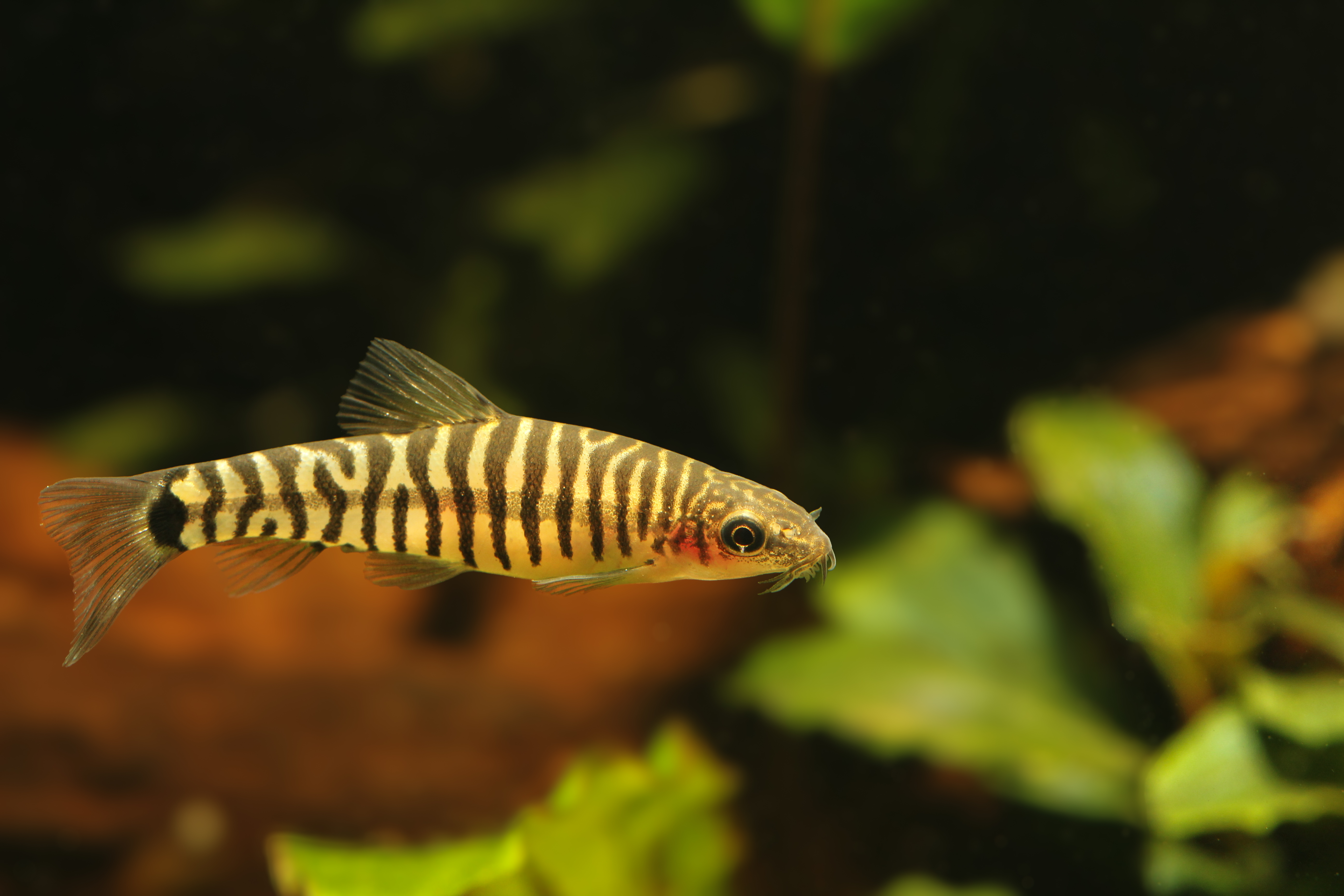
Hovering zebra loaches, as the name suggests, spend time away from the substrate. Photo by Alex Bell
Hovering zebra loach fact file
- Scientific name: Micronemacheilus cruciatus
- Size: up to 4cm (1.6”)
- Origin: Occurs in Vietnam
- Habitat: Slow moving waters in streams and small rivers. Shows a preference for areas with aquatic vegetation and sand or mud substrates.
- Tank size: 60x30x35cm (24x12x14”)
- Water requirements: Fairly adaptable but avoid the extremes. Water with a pH of 6-7.5 and 2-12°H will be suitable.
- Temperature: 22-27°C (72-81°F)
- Temperament: Generally peaceful, like many loaches they are extremely social. Ensure you keep them in sufficient numbers of 8 or more.
- Feeding: Accepts a variety of appropriate foods in the aquarium. Offer small sinking granules and pellets, crushed flakes and frozen and live foods.
- Availability & cost: Encountered fairly often in stores. If they are not available near you ask the staff to see if they can order them in for you. Expect to pay around £7 per fish with deals often available for groups.
Was it the right choice?
The hovering zebra loach are a wonderful and active fish. They add movement to the lower half of the aquarium which was certainly lacking with the previous stocking.
While they may not be the most obviously beautiful or colourful fish, much to my wife's disappointment, I think I made the right choice. With chilli rasboras and six banded barbs, the tank has plenty of red pigments already. The movement and pattern of these loaches actually makes them stand out in this display.
The chasing at feeding time is a little concern, but currently this is nothing to be too concerned about. Perhaps the 9 individuals that I have wasn't quite enough to keep any bickering between themselves. I will add more loaches if this behaviour continues outside of feeding time.
Have you got a wonderful community aquarium, a stunning aquascape, or perhaps your own mini coral reef? Head to our readers tank gallery to submit your fish photos for your chance to feature in Practical Fishkeeping magazine!