


Tai Strietman answers a reader's question about the best aquarium setup for kuhli loaches.
How can I stop my kuhli loaches from hiding all the time?
I absolutely love kuhli loaches, however, once in the aquarium they hardly ever make an appearance. If I set up a dedicated tank as a kuhli loach habitat would I be more likely to see them?
I would scape the aquarium using plants and substrate similar to what they would have in the wild. Would a few small dither fish that come from the same habitat help them feel secure? I was also wondering if leaf litter would be more suitable as a substrate than sand, but I value your opinion.
JOANNE JONES

Photo by Shutterstock
Tai says:
As you’ve mentioned kuhli loaches can be extremely shy, so your idea of a dedicated tank to suit their needs is great. Fishkeepers often purchase this species of tropical fish but then do not see them for many months.
A local fish shop, while I was studying at university, used to sell them at a great price. I remember buying around 40 individuals for a small tank, the result was that they were out all the time.
Using a small tank is a good way to increase the visibility of these fish. A large group of them in a 60-litre display would be ideal.
Related article: Learn how to set up the perfect kuhli loach hotel!
An aquascape mimicking their natural habitats is easy to assemble and leaf litter would be an ideal component.
To create a more planted aquarium, you could use plants such as Cryptocoryne moehlmanni, C. pontederifolia or C. nurii. However, any species of crypt that takes your fancy will work perfectly. Plant them into fine river sand with some root tablets for nutrients.
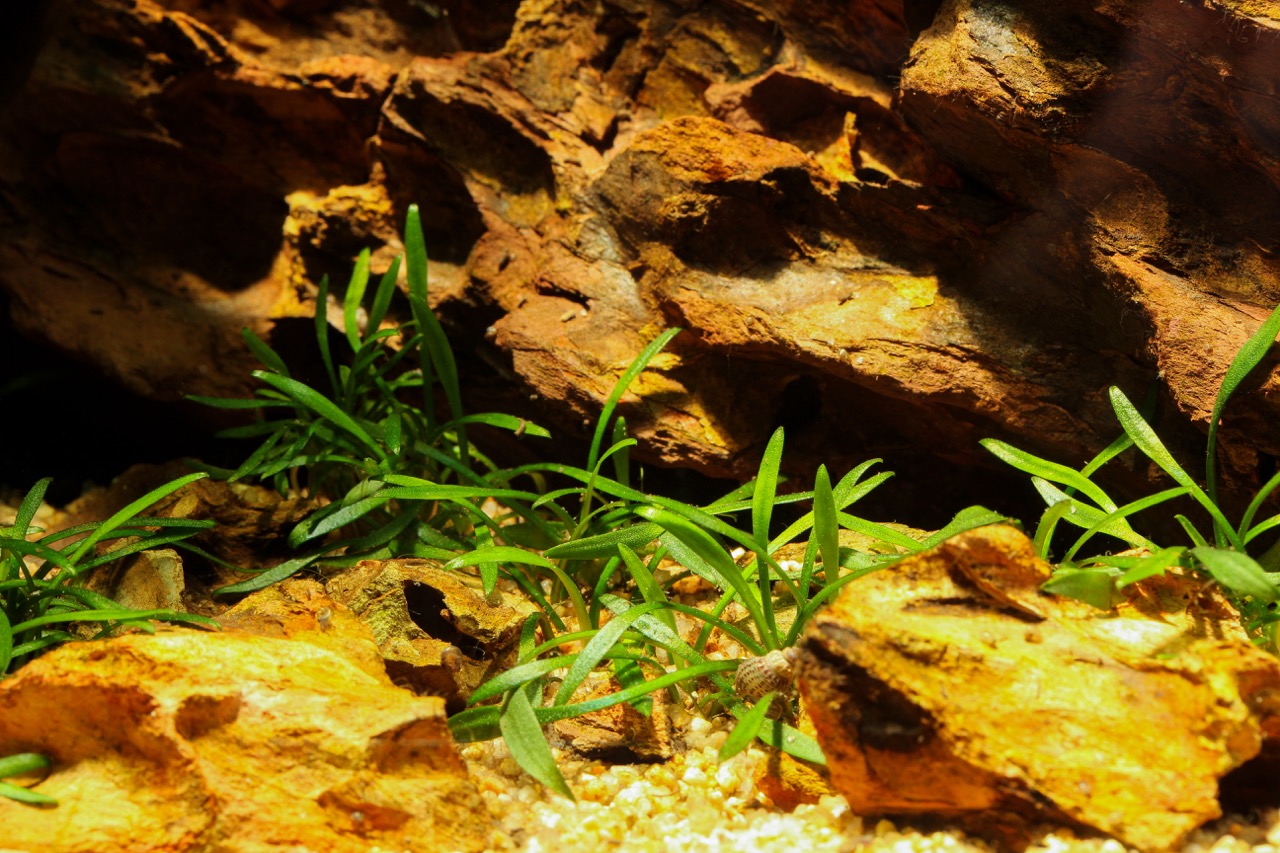
Cryptocoryne parva works well as a small foreground plant in displays
The addition of floating plants can help to diffuse the light, making your fish feel more secure. They can also help to improve water quality by soaking up nitrogen waste compounds. Water lettuce (Pistia stratiotes) or Salvinia species will work well in slow moving waters.
Sand is suitable so long as it’s fine, allowing the fishes to dig without causing damage to their sensitive skin. Using black sand would help to represent the sediment and detritus-rich habitat of these fish and bring out the colours of the Kuhlis. Darker conditions may also increase their confidence.
Plenty of leaf litter will provide cover and produce tannins for that ‘blackwater effect’. Alder cones are a great way to soften and colour the water and will help create the acidic waters that kuhli loaches thrive in.

Top tip: as a minimum you should rinse off botanicals before use in an aquarium
Choosing the dither fish
Plenty of common aquarium fish could work as dithers. Some compatible options include the mosquito rasbora (Boraras brigittae) dwarf rasbora (Boraras maculatus) and the phoenix rasbora (Boraras merah). Additionally, you could use the glowlight rasbora (Trigonostigma hengeli) which are a subtle but beautiful species of freshwater fish.
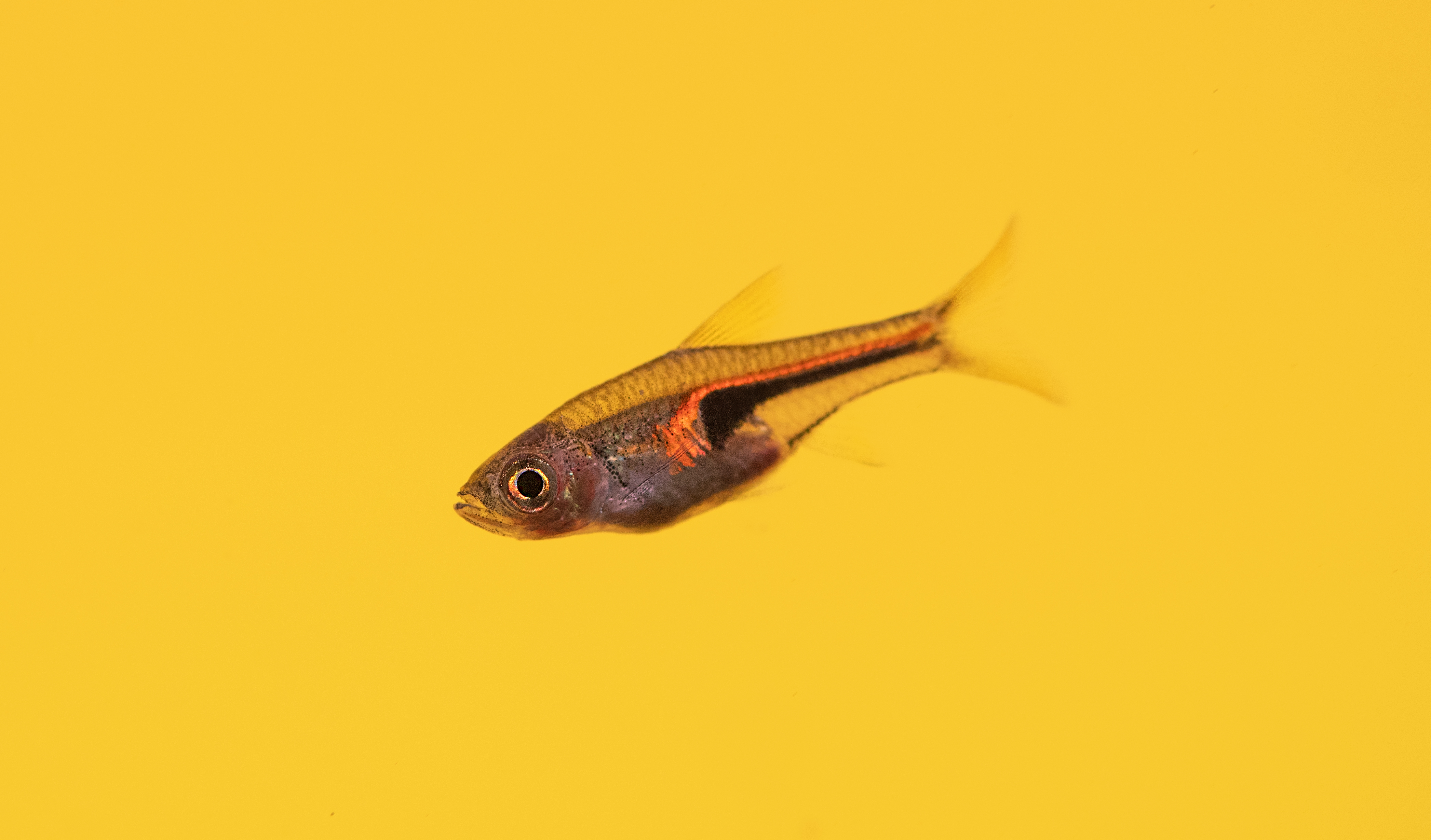
Photo by Tai Strietman
Related article: Rasboras: The Spartacus fish
These species all live in the same regions as several of kuhli loach species. Meaning they will thrive in a similar environment and water parameters. Combining them with the kuhli loach (Pangio semicincta) and C. moehlmanni would give you a lovely Sumatran biotope display.

Above is an aquarium layout that I created in a 30cm cube display tank. I included Pangio semicincta, glowlight rasboras and C. x purpurea (as a stand in for C. bankaensis).
This article was first published in the January 2025 issue. You can view our latest subscription offer to ensure you never miss a feature!