


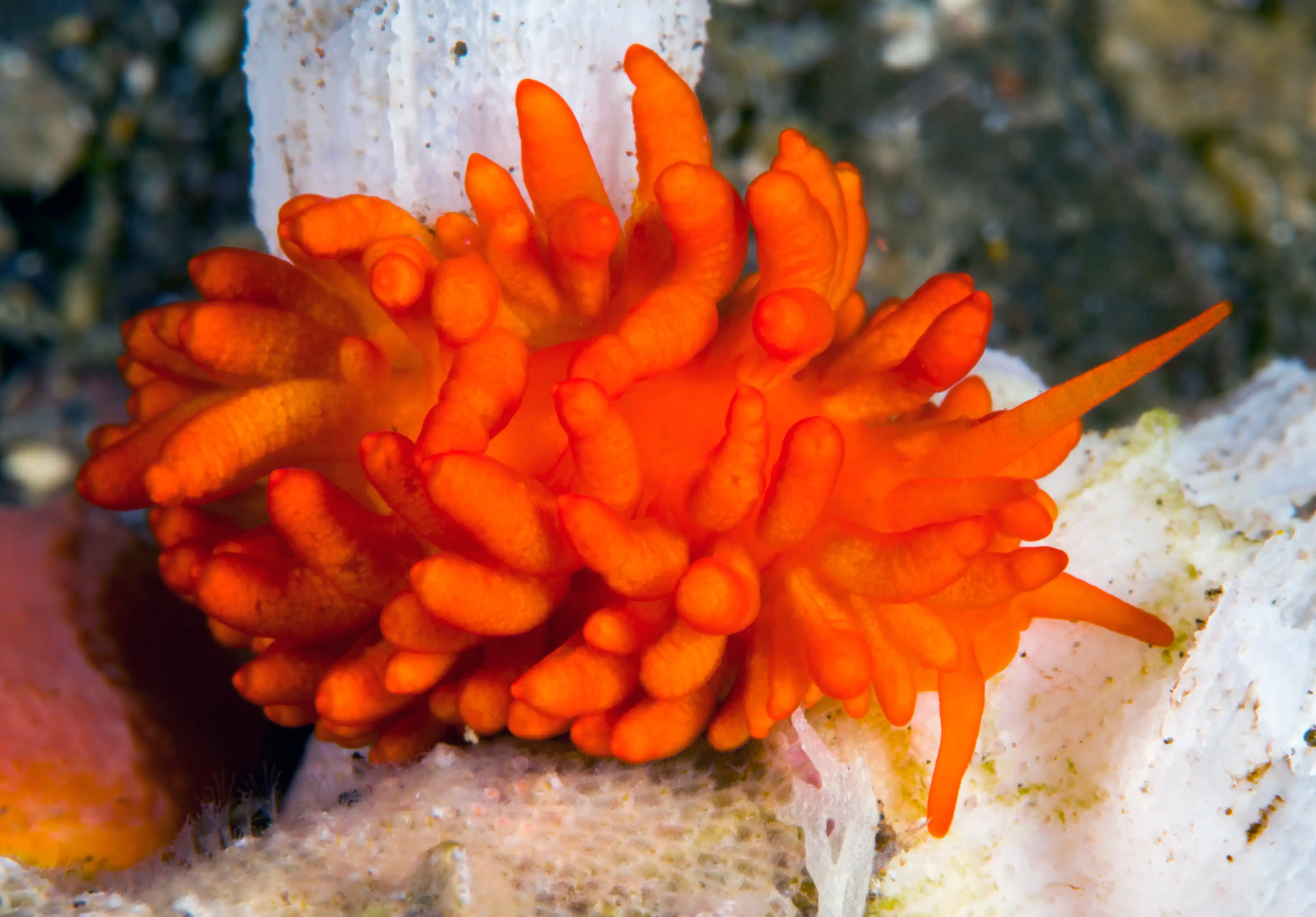
Jeremy Gay gives a reader some advice on removing a hitchhiking pest from a reef tank that arrived on a new coral.
How can I remove these hitchhikers before they eat my corals?
I have a 90-litre reef tank containing various polyps, a Favia and a scoly coral. The marine aquarium is also home to a couple of tiny captive-bred clowns and some reef hermits. A couple of weeks ago I visited a shop I'd not been to before and picked up a stunning yellow-orange coral. I have no idea what species of coral it was, and they didn't seem to know either.
I placed this coral in my tank, and it looked amazing. But a few days later I noticed something on the front glass. It had bright orange colour all over and a slightly fuzzy texture.
Excitedly, I thought to myself "wow a baby coral", however, as I watched it, I could see it moving, then I spotted several more.
I can only presume these are pests of some kind that are living on the coral. I've counted 16 in total – but they're just the ones I can see. They're about 2-3mm in length. How do I remove these from my saltwater aquarium please?
CONNOR SMITH
All images provided by Shutterstock

Many marine species found on coral reefs are specialised coral eaters. Sometimes they are specific to a certain coral species. While others may be more generalist consuming any hard coral, or soft coral for that matter.
Jeremy says: Without actually seeing them, they sound like a pest nudibranch of some description. While there are many forms of these, they always resemble the host polyp they devour.
In your case, I would image the coral is a Tubastrea sp. otherwise called the sun coral (pictured below). These are a non-photosynthetic species relying solely on feeding on meaty foods not symbiotic zooxanthellae like most corals.

The first rule when buying any new coral is to dip it using a coral dip treatment, to remove any pests. Use a white plastic bowl and ideally a small powerhead to circulate the dip. Dip your corals several times per week and even quarantine them if you have a spare tank to hold them in.
Wrasses are the best pest eaters. The only reef safe wrasse you could fit into a 90-litre tank is a six line wrasse (pictured below). They may behave aggressively in a tank that small so are not an ideal inhabitant.

Wrasses, like the six line wrasse or pyjama wrasse, are brilliant at removing unwanted worms and invertebrates.
Manually remove the pests you can see on the glass by sucking them up with a syphon tube, a turkey baster or large syringe. Physically remove them every time you see them and you will reduce their number. Dip the coral now to remove any adult pests and keep dipping it every few days.
Those nudibranchs will be specific eaters of that particular coral and will starve without it. If the worst comes to the worst, you could remove the coral altogether and the pests should disappear completely over time.
Coral Pest Top Tip
When dipping corals, it’s useful to attach the coral to some polystyrene. This will mean it floats upside down in the bowl containing the dip, allowing the irritated pests to fall off it more easily.