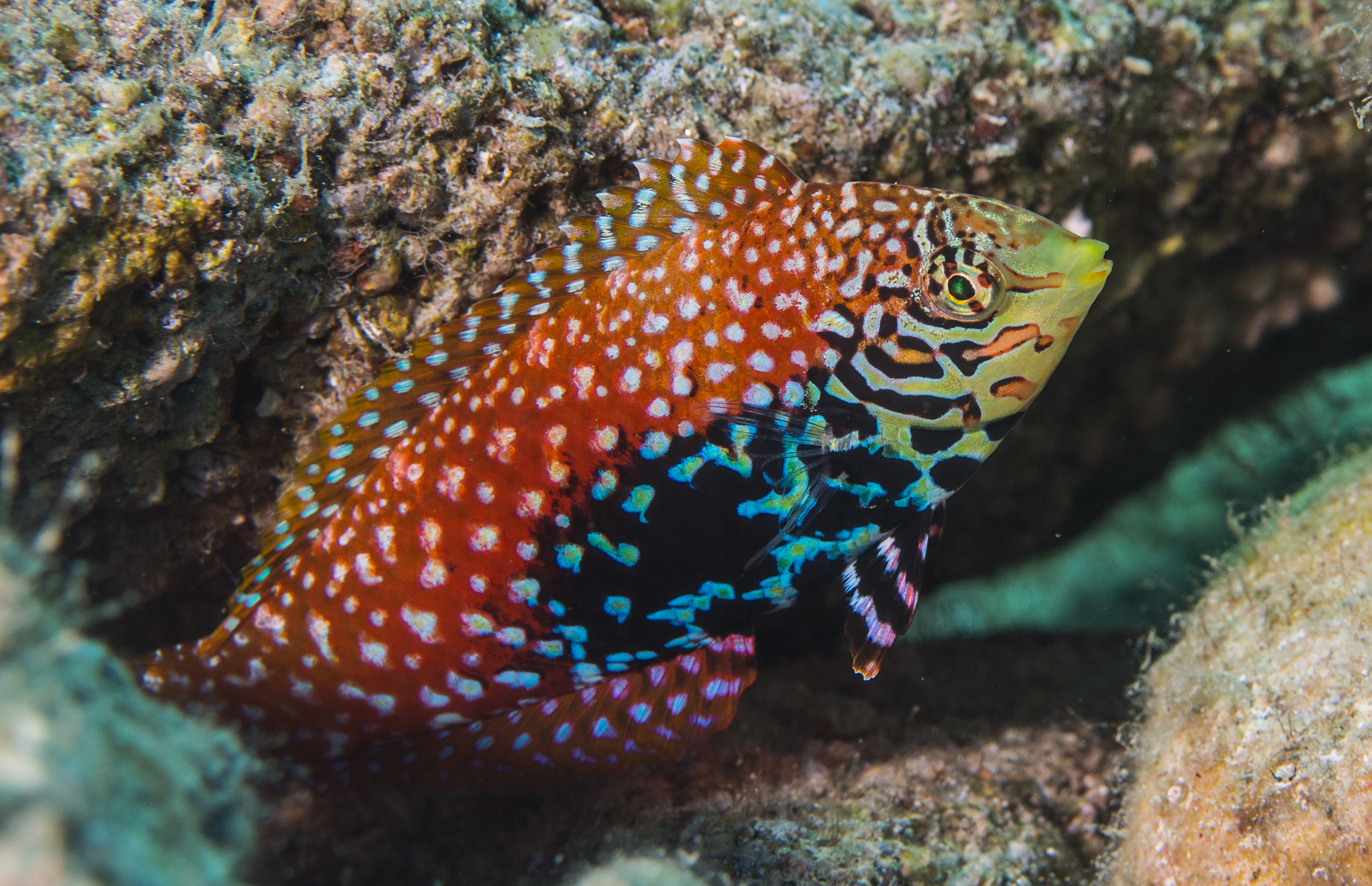
Jeremy Gay advises a reader on reef safe wrasses, and warns them of what reindeer, or dragon, wrasses will end up like in their adult form.
Is this wrasse reef safe?
Are reindeer wrasse reef safe? The store mentioned they may eat shrimp when they get bigger, but what about corals? What would I need to keep one?
My LFS has a couple in stock, and they are about 5cm (2"). My tank is 450 l (1.8m x 60cm, 6 x 2') and has a few reef hermits and three conches but no shrimp at the moment. It has a large toadstool with other softies and Xenia.
I have a sandy substrate of 4cm (1.6") in depth, but I could add some more if it's not deep enough for the wrasse to bury itself into. My marine aquarium houses a maroon clown, a flame angel, 3 chromis and a regal tang.
FREYA HILL
All images by Shutterstock.
Jeremy says:
Reindeer, or dragon wrasse (Novaculichthys taeniourus) will suit your large tank size. However, they are a threat to all mobile inverts like shrimp, snails and crabs when larger. This means that you won’t be able to have any of the normal useful clean-up crew.
They also pick up small rocks and throw them while searching for invertebrate prey – hence their other common name of rockmover wrasse. This means any decoration (including live rock) in the tank needs to be too large to move, or glued.
Moving rocks is not the only thing that can cause problems. They will also shift substrate, which will upset, cover and smother corals causing them to not open fully. Or worse, the corals could slowly wither away and die.
They grow large, reaching 30cm (12") or so, and the adults, while still attractive, look nothing like the cute, ‘antlered’ juveniles (pictured above). They are best suited to a larger fish-only community tank. This does open the door to a wide range of large fish tank mates that aren't suitable for reef aquariums.
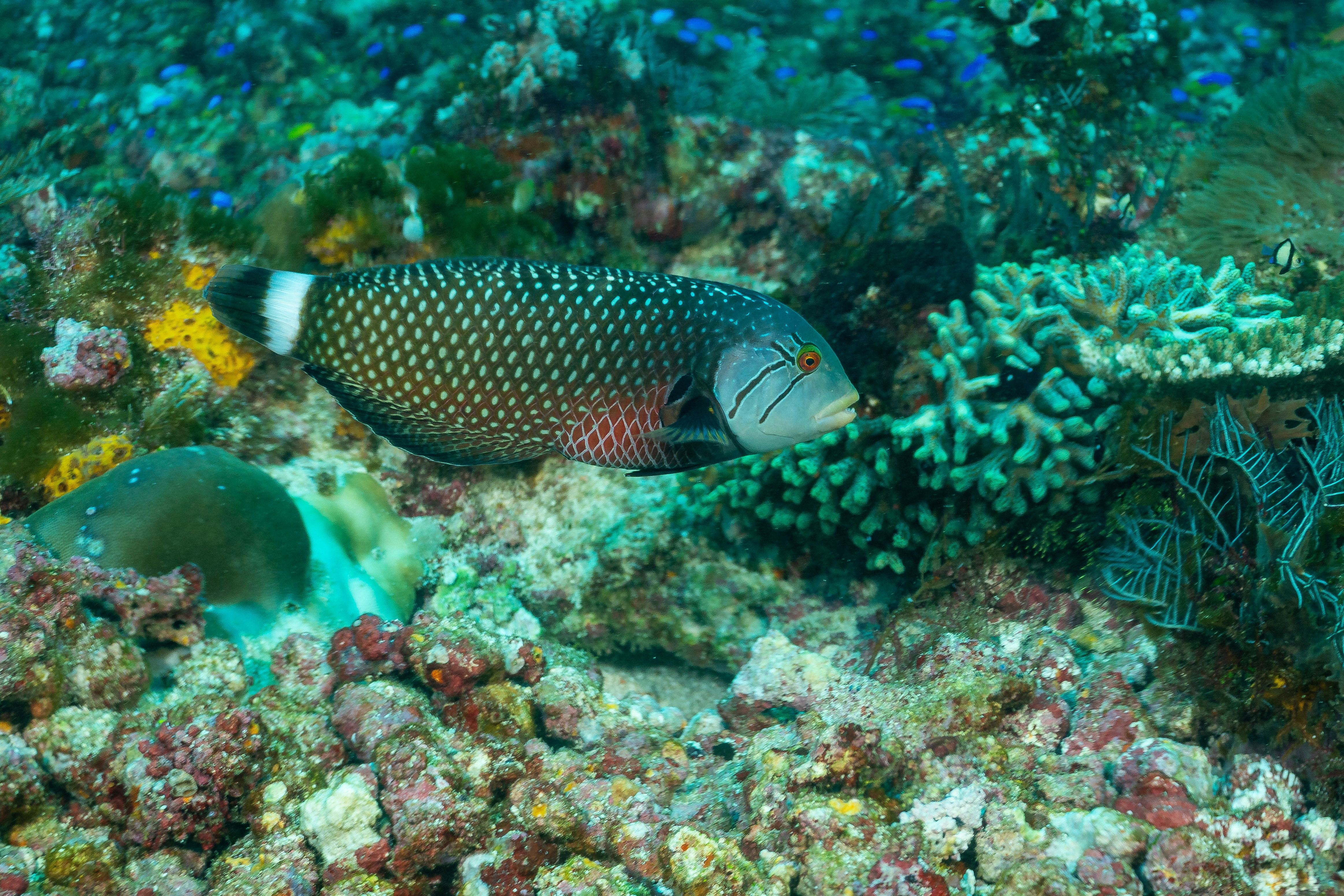
Adult reindeer wrasse (pictured above) look totally different to their juvenile form.
While not endless, there is a long list of options for large community fish not that could work well with this wrasse. Check out these characterful marine fish which include, but not limited to, pufferfish, moray eels, triggers and lionfish.
Reef safe alternatives
However, there are plenty of reef-safe wrasse species available in the marine hobby. These include fishes from the genera:
Halichoeres- including the bright yellow coris wrasse (Halichoeres chrysus).
Anampses- including the beautiful A. femininus, the blue striped orange tamarin wrasse.
Pseudocheilinus- which the commonly seen six line wrasse, that great at removing pest flat worms, belongs to.
Or if you like exotic looking patterned wrasse species, try the peacock, or leopard, wrasse (Macropharyngodon bipartitus). These are beautiful fish and the if you have more than one, the dominant fish could change to a male and look totally different!