


Wondrously wacky with a strange relationship with sea urchins. Marijke discusses whether Diademichthys lineatus make a good choice for your reef tank.
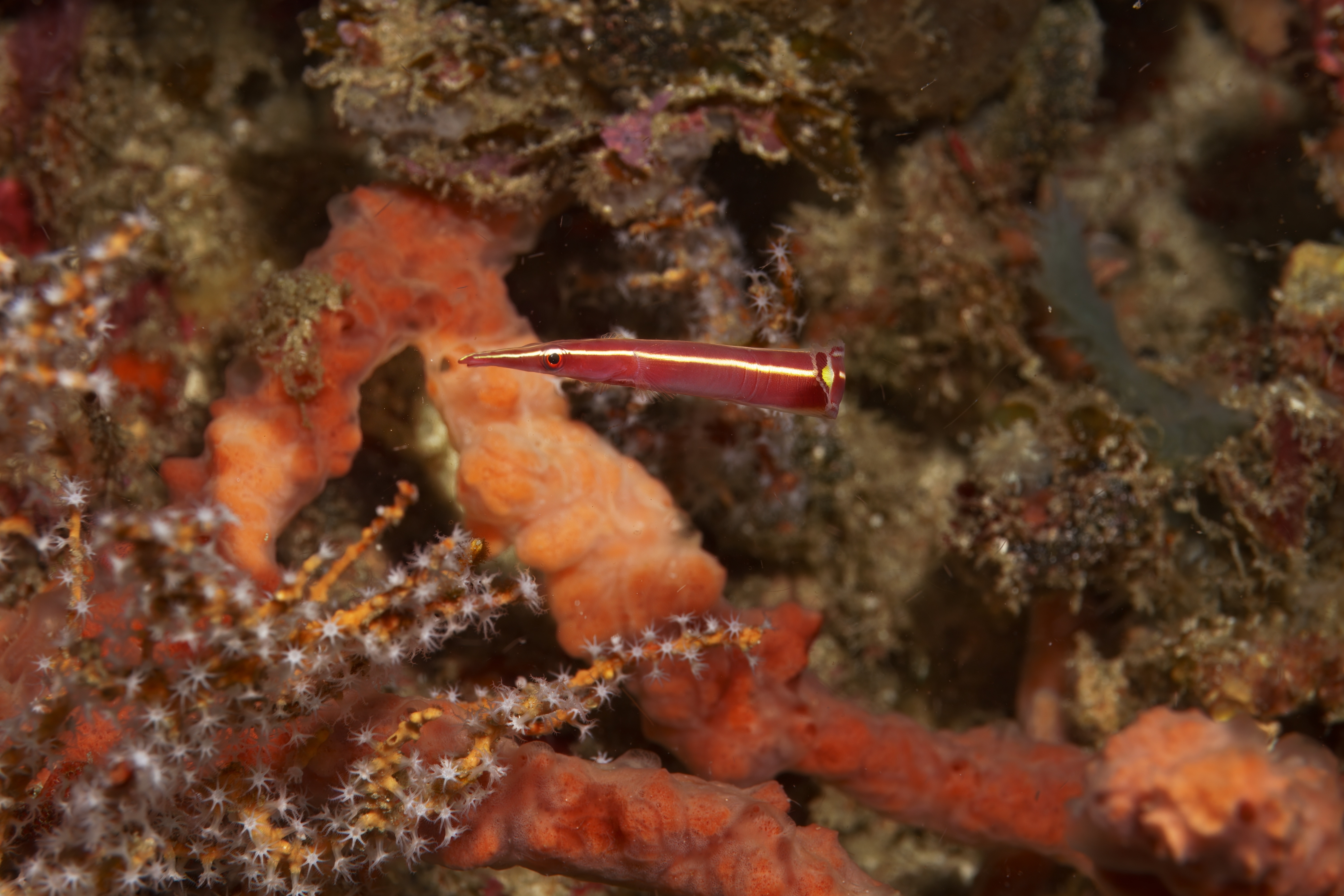
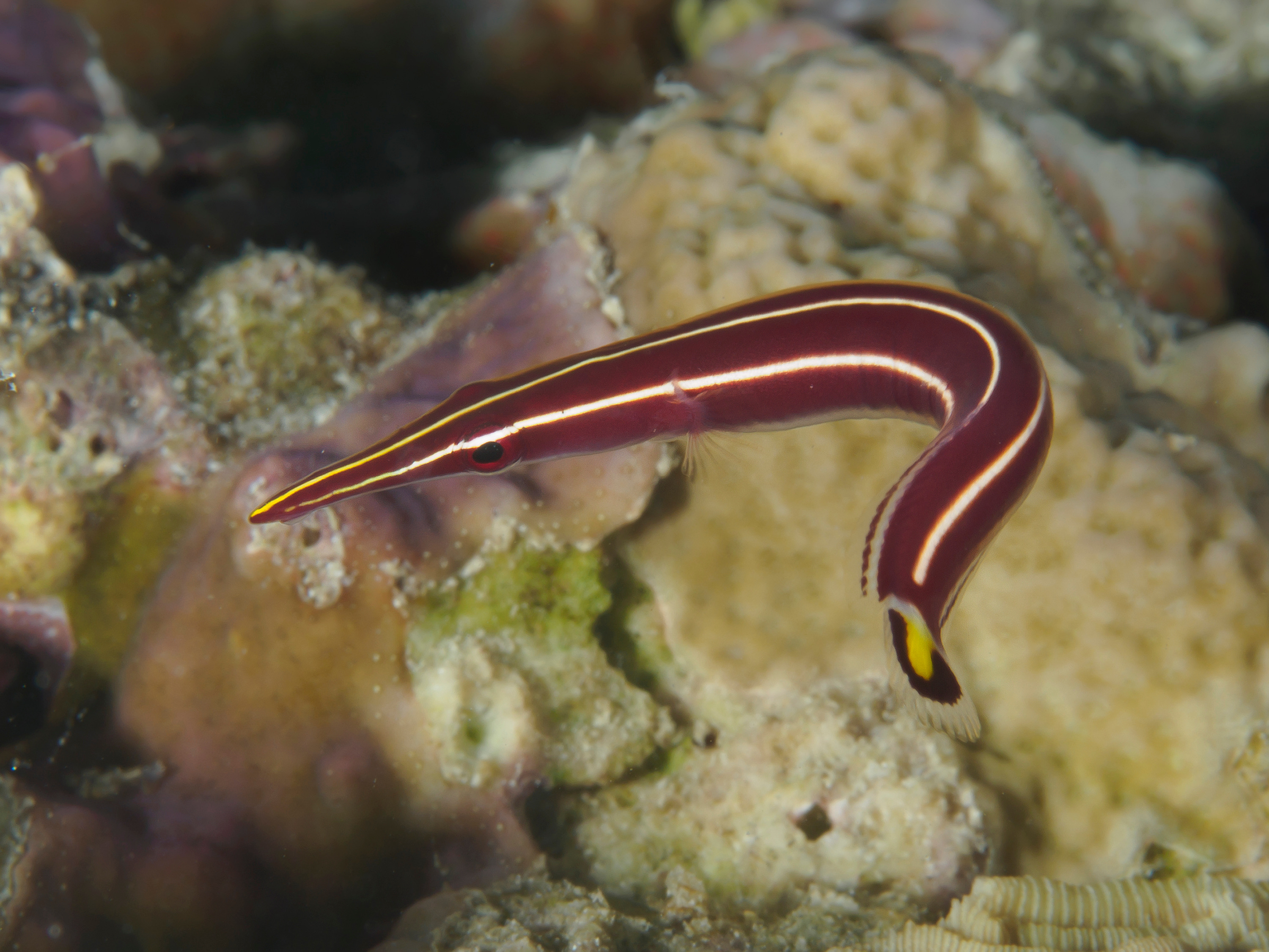
Did you know that for less than £30, you can add one of the strangest fish on the reef to your aquarium? Everyone loves a reef oddball, and the urchin clingfish (Diademichthys lineatus) ticks all the boxes. They have an incredibly strange appearance, an interesting relationship with an unwilling host, and incredibly toxic skin.
We have a lot to unpack here—and unpack it we will—but let’s start with some basics. You may see this fish listed as the yellow stripe clingfish or long-snout clingfish. Both appropriate names considering its appearance.
Diademichthys lineatus is a member of the taxonomic family or suborder Gobiesocidae. This suborder belongs to the overarching order of Blenniiformes. Technically, they are distant relatives of the more well-known blennies, although, in practice they are rather different.
Where do urchin clingfish naturally live?
If you like to scuba dive, you can spot this fish fall across the tropical Indo-Pacific. Starting from the rom the Gulf of Oman east to the Polynesian island of Tonga. I can certainly attest to it being a common sight at dive sites in the Gulf of Thailand. Here, its wiggling swimming style makes it a fun find for anyone whether they are a fish fanatic or not.
The natural habitat of urchin are shallow reefs down to around 20 metres (65'). They prefer sheltered spots like branching coral colonies, eelgrass patches and of course, the long spines of Diadema urchins.
Clingfish love Diadema
For a small fish, staying close to Diadema urchins, with their armour of long and often toxic spines, is a no-brainer. But the urchins don’t just come in handy for safety reasons. In a double whammy for the clingfish (but not the urchin), they also provide food.
If you’ve ever looked closely at a living sea urchin, you’ll have noticed small “tentacles” protruding around its spines. These are tube feet, and the urchin uses them for locomotion, to bring food to its mouth, and even, bizarrely, to breathe. It appears these tube feet, to which its symbiont has easy access, are pretty tasty. In fact, they form a significant part of urchin clingfish diet!

According to a 1992 study, the urchin doesn’t seem to notice the loss of some tube feet to hungry freeloaders. Scientists discovered that the damage caused by the clingfish is insignificant.
As such, the relationship between the fish and the long spined sea urchin is commensal. One species benefits from the relationship, while it does not affect the other.
Besides, the clingfish don’t depend on their host’s feet exclusively. They also feed on copepods, small burrowing bivalves, and the eggs of the purple urchin shrimp (Stegopontonia commensalis). These shrimp also associate with Diadema urchins.
Male clingfish sport relatively rounded snouts perfect for munching on tube feet. The girls have elongated, tweezer-like snouts that are better suited to the delicate task of burrowing for shrimp eggs and bivalves.
Juvenile fish do not show this divergence in diet between the genders. Whether male or female, baby clingfishes feed on smaller parts of their host (specifically the pedicellariae and the sphaeridia). They also enjoy various associated copepods.
Urchin clingfish for your saltwater aquarium
How does all the aforementioned translate to the home aquarium? Given their specialised diets, you’d expect urchin clingfish to be almost impossible to keep.
It can be challenging to get new clingfish to eat. However, experienced reefers can maintain this species in home aquariums. Sourcing them may be difficult, but certain suppliers do supply them if you ask around.
Thanks to their small size (they rarely surpass 5cm/2” in length), urchin clingfish are suitable for smaller set-ups. Most sources recommend a minimum of 40 litres (9 gal), though I’d say 60 litres (13 gal) or up just to be safe.
You don't need to provide them with an urchin, which are not suitable for nano set-ups anyway. However, if your aquarium can accommodate it would make for fascinating viewing. Just be sure to avoid touching their toxic spines, which can provoke an effect similar to a bee sting.
Feeding your clingfish
As mentioned, not all urchin clingfish eat readily from the start. I recommend verifying the fish you’re intending to buy has a healthy appetite at the local aquarium store.
Keep your clingfish separate from the rest of the tank until they consistently accept prepared or frozen foods. In a similar way to seahorses, they can be quite slow to feed and by the time they strike, the food has moved. To combat this, aim any food at a relatively flat shell or feeding dish. This allows them to easily spot it and hopefully have a more successful ‘hunt’.
Although I’m not aware of any supplier selling urchin tube feet, foods consisting of crustacean eggs do exist. These would be good choice for a fish that naturally feeds on shrimp eggs. You can also try live brine shrimp, copepods, and other regular small reef foods.

Can you breed urchin clingfish?
As for breeding, there are a few successful reports out there. Wild urchin clingfish use empty bivalve shells as nests, with the males caring for the eggs until they hatch. They show a relatively high level of parental care, fanning the eggs regularly and rarely leaving their clutches.
However, that doesn’t necessarily mean they’re good parents: brooding males do consume some of the eggs to sustain themselves.
You can differentiate the sexes by females having a longer thinner snout while males are short and stubby. Aim to keep one male with multiple females, as males will compete and interfere with each other's nests.
Provide empty clam shells for the fish to use as a nest and rear the larvae on extra-small foods. No solid information about what they prefer to eat is available yet.
Enriched rotifers and green water may work initially. Copepods also make a good choice, because as we’ve seen, that’s part of what young urchin clingfish eat in the wild. Just be sure to go for the tiniest pods possible, Apocyclops panamensis or Parvocalanus crassirostris are perfect. The nauplii of these are a quarter of the size of a female rotifer!
What can I keep with urchin clingfish?
As you can probably imagine, these small fish won’t do well when kept with large, boisterous tankmates. They’re shy and peaceful, leaving members of their own species, and others, alone. They should only share their tank with similarly even-tempered fish and invertebrates.
As they are slow, fussy feeders, stocking fish that will compete with them is not ideal. Unless you have plenty of live food cultures going, go for small slow feeding species that will readily accept common reef foods. This will reduce the pressure placed on your food production.
Provide plenty of live rock to act both as shelter and foraging grounds for the clingfish. Plus, since these fish will not bother your corals, you can place all sorts of sessile invertebrates throughout the aquarium. Avoid anemones which may sting, capture and eat your clingfish, though.
Fact File
Scientific name: Diademichthys lineatus
Size: up to 5cm (2”)
Origin: Tropical Indo-Pacific
Habitat: Lives on sheltered, shallow reefs, typically associated with Diadema urchins but sometimes branching corals suffice.
Tank size: 60x35x30cm (24x14x12”)
Water requirements: Standard reef parameters will be suitable
Temperature: 22-26°C (72-79°F)
Temperament: Reef safe, peaceful but easily outcompeted by tank mates. Males can squabble over breeding sites.
Feeding: Not easy to feed. Be prepared to offer various live foods, including copepods and brine shrimp, while you attempt to wean them onto frozen foods.
Availability & cost: An unusual find, but usually don’t cost more than £30 each.