


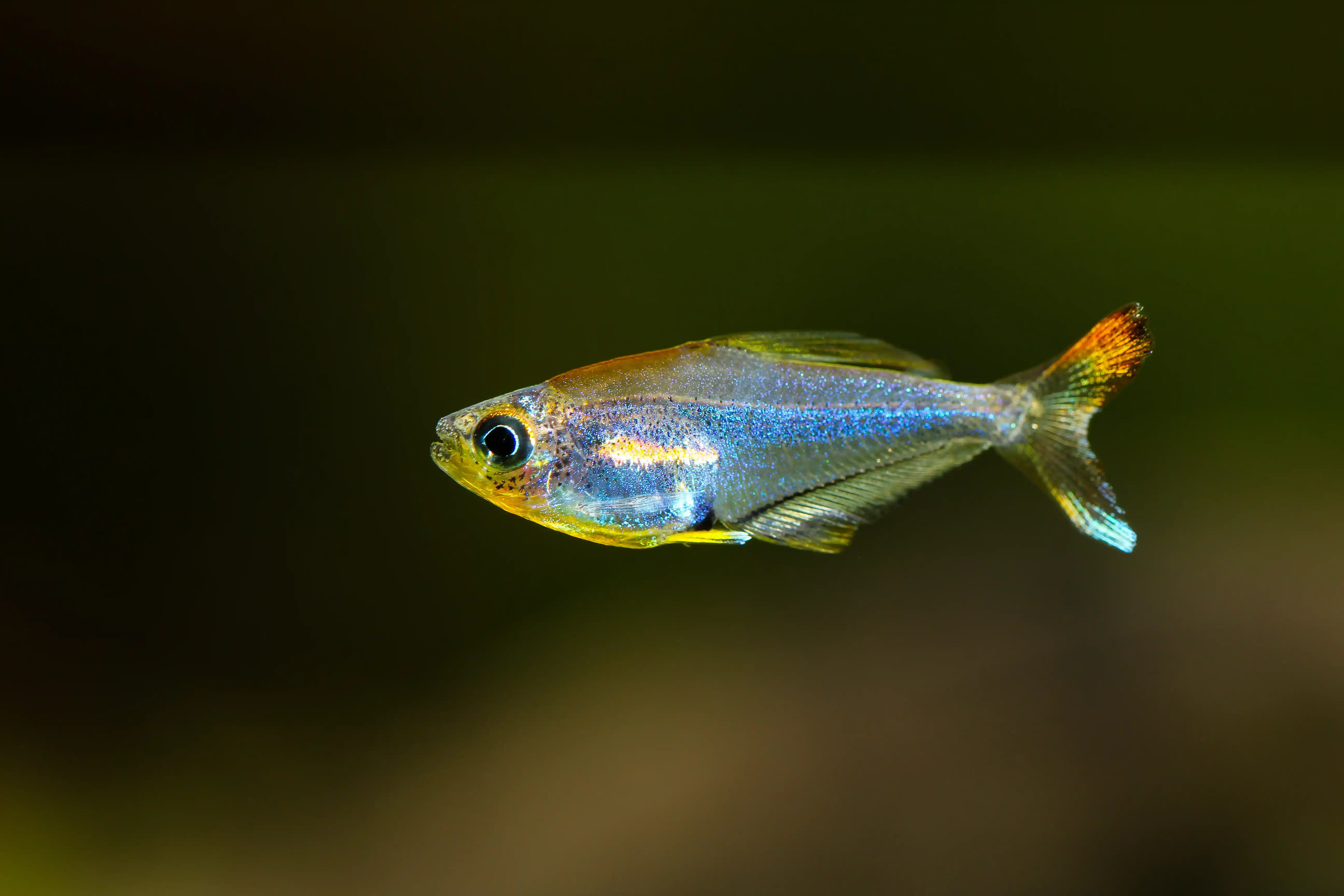
A fish that can be both see through, and remarkably colourful at the same time. This small tetra is certainly one to add to the bucket list of species to keep.
First described in 2010, Trochilocharax ornatus is a relatively new addition to the wonderful group of characins. This means that information on both its care and natural habitat is fairly scarce. Recently we have seen it available in a couple of stores in the UK under the common name 'hummingbird tetra'.
However, crystal rainbow tetra, another common name for this species, is perhaps more apt for this species. These fish can look almost crystal clear, but as the light catches them correctly they display a vibrant blue body. Yellow and orange pigments on the fins surround this blue giving a rainbow like appearance.
For an overview of their morphology, and defining characteristics head to our news feature from when this species was originally described. Instead, in this feature we will focus on their basic care requirements so that you can keep this stunning nano fish successfully.

Photo by Alex Bell
Hummingbird tetra tank size
Reaching just under 2cm (0.8") in length, their small size means this species is perfectly suitable for nano tanks. Ideally, opt for a tank measuring 45cm (18") for long term care so that you can house a good sized group. This will enable you to see these colourful fish at their best, with males holding territories and displaying to each other.
If you plan to maintain this species in a community tank set up with other peaceful fish, you will need a larger tank. A standard 60cm (24") aquarium would suffice depending on the tank mates chosen. This will allow you to combine them with other small acidic loving species.

Photo by Alex Bell
The wonderful ember tetra could make an ideal tank mate. They generally stay in the lower reaches of the tank whereas the hummingbirds stay closer to the top. Pencilfish and Apistogramma could work nicely as potential tank mates as well, providing different behaviours and swimming styles. They are also unlikely to outcompete the little tetras at feeding time.
Water chemistry
Pinpointing exactly where this fish comes from is currently impossible. However, the habitats in the regions suggested are fairly similar having tannin stained water.
Aiming for soft and acidic water will help your hummingbird tetras thrive: a pH of 6.5 or below is ideal. Water temperature is less critical, with this species tolerating a wide range from 20 to 28°C (68-82°F).
Related article: Biotopes of Peru: Daring to be first.
While they generally inhabit tinted water habitats, we saw one group thriving in a high-tech aquascape. The aquarium soil and CO2 injection help to create the water chemistry required. Plus, the associated dense plant growth provides plenty of cover for these fishes so that they feel secure.
Aquascaping their aquarium
As we just mentioned they can do well in a planted aquarium, but a more natural look would be a botanical method tank. Decorate with a soft sand covered with leaf litter and various seed pods. Add twisty roots and fallen tree branches to add some three dimensional structure.
Floating plants can help diffuse the light and use up excess nutrients helping to create the environment your fish will love. Low light tolerant aquatic plants like Echinodorus can also add a pop of green to the aquarium.
Aquarium care for Trochilocharax ornatus
Caring for this species is not always straightforward with aquarist reporting mysterious deaths despite providing the above conditions. Sourcing quality fish that look healthy and settled in the shop tanks will certainly help you succeed.

Photo by Shutterstock
Similarly, offering a varied diet will keep these fish in top condition. A mix of prepared foods along with frozen and live foods like Daphnia and brine shrimp will certainly help. However, nothing is ever a guarantee with sensitive species like these tetras. Provide the right environment and water conditions and hopefully the fish will reward you with their dazzling colours.
As males can be somewhat territorial, holding their position in the tank, opt to keep more females than males. You can spot males by them being larger, more colourful and having elongated fins. This can be challenging when looking at newly imported juveniles, however.
This is certainly an eye catching species that is well worth the extra effort.