


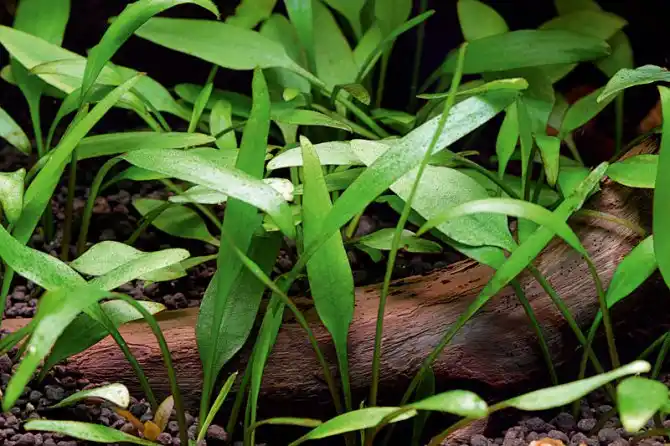
George Farmer explains how you can grow Cryptocoryne parva, the smallest of the Crypt species perfect for the foreground of an aquascape.
Factfile for Crypt parva
Scientific name: Cryptocoryne parva.
Family: Araceae.
Origin: Asia.
Maximum height: Rarely over 6cm/2”.
Width of rosete: 5-7cm/2-2.8”
Temperature: 20-29°C/68-84°F.
Hardness: Very soft to hard.
pH: 5.5 to 8.
Light demands: Medium.
Growth rate: Very slow.
Demands: Medium.
What is Crptocoryne parva?
Cryptocoryne parva is the smallest of all the Cryptocoryne (crypt) species. Unlike most other crypts, it does not significantly alter appearance when changing from its emerged to submerged form.
It tends to require more light than other crypt species, probably due to its small stature, being further away from the light source and it is easily overshadowed by taller plants.
Like all crypts, it does better in a nutrient-rich substrate and will benefit a lot from CO2 injection and a nutrient-rich water column. Because of its very slow growth it is prone to green spot algae which can be addressed with better circulation levels — especially towards the bottom of the aquarium.
Related article: How to set up a Cryptocoryne aquarium
How to grow parva
It will grow in lower lighting conditions if provided with good nutrients, but expect incredibly slow growth. It does well in warmer water, making it suitable for low-maintenance planted discus tanks, although don't cover the full foreground with it as discus will appreciate some open sand to feed from.
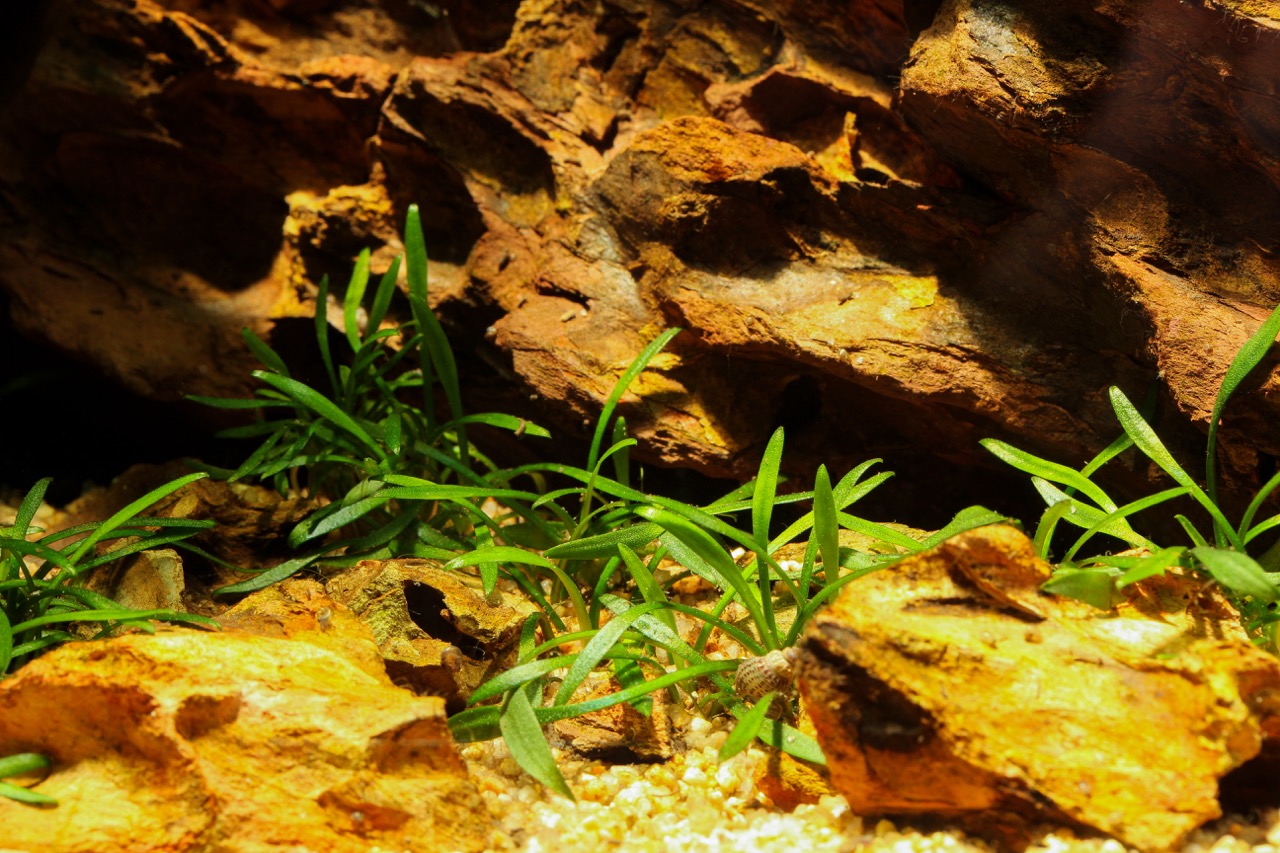
It is also popular for lower tech aquascapes as an easy foreground plant, and given enough time can create a low maintenance carpet effect.
It is usually supplied in pots or in vitro cups containing lots of small plantlets. Carefully separate these and plant a few centimetres apart from one another. Over several months, or more depending on your set-up, they should start spreading out and covering the substrate. Prune off any overgrown or unhealthy leaves near the rhizome.
As with most crypts, expect some die-off after initial planting as it adjusts to a new environment, in vitro plants seem less prone to melting. Remove dying matter and await new healthy growth.
This article was first published in the November 2009 issue of Practical Fishkeeping magazine but has been recently updated. It may not be reproduced without written permission. Check out recent issues of Practical Fishkeeping.