


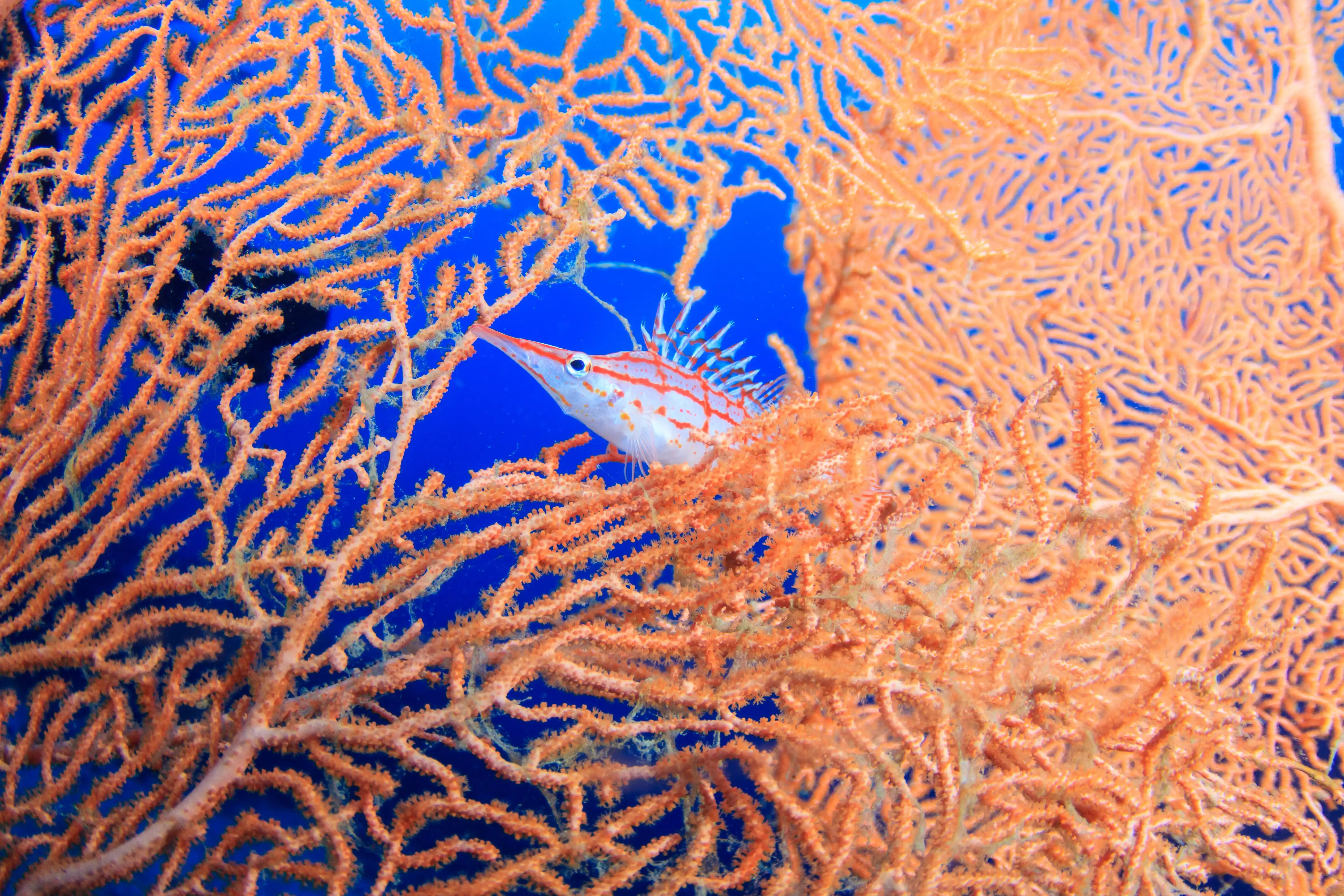
Hawkfish have plenty of character and colour but can you add them to your reef aquarium? Let's investigate...
When searching for a fish with charisma and character in the marine world, the reef-dwelling hawkfish have few rivals. These curious critters prefer to perch on a coral outcrop and observe their surrounding rather than dart away and hide. This makes them great additions to a saltwater aquarium as they will be watching you just as much as you will be watching them.
This also makes them perfect for practicing some fish photography as they sit still for long periods. If you've got a hawkfish, grab your camera and snap the perfect shot of it perched in your tank. We would love to see your photos and you can even submit them to feature in the magazine.
All photos by Shutterstock
Are hawkfish reef safe?
While these marine fish have plenty of colour and personality, the critical question is are they reef safe? The answer is yes, with some considerations.
These fish naturally predate on shrimps, worms and even some small fish in the wild. They sit on their perch and swoop down like the true hawks when they spot potential prey. With this in mind, these animals are generally not safe in a tank with a hawkfish.
Some reef keepers report that longnose hawkfish can be successfully cohabit with cleaner shrimps. However, they may change their mind overnight and your colourful crustacean may become an expensive snack. Larger, more robust, mobile marine invertebrates like snails and crabs might be safe, but add them at your own risk.
In fact, their habit of perching can cause the hawkfish problems in a coral reef setting. Anemones and powerful stinging corals may irritate or even kill your fish should it try to settle on them. Therefore, it is wise to choose your sessile invertebrates carefully and avoid these stingers.
In smaller tanks with less branches and rocky outposts to sit on, hawkfish may find a particular coral to be their preferred spot. This can irritate your coral, preventing it from opening and cause it to slowly die. You can prevent this by stocking robust, hardy species, and ensuring there are plenty of suitable live rock perches for your hawkfish.

Hawkfish species to consider
Now we have established that you can have a hawkfish in your marine aquarium, it is time to decide which species to keep. Remember that all hawkfish tend to be aggressive, no matter the species of fish. Add them to your fish tank last to reduce issues.
Below we have five of our favourites that are often available in the trade. However, there are plenty of others available that you can consider, but always research the species before buying!

Flame hawkfish (Neocirrhites armatus)
- Origin: Western Pacific from Japan down to Australia.
- Size: 10cm (4”).
- Minimum tank size: 90x40x40cm (36x16x16”).
- Feeding: Will take to dry diets as well as the usual frozen offerings.
- Notes: You may see this species of hawkfish listed under a different name, the scarlet hawk.
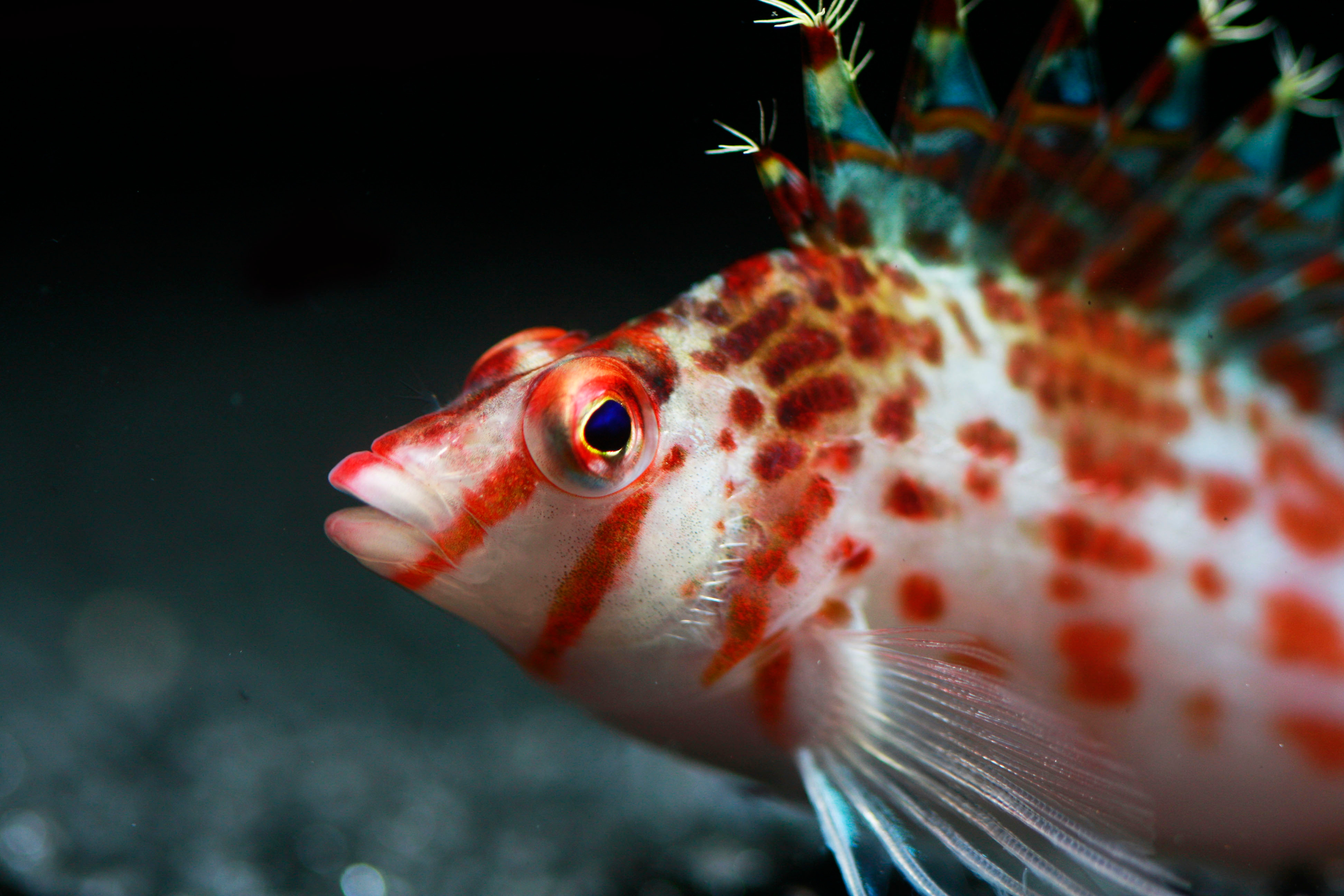
Dwarf hawkfish (Cirrhitichthys falco)
- Origin: Indo-Pacific: Including the Great Barrier Reef, Maldives, Samoa, and up to Southern Japan.
- Size: 8cm (3.8”).
- Minimum tank size: 60x45x45cm (24x18x18”).
- Feeding: Offer the usual frozen and live fares including Mysis and brine shrimp. May take to prepared diets.
- Notes: One of the least aggressive hawkfish available, but they can still cause problems for shy and small species.
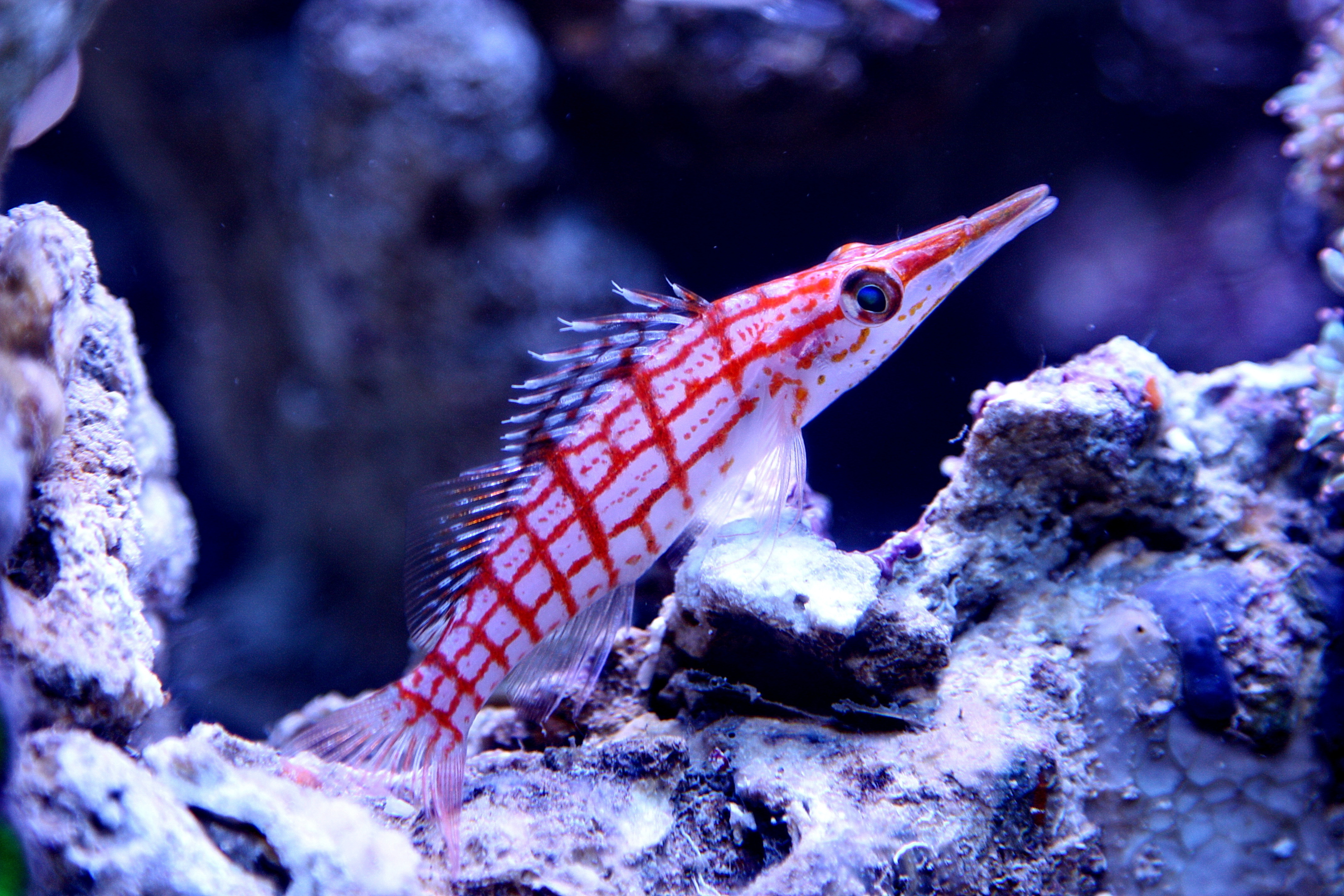
Longnose hawkfish (Oxycirrhites typus)
- Origin: Widely distributed. Found from the Red Sea, across the Indian and Pacific oceans to Hawaii.
- Size: 13cm (5”).
- Minimum tank size: 100x45x45cm (40x18x18”).
- Feeding: The long nose of this species make them adept at picking worms and crustaceans out from live rock. Generally unfussy and accepting of most common reef aquarium foods.
- Notes: Typically occurs in deeper waters, with larger territories. Therefore, they require larger tanks than other hawkfish of a similar size.
Related article: How do I breed longnose hawkfish.

Arc-eye hawkfish (Paracirrhites arcatus)
- Origin: Indo-Pacific, from East African across to Hawaii.
- Size: Reports up to 20cm (7.9”) but usually no bigger than 15cm (6") in captivity.
- Minimum tank size: 100x45x40cm (40x18x16”).
- Feeding: A classic hawkfish that will feed on meaty foods, including its tank mates when given the chance.
- Notes: Named after their characteristic U-shaped marking around the base of the eye. This species occurs in a variety of colours, with the main body varying in shades of green-brown to a red-orange.