


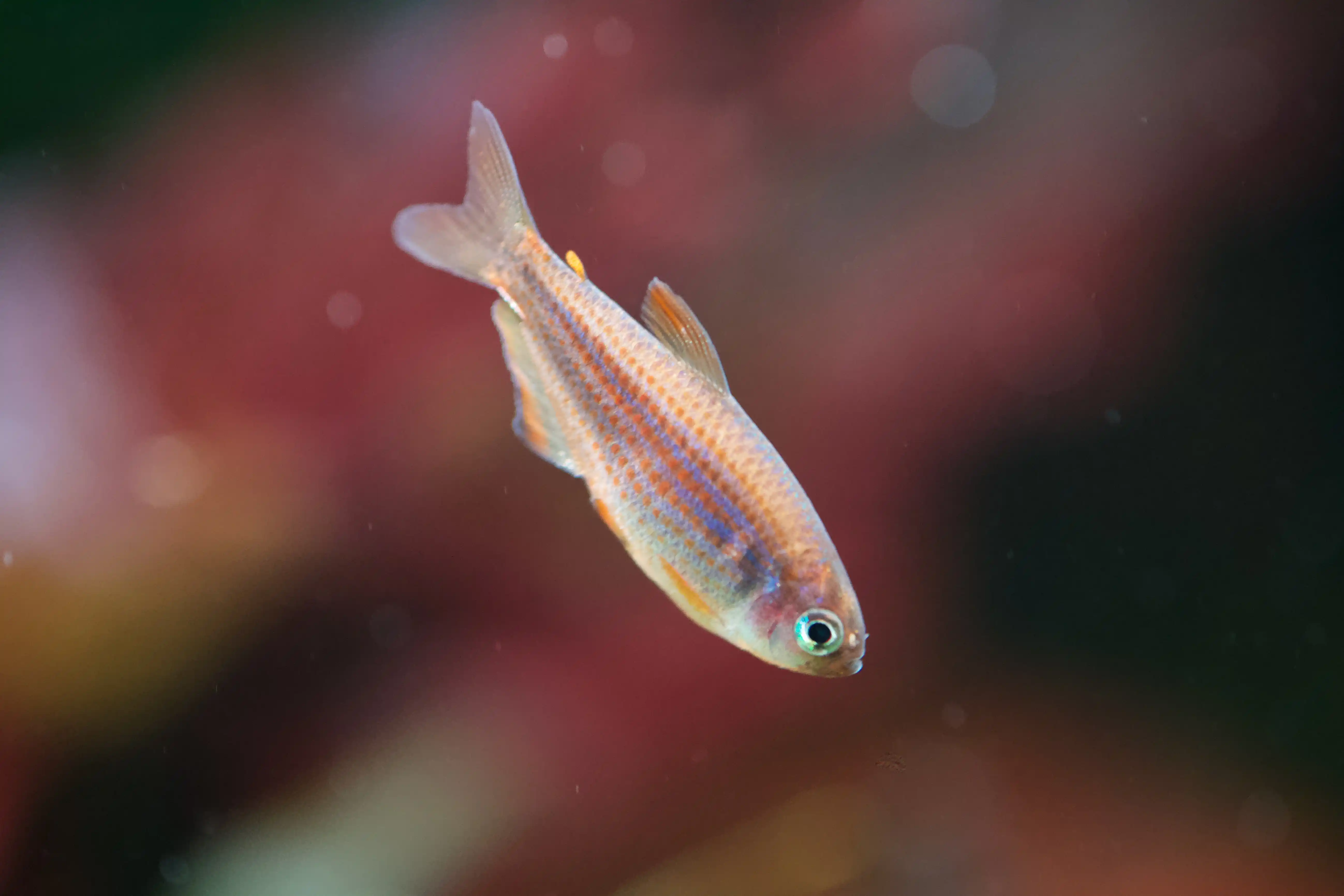
Alex has seen some different characins on his visits to various fish shops lately. He suggests how to care for each species in an aquarium.
During the recent shop visits I have been routinely seeing South American tetras that you don't often spot. I don't know if these species are becoming more available or if I am just lucky and visiting the right stores. However, it is great to see them in the flesh and I thought I would highlight my three favourite species so far.
Photo above by Rob Lowen of Maidenhead St Mellons.
Morse code tetra
This one is a great option for those interested in unusual tetras rather than garish colours. As of yet they do not posses an official scientific name, but you may see them under the name Hemigrammus sp. "Morse Code".
They stay small, reaching a maximum size of 2.5cm (1") and their behaviour is quite sedentary. Individuals seem to hover in the same place within the aquarium, gently flicking their fins to maintain their position. Therefore, this is a species well suited to nano tanks.

In fact, Fishkeeper Southwest had a small group in a Fluval Betta tank holding 22.7 litres (5 gal) of water to great effect. We encountered this tank during the On The Road event in August. They showed the same behaviour here as they did in the sales tanks, minimal movement each fish holding their position near to cover.
Information on this fish is scarce, as there are no scientific studies on the species. However, they come from Peru and suggestions are that their care is fairly straightforward. Aquarium Glaser suggests that their requirements are similar to that of neon tetras (Paracheirodon innesi).
The YouTube channel Under Surface mention that they appear to only feed in midwater, taking particles that drift by their spot in the tank. Adding a gentle current to the tank to bring the food to them is therefore a sensible idea. Equally, live foods like Daphnia that maintain their position in the water will work well.
This slow feeding style does mean they may miss out on food in a busy community tank. Perhaps a dedicated nano tank is the best option for this fish. Furnish it with plenty of cover in the form of low light tolerant plants, aquarium safe wood and botanicals. This ensures each fish can have a shaded spot to call their own.
Some websites suggest they thrive in medium to hard water. They also mention that soft and acidic water conditions are necessary for breeding, yet reports of breeding are absent. Perhaps this information is somewhat guesswork based on the assumption their requirements are similar to neons. With this in mind, it is probably best to aim for soft and slightly acidic water parameters.
Red cherry tetra
In contrast to the appearance of the previous species, aquarists desire this species because of colour alone. Another tetra that does not have a scientific name, currently people use Hyphessobrycon sp. "Cherry Muzel" or "Muzel Red Cherry". Dr. Flávio Lima from the Universidade Estadual de Campinas is currently working on a scientific description.
I first encountered this colourful tetra in person in Tai Strietman's aquascape gallery. Immediately I understood why the price tag does not discourage potential buyers. They actually are as vivid and bright as the photos suggest. I recently encountered this fish again and managed to avoid the temptation.

This is a slightly chunkier tetra, growing to 4cm (1.6") in length and shows the more outgoing behaviours that you expect from a characin. This makes them more suitable for a busier community aquarium as they will happily feed alongside their tank mates.
We will likely get a better understanding of their wild habitats once Flávio publishes their work. Until then, we can once again assume that soft and acidic is the way to go for their care requirements.

They looked settled and healthy in Tai's high tech aquascape, so a heavily planted tank will work well. Equally, I am sure they will thrive in a more biotope inspired set up. However, their colours may look subdued thanks to the tannin stained waters. Whatever aesthetics you go for, a 75x30x30cm (30x12x12") tank is the minimum tank size I would consider for this species.
Scratched inpa tetra
Finally, a tetra with a scientific name, Inpaichthys parauapiranga. The blue emperor tetra (Inpaichthys kerri) is a fairly well known relative. They are a similar shape and also reach around the same length, which is about 4cm (1.6").

Scratched inpas, sometimes known as scratched kerri tetras, come from a tributary of the Canamã River in Mato Grosso.
This species live in shallow waters of around 60cm (24") deep. The waters are clear with a gentle current, and a sandy substrate. Aquatic plants are abundant in the native habitat, so they should feature if creating a biotope aquarium.
While the waters may not be full of tannins, they are still soft and acidic. Keep the pH below 7 and buy a good sized group and you should do well with this species.
I have spotted these twice in the last few months, once at Maidenhead Aquatics St Mellons and also at Fishkeeper Southwest. While the colours were not as striking in the store's tanks, you could see the potential in them. A quick search online will show you images of what these fishes become, and wow they are impressive.
A blue sheen with bright red lateral lines running down their flanks mean they rival the classic cardinal tetra for colour. A freshwater aquarium measuring 60x35x30cm (24x14x12") should be the minimum considered for a group.