


Sump systems add extra water volume and space for filtration, but they can look quite daunting. Jeremy explains why they are so useful and what you should consider when designing your sump.
Sumps are an integral part of most successful reef aquariums. If you are thinking about keeping marines, I recommend a sump. If you start with a saltwater aquarium that doesn’t have a sump, I almost guarantee that your next upgrade will have one. That’s how useful they are.
What is a sump tank?
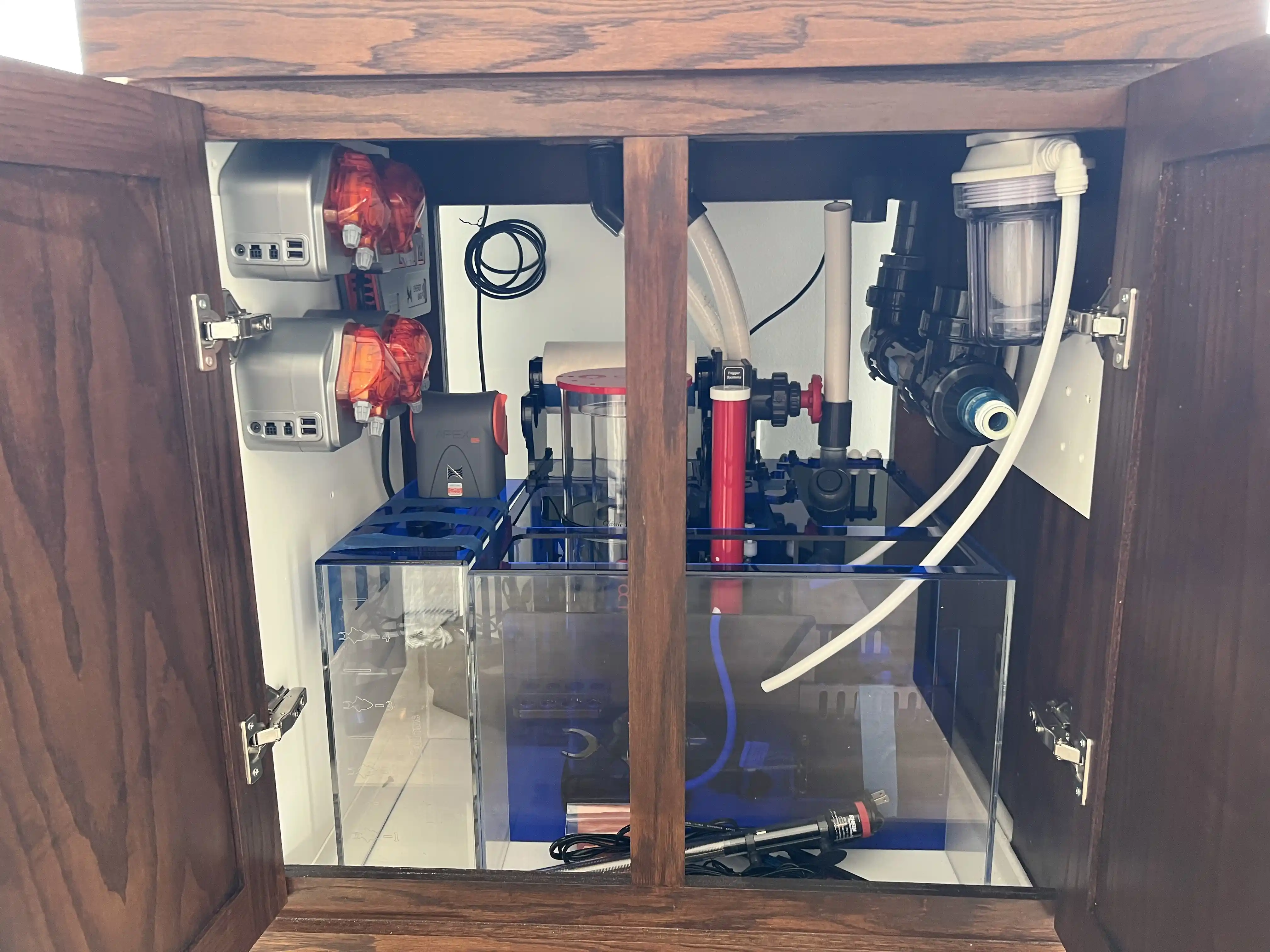
A sump is a second tank underneath the main tank which connects via pipework, and is part of the system. Two major benefits include increasing the total water volume, and the extra space for equipment. With reefkeeping, water volume and the right equipment are everything because it helps to make your rank more stable. This is critical for keeping corals.
In the marine hobby, a sump is typically a glass aquarium, but a sump can be anything that holds water. Plastic containers to a glass or acrylic tank, or even something much more elaborate all do the job.

How does a sump filter a reef tank?
If you haven’t ever had a sumped aquarium it can take some getting used to. The main aquarium must have holes drilled into it and pipework connected, or it must use something called an overflow box. Both of which enable water to move from the top tank to the sump and filtration beneath.
Water is pumped into the main tank where it rises above the hole, and starts to drain out, just like the emergency overflow hole in a sink or a bathtub. The extra water then trickles through pipework into the sump below.
Once in the sump, a fine filter media traps dirt particles. This can be through filter socks, filter floss, sponges (mainly in freshwater sumps,) or a roller filter. The latter is a clever device which traps the dirt on a roll and rotates every time it gets dirty. Roller filters cost around £300, but they pay dividends in labour saving, water clarity and nutrient control.
In a reef tank, water is then cleaned further by a protein skimmer, before travelling through a set of sump baffles into the final chamber. Here a return pump sends it back up into the main tank. The heater goes in the sump too, so a sump can hide your filtration, heating and return pump in the cabinet underneath.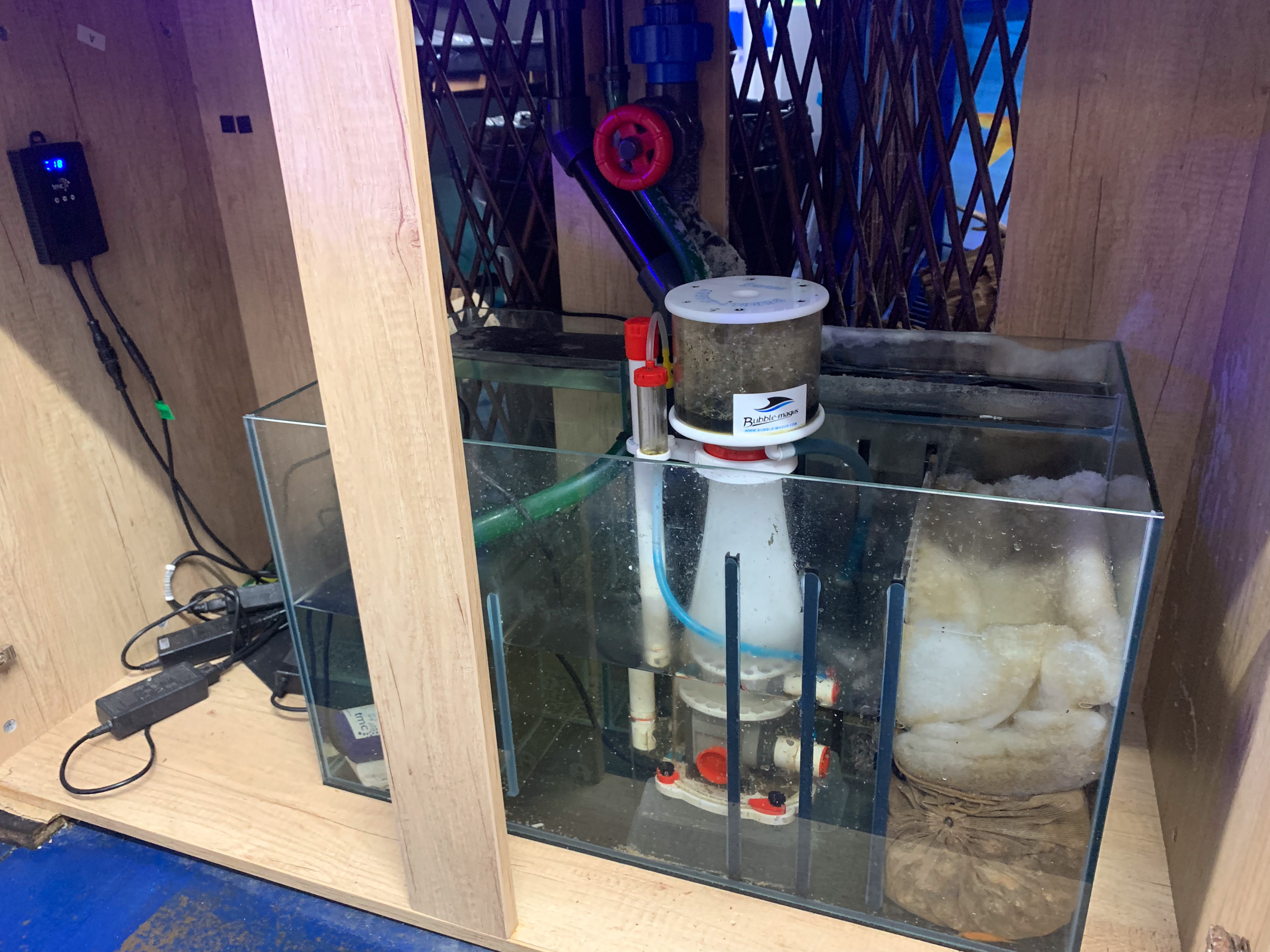
Types of sumps
A sump can be as simple as a box with a pipe coming in, a return pump, and a pipe going out. However, we usually divide off the pump with a baffle or several baffles. This forces water up and over different the types of filtration.
All tropical aquariums will evaporate water through open-topped sumps. Therefore, it's a good idea to have an auto top-off device (ATO) and a separate reservoir of RO water.
Some marine sumps will also contain a refugium section. These are areas where macro algae can grow. Not only do they help soak up nitrate and phosphate, but they also provide a home for animals like copepods.
Sumps are available off the shelf in specialist marine stores, or may come as part of a reef-ready aquarium set. You can also have them custom-built to your specifications, or even make one yourself from a spare fish tank. Glass is the most popular build material in the UK, although acrylic and PVC sumps are available.

The Aqua Marin 900 Pro reef set (pictured above) from Maidenhead Aquatics comes with a sump and the pipework required.
Related article: Frequently asked questions on sumps.
What size sump do I need?
A sump can be as large as you want it to be, and it can even be larger than the tank itself. Sump aquariums do have a minimum size however.
When you turn the power off, a certain amount of water will continue to overflow into the sump below. That’s why nearly all sumps are only ever half-filled with water. This ensures that the sump doesn’t overflow when the power goes off.
You can calculate how much water back syphons from the main tank and then make sure that your sump tank will be large enough. But if in doubt, consult a marine aquarium specialist who can advise accordingly.
The sump needs to be able to house all the equipment you want to run. Reef tanks may use roller filters, protein skimmers, media reactors, heaters and return pumps. Decide on your equipment and get a sump to match.
Typically, they are between 60 and 120cm (24-48") in length. These will cope with reef tanks from 60cm (24") in length (and 170 litres/37 gal), to over 180cm (6') in length (and 600 litres/ 132 gal) in volume. Expect about a twenty per cent increase in total system volume.
Which sump design should I choose?
Base your sump selection on three things: Is it fresh or saltwater? Do you want a macroalgae refugium or not? And do you require filter socks or not?
Freshwater sumps don’t have protein skimmers or macroalgae refugiums and tend not to use roller filters either. You generally cannot buy a freshwater-specific sump. If you require one either make your own (with lots of baffles, and up-and-over filter chambers,) or get one custom-built.

Chaeto macro algae is a common choice for refugiums, Photo by Shutterstock
Although popular, filter socks can become a pain to clean, they become clogged more and more easily as they age. Plus, if you don’t clean them often enough, nutrients can still build up in the water. If you choose a sump that comes with a filter sock chamber, ensure that the chamber is removable. That way you can install a roller filter in the future, as most people do.
I have used macroalgae refugiums on approximately half of all the reef tanks I’ve run and set up. The jury is out on if they benefit a reef system or not.
I’d choose a sump tank design with an auto top-off reservoir over a refugium area. This is because you are will need to top off, yet you can still grow Chaetomorpha macroalgae in a reactor. I have used and loved some high-end acrylic sumps, but glass is still the most practical as they scratch less easily. Plus, glass chambers and baffles can be cut out whereas acrylic and PVC sock chambers are welded into place.
After using, designing and selling thousands of sumps there is still no one-size-fits-all perfect aquarium sump design.

Extra considerations for sump tanks
- If it's a glass sump, ensure you cushion it with a foam base mat, just like the glass aquarium above it.
- Non-return valves are available for pvc pipework to lessen the back siphoning if the power goes off.
- Spare sump chambers can house problem fish or inverts until you find a new home for them.
- The best sump systems have three holes in the weir box; a return, a drain, and an emergency drain to prevent any accidents. A three-pipe Herbie system is also the quietest running too.
- Fit a light inside the cabinet so you can see what you’re doing when you’re working on the tank.
- Consider getting a metal frame cabinet with removable panels. This allows you to give your cabinet a refresh after a few years without disturbing the tank, sump and pipework.
- You can cover your sump with lids to help lessen evaporation.
- Heaters should not be in the pump chamber. This is so that the pump does not expose the heater if it pumps all the water from the return chamber.
- A precision gate valve is a more accurate flow controller than a standard ball valve.
- Sump cabinets should have specifically designed rear ventilation to let the warm, moist air escape. Poor ventilation will cause the cabinet hinges to rust. Plus, water ingress will cause MFC and MDF panels to expand.
Sump FAQs
Can I place the sump above the aquarium?
Yes, you just drill the sump base, fit a standpipe, and let gravity take water back to the main tank. You will need the return pump in the main tank, however, to pump water uphill to the sump. It takes a little more design and planning than a standard sump configuration but it is possible.
Can you get hang-on sumps?
Yes, small acrylic hang-on-the-back sumps are available. They work great as macroalgae refugiums, too. You don’t have to worry when the power goes off either, as the water just runs back into the main tank.
What’s the best filter media for a sump tank?
For reef aquariums choose Maxspect Bio Balls or Siporax as your sump filter media. For a freshwater sump use a wide variety of different biological media for the most diverse surface area. Alternatively, create a moving bed filter with K1 plastic media and a large airstone.
Can you run two tanks off the same sump?
Yes, but just make sure that the sump is large enough to house the runoff from both tanks when the power goes off. Many aquatic stores run several tanks off each sump. One large return pump can supply warm, filtered water to many tanks in one go. It means you only need one heater too.
How do I do a water change with a sump?
You can remove some water from the sump, although the ATO will kick-in and start topping off with freshwater instead of salt. The best solution for a partial water change is to turn off the return pump, let the water equalise in the main tank and sump. Then you can remove water from the main tank using a gravel syphon, just as you would with a tropical freshwater tank.
Replace water in the main tank with saltwater up to the level it was at with the power off. Switch the return pump back on and it should be like it never happened.
For very large sumps, water can be pumped to waste (down the drain,) using the return pump, a T piece, and a series of ball valves to redirect water from the main tank to the drain. Sumps can also be automatically topped up with float valves, although it pays to have an emergency overflow pipe built into the sump if topping up directly from the mains, or from a reverse osmosis unit. Better safe than sorry!
Some of the links provided are affiliate links which we may earn commission from if you make a purchase via the provided link. This will not cost you extra.