


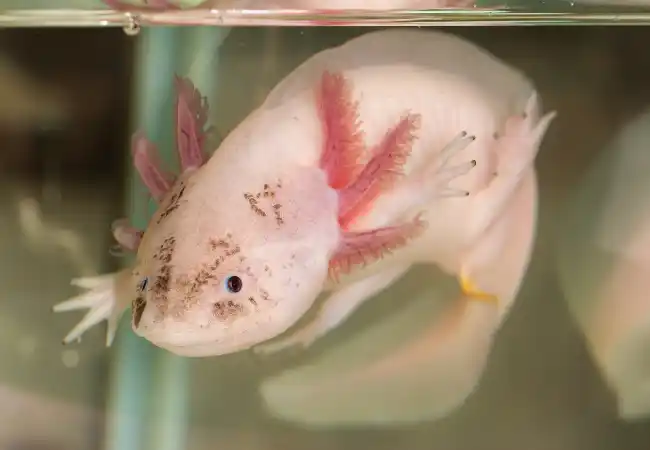
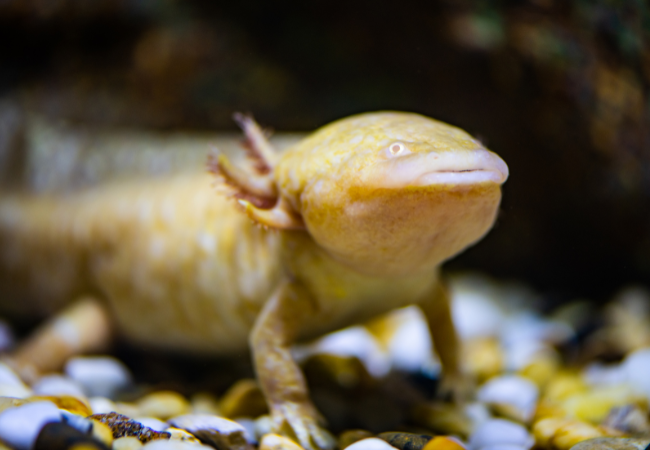
The popularity of axolotls as pets has increased dramatically in recent years, thanks to social media and Minecraft. Does that necessarily make them easy to keep though? Here's our complete guide to keeping axolotls, as well as some things you need to consider before purchasing...
Compared with, say, terrapins or bearded dragons, axolotls are significantly easier to keep and this has lead to a whole new, younger generation of aquatic hobbyists. Axolotls are smaller, easier to feed, and don’t (usually) require any expensive equipment to do well. At the same time, however, like so many exotic animals, when it comes to healthcare, prevention is better than cure. Their demands, though modest, are not up for debate, and if you can’t provide the conditions they need, these aren’t the pets for you. So, let’s take a deep dive into the real world of the axolotls outside their video game appearances...
What sort of tank do I need for an axolotl?
![]()

Credit: Canva
Axolotls are completely aquatic animals that never come onto the land, and this makes housing relatively straightforward. A 90-litre tank should be considered the absolute minimum for an adult, and while youngsters might be reared for a while in a smaller system, I’d always advise people on a budget to get the tank needed for the adult, rather than wasting money on a smaller enclosure that’ll be outgrown in a year or so.
Related article: Your guide to what goes where when setting up your first aquarium
Some things to consider when purchasing a tank for your axolotl:
![]()

Credit: Canva
1. Besides the tank, you’ll need a secure lid
While axolotls aren’t especially jumpy, they won’t last long out of the water if they do somehow manage to escape. The lid needn’t be anything fancy: a piece of plate glass cut to size and with the sharp edges ground off will do the job.
2. Lighting
If you prefer, you can use a standard issue aquarium hood, but axolotls aren’t fussed about light—indeed, they prefer their tank to be dark.

4. Water chemistry and temperature
Axolotls come from Central America, so moderately hard, neutral to slightly alkaline conditions suit them best—they aren’t fussy, but they won’t do well in very soft water. ‘Liquid rock’ (extremely hard water) of the sort served up to hobbyists in Southern England is no barrier at all to axolotls, which will thrive in such conditions.

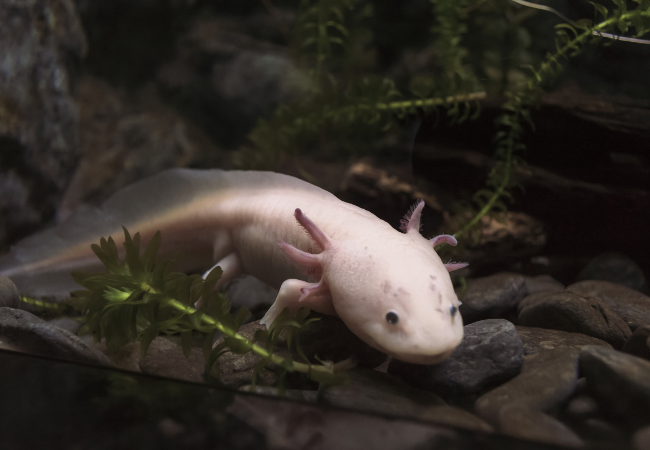
What do axolotls eat?
![]()
Credit: Canva
Can I keep more than one axolotl together?
![]()

Credit: Canva
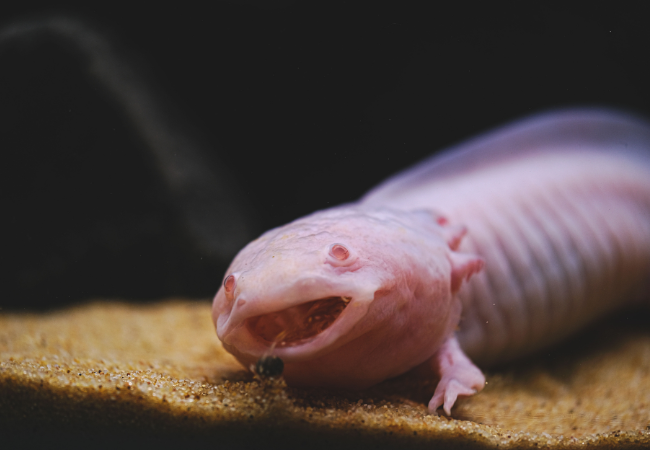
Axolotls are not social animals and can be kept singly—and there are good reasons for keeping them on their own. Kept in groups, there’s a risk of them biting one another, and in some cases one will bully the other. Damage to the gills and feet in particular is common. In good conditions, these heal right up, but if axolotls are fighting all the time, it’s clearly not fun for them. If size differences are very great, cannibalism can even occur.
Can I handle an axolotl? Should you hold them?
While axolotls can be hand-fed using forceps, avoid handing them directly. They are easily damaged and more to the point really don’t like it.
Breeding Axolotls
![]()
Credit: Canva
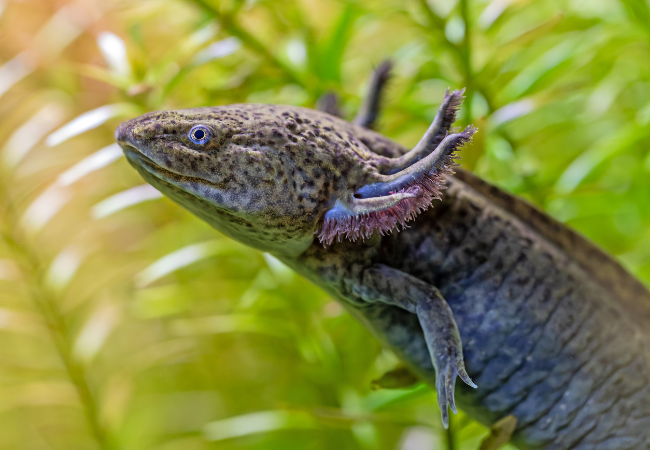
Ideally, keep just the one axolotl in a tank, unless you’re looking to breed them. If you do keep groups, provide plenty of space and ensure each axolotl has access to a hiding place of some sort. Most of the time aggression is limited to ‘get out of my face’ sort of interactions, so a bit of distance and a line-of-sight break helps to ensure peaceful relations.
What's the difference between male and female axolotls?

They are ferociously cannibalistic if not given enough food. Daphnia and other very small live foods work well to start with, graduating onto live and then frozen insect larvae as they mature. Growth is slow at first, and it’s really important to segregate them by size if you’re aiming to breed them in significant numbers. If you don’t, you’ll probably end up with just one or two big ones…

Credit: Canva
Axolotl Fact File
Scientific name: Ambystoma mexicanum
Pronunciation: Am-bee-stow-ma mex-ick-an-um
Size: To 45cm (rare), usually tops out at 25cm
Origin: Endemic to Mexico
Habitat: Heavily vegetated marshes, pools, lakes and canals
Tank size: 100x45x30cm (depth not too important)
Water requirements: Neutral to slightly alkaline water; 7.0-8.0pH, 5-20dGH
Temperature: Ideally 16-18°C
Temperament: Antisocial, likely to eat anything it can fit in its mouth
Feeding: Axolotl-specific dry foods, as well as earthworm, insects, bloodworm, prawn, fish pieces, other meaty foods
Availability and cost: Surprisingly common in modern aquatic stores, prices vary pending size and colour, but start around £25
Filters for an axolotl tank
As axolotls are sensitive to poor water quality, they require a filter, just as fish in an aquarium do. The filter needs to be large enough to deal with the mess the axolotl will create, but doesn’t need to have a powerful outflow—axolotls prefer their water to be relatively stationary.
An internal canister filter will do the job, especially if its flow can be turned down, but a safer option may be a large, air driven sponge filter that sits in the tank. This will require an air pump to power it (which can be quite noisy) but is also a very cost efficient way of keeping water clean.
As with fish, it’s the biological element of the filter that’s essential, so always clean axolotl filters in a bowl of water taken from the tank, and never directly under a tap—tapwater will kill off your filter bacteria!
Related article: Do I need a filter for my aquarium?
Credit: Canva
Fun fact: Did you know?
Axolotls don’t metamorphose because they don’t produce the hormone thyroxine that triggers metamorphosis in other amphibians. They also retain stem cells able to regenerate tissue to such an extent they can regrow missing limbs and even some of their organs. Scientists have injected axolotls with thyroxine and caused them to metamorphose, in which case they turn into something like a tiger salamander.
Recommended care products for axolotls
For many years, axolotl care products were either DIY affairs (such as Holtfreter’s Solution), or repurposed from aquarium fish use, as in the case of dried foods, medicines and water conditioners. More recently, axolotl specific products have become readily available, taking the guesswork out of axolotl care. Here are four we wouldn’t want to be without…
Pro-f Axolotl Pellets — when it comes to dry food, axolotls want a nutritionally balanced, quick sinking food with a high protein content. Rich in smell to entice even the most stubborn of axolotls, Pro-f pellets remove the risk of introducing disease pathogens from live foods. Smaller junior pellets are richer in protein and vitamin content (for healthy growth) while the larger adult pellets ensure optimal nutrition without excess pollution.
AxoSafe Tap Water Conditioner — some commercially available aquarium dechlorinators contain aloe vera which isn’t desirable for axolotl care. AxoSafe is a conditioner that tackles chlorine, chloramine, halogens and heavy metals found in tap water, making it safe for use in waterchanges. Simply mix it with your water before use and you’re good to go. If you’re unsure of how much to use, NT Labs even has a dosage calculator to help you at ntlabs.co.uk/dosage-calculator
AxoTonic Salt Mixture — known amongst axolotl keepers as a ‘modified Holtfreter’s Solution’, AxoTonic has many uses. Primarily, it caters to an axolotl’s need for optimal pH, KH and GH levels, it also helps to prevent fungal infections, and aid recovery should your axolotl become infected. In an idea world, it would be mixed with RO water, but if using tapwater (which will need to be dechlorinated first) all you need to know is the hardness level of your supply to calculate the exact dosage.