


Six new species in the miniature plec genus Hisonotus have been described from southern Brazil in the latest issue of the journal Neotropical Ichthyology.
The new species are named in a review of the species found in the laguna dos Patos system by Tiago Carvalho and Roberto Reis.
Hisonotus brunneus (pictured above)
This species is known from the upper Jacuí River drainage, and is distinguished from congeners by the arrangement of odontodes on the head and the bony plates and on the body, and the colour pattern on the caudal fin. This species is found amongst marginal vegetation in clear- to brown-water streams with moderate to fast current and a substrate of sand or rock.

Hisonotus carreiro
This species is known from the Carreiro River drainage and is distinguished from congeners by the arrangement of odontodes on the head, length of the fin spines, and a yellowish colour in life. This species is found amongst marginal and submerged vegetation in rapid-flowing streams with clear water and a sandy or rocky bottom.

Hisonotus heterogaster
This species is known from the Jacuí River drainage and is distinguished from congeners by the arrangement of odontodes on the head and the bony plates and on the body. This species is found in marginal vegetation (mostly bamboo) in clear streams with a moderate to fast current and a substrate of sand or rocks.
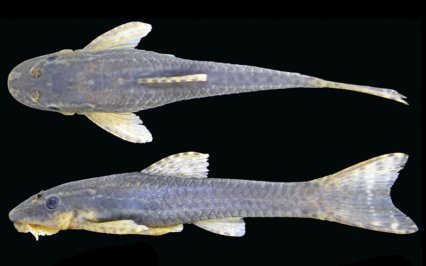
Hisonotus notopagos
This species is known from the Camaquã River drainage and is distinguished from congeners by the arrangement of the bony plates and on the head and body and the shape of the caudal peduncle. This species inhabits streams with clear water and slow to moderate flow over a sandy bottom, and is found amongst marginal or submerged vegetation.
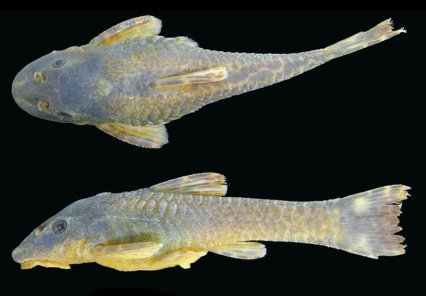
Hisonotus prata
This species is known from the Da Prata River drainage and is distinguished from congeners by the arrangement of odontodes on the head, length of the fin spines, and a greenish colour in life. This species is found amongst submerged vegetation in rapid-flowing streams with clear water and a rocky bottom.

Hisonotus vireo
This species is known from the Jacuí River drainage and is distinguished from congeners by the arrangement of odontodes on the head and the bony plates and on the body, the morphology of the pectoral-fin spine and the colour pattern on the caudal fin. This species is found in streams with clear water and moderate to fast current over a sandy or rocky bottom, and is found amongst marginal or submerged vegetation.
A total of 12 species of Hisonotus are known from the laguna dos Patos system, note the authors, and two of these, H. laevior and H. nigricauda are redescribed in this study.
For more information, see the paper: Carvalho, TP and RE Reis (2011) Taxonomic review of Hisonotus Eigenmann & Eigenmann (Siluriformes: Loricariidae: Hypoptopomatinae) from the laguna dos Patos system, southern Brazil. Neotropical Ichthyology 9, pp. 1–48.