


We tasked Neale Monks to design a perfect community tank for those with hard, alkaline water. He certainly delivered with these brilliant suggestions of fish species all suited to life above pH 7.
Most aquarists start with a community aquarium. They let you keep a variety of species all in the same tank creating an active and attractive display. However, they have a reputation for being difficult to get right thanks to compatibility issues. That doesn’t need to be the case, with a little bit of planning a beautiful community tank is possible.
With community aquariums water chemistry is generally the key! Get this right and everything else falls into place.
Of course both their behaviour and diet are important as well. However, the species sold as community fish are usually peaceful and thrive on flakes and pellets. Whereas, if you ignore water parameters the species that should be ‘easy to keep’ can cause endless frustration.
So for those of you with hard, alkaline tap water, I have designed a great blend of community fish. The tank in mind for this display holds between 100-200 litres (22-44gal) as this is a great size for a community tank. However, you could easily adapt this stocking for other sized aquariums.
Related article: Understanding water hardness
Classic hardwater fish
Central America and New Guinea are two parts of the world where the water tends to be rich in minerals. Meaning that tropical fish native to these areas generally handle ‘liquid rock’ well. While the range of species available isn’t huge, there’s still enough to stock a community tank in an interesting way.

Guppies, mollies, platies, and swordtails are an obvious choices, but I’m not going to recommend them. Guppies and platies aren’t reliably healthy anymore and can cause problems unless purchased from a reputable source.
Meanwhile, swordtails don’t seem to be problematic on that front but they need lots of swimming space. The males, especially, can be real pests if the group isn’t large enough to spread out any aggression.
As for mollies, I’m not convinced they’re good fish for casual hobbyists. Their need for warm, possibly brackish, water and an algae-based diet makes them tricky to house with community fish. So, as fabulous as they are in a single-species or biotope set-up, they’re not a good pick for our community tank.
Even if you have to hunt a little harder for other livebearer species, they’re definitely worth the effort. You can’t go wrong with either of the two Limia species commonly seen: Limia perugiae or Limia nigrofasciata.
Satisfied with all the usual foods, feeding them in a community setting will not be difficult. Plus, Limia become incredibly tame once settled in, begging for food the moment they see you. All in all, I’d rate these among the best livebearers in the hobby.

Limia perugia Photo by Shutterstock
Add colour with rainbowfish
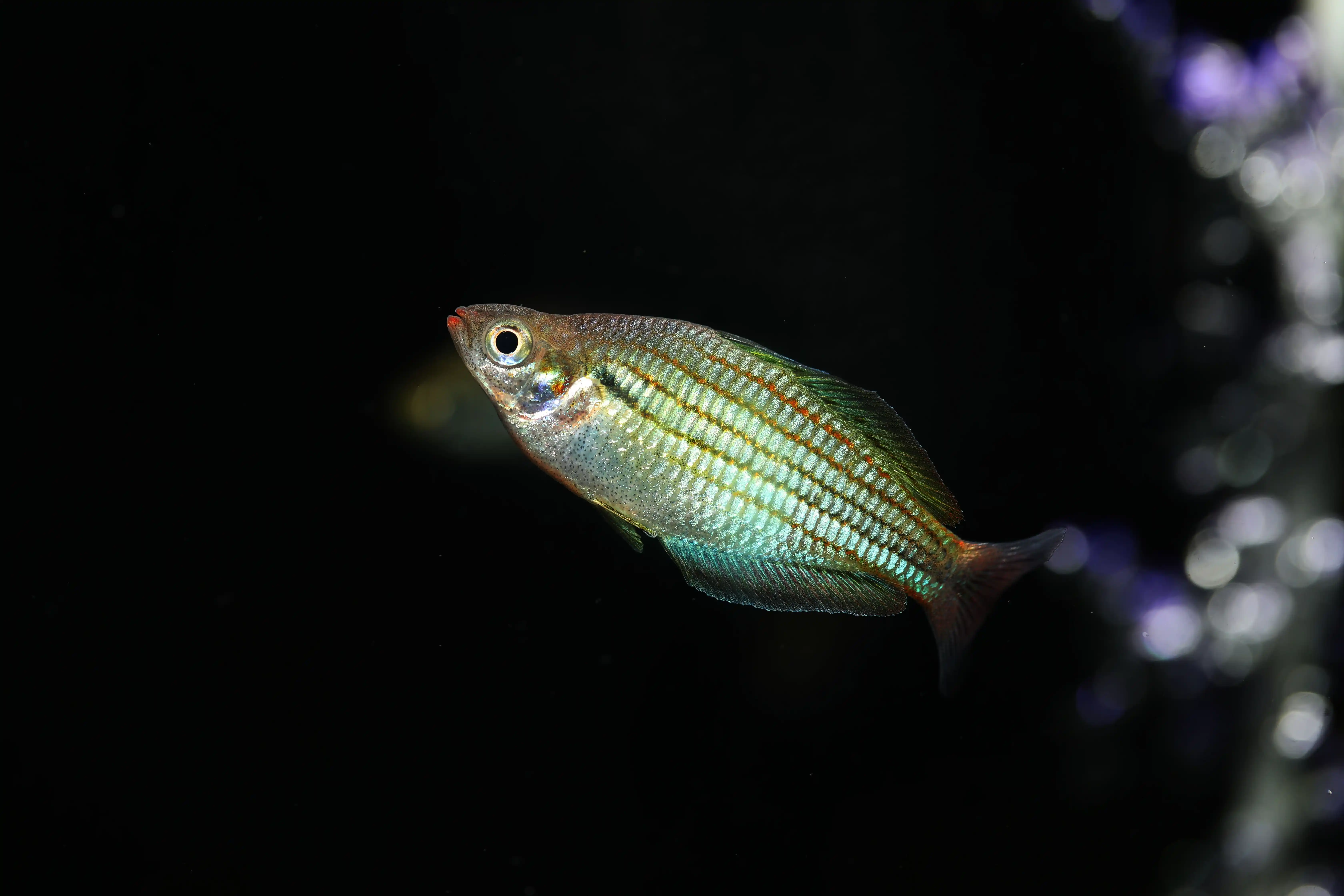
Quite a few rainbowfish handle hard water well. Not all do, of course, so do your research first. Many will be happy between 12-15˚H, including the elegantly striped dwarf rainbow (Melanotaenia maccullochi). Reaching 6cm (2.4) in length, like most rainbows this fish is a bit skittish if kept in too-small a group.

Dwarf rainbowfish (Melanotaenia maccullochi) Photo by Shutterstock
A step up in size is the Australian rainbow (Melanotaenia fluviatilis), a variable species that used to be common. It has been a bit overshadowed recently by more showy species like Melanotaenia boesemani. But in their favour, they aren’t as large, reaching up to 10cm (4”), versus over 12cm (4.7”) for Boeseman's rainbowfish. Making them better suited to tanks under 250 litres (55 gal) in size.
Provide your rainbowfish with overhead shade to help them settle. The long leaves of Vallisneria are a great option as they thrive in hard water too. In fact, they are able to source carbon from the carbonates in the water rather than just from dissolved CO2.
Don't overlook South America
Quite a few tetras can do well in moderately hard water, up to 20°H in fact. Especially if the tank is mature and well planted.
Emperor tetras and penguin tetras both fall into that category. However, my recommended all-rounder would be the x-ray tetra (Pristella maxillaris). This species lives in coastal areas including slightly brackish streams. They are not nearly as picky about water chemistry as the popular cardinal and neon tetras.
Even better, the x-ray tetra is incredibly peaceful, tough as old boots, and has lovely, if understated, colours. They’re small fish though, maybe 5cm (2”) long when mature, so be sure to get as large a group of them as you can afford. I’d suggest at least a dozen to see them at their best.
Related article: 12 great community tetras.

X-ray tetra Photo by Shutterstock
Corydoras (in the broad sense) can do well in hard water. Focus on the hardier species with broader geographical ranges, such as the peppered cory (Hoplisoma paleatum). Farmed bristlenose plecs (Ancistrus sp.) will also do perfectly well in hard water too.
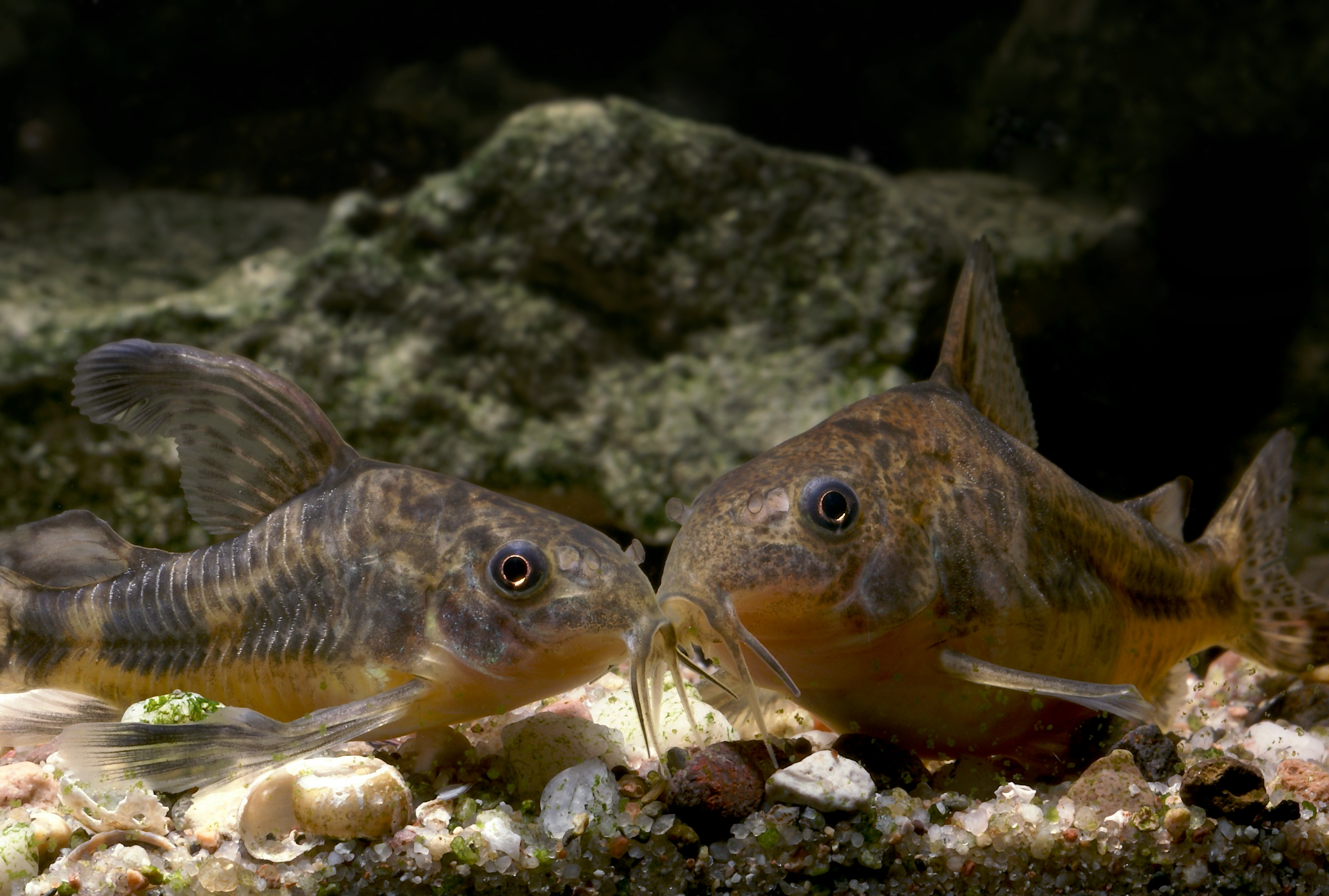
Peppered corydoras Photo by Shutterstock
But for sheer fun, don’t overlook whiptail cats such as Rineloricaria lanceolata. These sociable, rather than schooling, catfish get to 8–10cm (3-4”) in length, but half of that is their long, thin tail. Barely able to swim, these catfish prefer to dig into the sand and leaf litter. Rather like flounders, they are able to change their colours to blend in with the surrounding substrate.
So, test the hardness and pH levels of your water before planning your aquariums stocking. It might be that you have the perfect conditions to create my vision. Just be sure to only pick out a few of these species, rather than stocking them all as a fish tank shouldn't be overcrowded.
Related article: New ways to mix your community fish.