


There’s nothing worse than having a spawn of eggs blighted by the appearance of fuzz. Here’s how to deal with a pernicious problem that besets many breeders.
Any fishkeeper who enters the world of tropical fish breeding inevitably finds themselves at odds with a stubborn foe. The hairy growth on some eggs may seem innocuous but can rapidly overtake an entire clutch. People often refer to this fuzzy menace as a fungus, but what actually is it?
If you read older books and magazines — or even some more recent websites — you’ll find they refer to it as a fungus. However the most common agent we’re fighting is actually an oomycete, otherwise known as a water mould.
The most common pests in this category are Saprolegnia, having an appearance of soft, cotton-like growths. Saprolegnia typically subsists on dead organic matter, but will opportunistically feed on fish and their eggs where circumstances allow.
After water moulds, several species of bacteria are the next group of concern. Usually these take hold in the presence of other pathogens or poor environmental conditions. Most of these are harmless, beneficial even.
However, if opportunity allows, these organisms will jump at the chance to feast on vulnerable organic material. The presence of water mould damages the outer egg layer, allowing these other nasties to also take hold.
How do water moulds infect fish eggs?
Saprolegnia has a difficult time colonising live eggs, which have some degree of immunity and built-in antimicrobial enzymes. However, these defences are limited and can easily be overwhelmed. Unfertilised, damaged, and dead embryos offer no resistance, and will readily succumb to infection. Once established on deceased eggs, the water mould will move onto the adjacent healthy eggs.
Certain conditions can help Saprolegnia. A low oxygen environment or poor water quality may lead to egg death, granting the pathogen new sites to take hold of. Eggs regularly find their way into sites with poor circulation which can cause problems.
Many species of egg-laying freshwater fish deposit eggs in small crevices in tank decor for protection. However, it is these sites that typically have poor water flow unless fanned by their parents' fins.
As such, it is common practice among some breeders to run an air stone not too far from the developing brood. This keeps the water moving and agitates the surface, enhancing gas exchange. Similarly, some breeders like to keep their eggs in shallow water, either in a container near the tank surface or in a separate dish. The proximity to the surface allows more efficient gas exchange than deeper water might allow for.

Hypancistrus eggs kept aerated by air stone photo by Paul Adonis Macavei
Unfertilised eggs will readily fuzz up since they’re basically balls of unprotected nutrients ripe colonising. Infertile eggs are not uncommon as animals can miss the odd egg, be inexperienced, or have fertility issues. Any of these factors can contribute to a fair percentage of eggs being unfertilised, putting the rest at risk.
A poorly maintained tank with detritus, leftover food, and excess nutrients is a breeding ground for opportunists. These organisms are not typically harmful, but in such prime conditions their numbers can escalate. In vast numbers, it is easy for these critters to overwhelm the vulnerable egg and fry stages of fishes.
These conditions often go hand-in-hand with other stressors, like low oxygen, making breeding a whole lot more difficult. Keeping up with good tank maintenance helps to prevent this among many other problems typically associated with rearing fry.
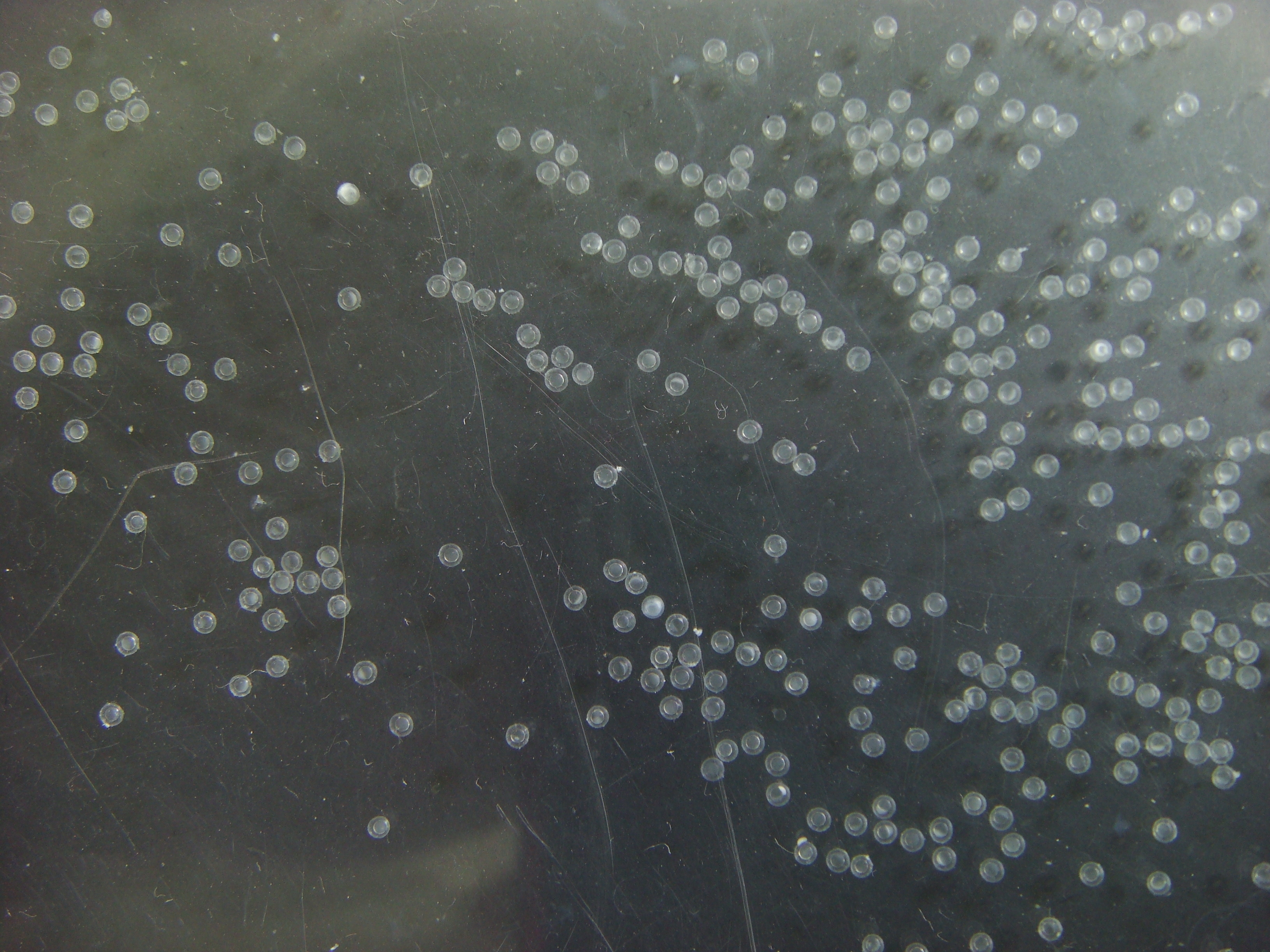
Unfertilised eggs can be easily spotted as they are a different colour, Photo by Shutterstock
Prevention and Treatment
As per the adage, prevention trumps cure. Remember that you cannot completely prevent Saprolegnia from entering your aquarium. Their spores are abundant, hardy, and invariably exist in most aquatic environments. However, would-be breeders who can get in front of this pathogen before it takes hold will avoid unnecessary woe.
Whether or not you’ve applied a treatment prophylactically, keep an eye out for unfertilised eggs. These will be a different shade from developing eggs, although specific colours may vary from species to species. As mentioned earlier, they are easy for microbes to colonise before spreading. In great enough numbers, these can overwhelm the defences and subsequently smother adjacent healthy eggs.
If a bit of fuzz has already begun to appear, don’t worry — you still have the opportunity to save most of your batch. Unfortunately, the eggs which already have a healthy layer of fuzz are beyond saving. Remove affected individuals as soon as possible to help prevent it spreading.
Excessive fuzz can also make it difficult to visually differentiate affected from unaffected eggs. In cases like these I’m happy to remove the eggs immediately adjacent to fuzzy eggs, healthy or not. Saprolegnia may have already got a small foothold, and the sacrifice might save a later headache.
As always, stay on top of your maintenance schedule. Conditions that allow unwanted microorganisms to thrive will lower your chances of success dramatically. Many chemicals used either prophylactically or as treatment will readily react with organics present in the aquarium. An excessive presence of these organics may lower your effective dose significantly.
You can dose prophylactic treatments as a short-term, once-off treatment, or maintain a low dose throughout incubation. You can use many of the prophylactic chemicals as a treatment to react to an outbreak. However, it is always best to prevent it reaching this stage if you can.

Methylene blue is a powerful dye that will stain hands and clothes so be careful! Photo by Shutterstock
Chemical cures for egg 'fungus'
Many chemical treatments do not go well with filters. Carbon filtration will adsorb the chemicals, while the treatment itself may negatively impact your biological filter.
To avoid these hassles treat the eggs in a separate tank or container. In days past, malachite green and formalin saw more abundant use in aquaria. Although some preparations still use these ingredients, they’re less prevalent owing to restrictions in several regions.
While malachite green retreats from aquarium use, methylene blue has perhaps the most widespread use with fish eggs. Usually, it's quite safe to dose over a longer term, people often use low doses during the entire incubation.
Many old hands in the hobby have a keen eye for the shade of blue they like to turn their water. For the rest of us, I'd recommend that you dose to a concentration up to 3ppm (3mg per litre).
This will usually be enough to eliminate currently present water mould. Plus, the dosage should dilute over time (through break-down and water changes) so that the water is barely tinged when the eggs hatch. Dyes have strong staining capabilities, including but not limited to your clothing, hands, and aquarium silicone. Work carefully with these chemicals.
Hydrogen peroxide is a cheap and readily available chemical from pharmacies. Found in a number of dilutions; for our purposes, the 35% mix is around where we want to be. This is one of the harsher concentrations, and while it will dilute in water do be careful when handling it.
Recommended doses vary, although I prefer the one that plays it a little safer. Dose 1ml per ~3.5 litres on the first day and then repeat the dose on day two. This second dose is useful since hydrogen peroxide breaks down quickly.
Salt has shown to be efficacious against water moulds at doses as low as 3ppt. Depending on circumstances you can raise it higher than this.
How useful this treatment is depends on the salt tolerance of a given fish species. Not all fish, and by extension their eggs, will appreciate even slightly raised salinity. Evidence seems to indicate this method works best with fishes adapted to harder, alkaline waters and brackish water fishes.
Be sure to do any sort of salinity adjustments (both increasing and then later decreasing) incredibly slowly. Other chemotherapeutics options are available, inclusive of several commercial preparations that may use chlorine oxides, acriflavines, bronopol, or a combination of these (or other) active ingredients.
Follow the manufacturers’ instructions closely for best results, but pay close attention to success rates of your batches. Tolerances to these chemotherapeutants can vary from species to species, with some being more sensitive than others. Experience here is handy in making the necessary adjustments.
(Editor’s note: Pimafix, with the natural phytochemicals of bay oil, is also an increasingly modern method of Saprolegnia control.)
